Medically reviewed by Dr. Magnus Jayaraj Mansard, Specialist in Liver Transplantation, HPB Surgery and Surgical Gastroenterology. Last medically reviewed on September 2026
If you have advanced liver disease, cirrhosis, liver failure, or have been advised to consider a liver transplant, getting the right specialist evaluation is an important next step.
Dr. Magnus Jayaraj Mansard is an experienced Liver Transplant Surgeon in Chennai with 17+ years of surgical experience and 15,000+ surgical procedures performed. His expertise includes liver transplantation, complex liver surgery, HPB surgery and surgical gastroenterology.
Not everyone with severe liver disease needs a transplant. A detailed evaluation helps understand how well your liver is functioning, whether other treatments can help, and when a liver transplant may be the right option.
When Is a Liver Transplant Needed?
A liver transplant may be considered when the liver is badly damaged and can no longer work properly. It may also be considered when serious complications of liver disease cannot be controlled with medicines or other treatments.
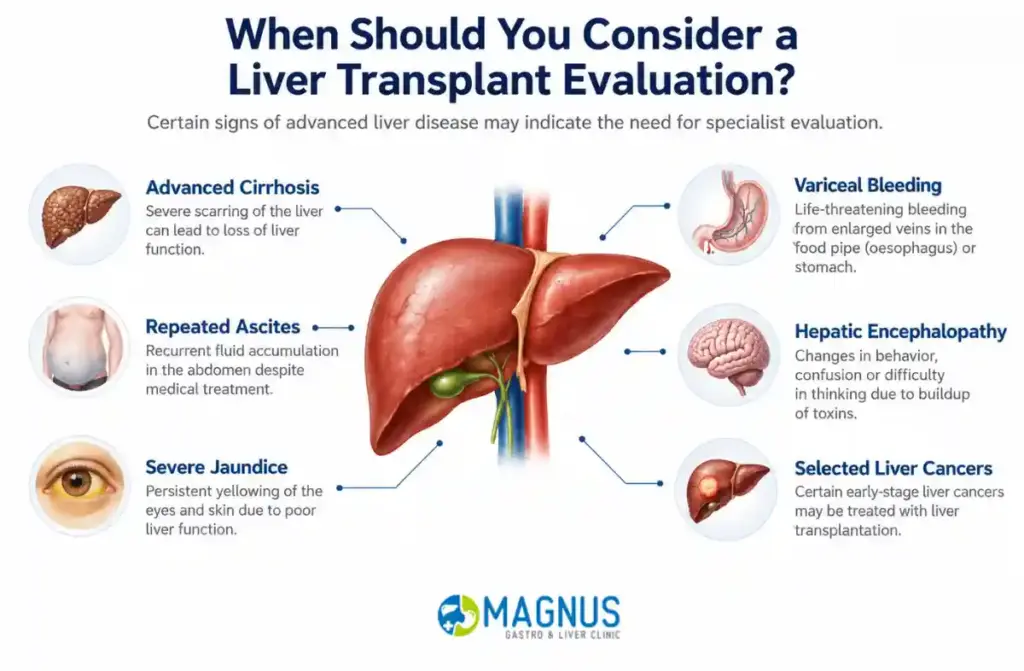
A transplant evaluation may be needed for people with:
- Advanced liver cirrhosis
- Liver failure
- Repeated fluid buildup in the abdomen (ascites)
- Repeated internal bleeding due to liver disease
- Hepatic encephalopathy, which can cause confusion or sleepiness
- Severe loss of liver function
- Some types of liver cancer
- Certain inherited liver diseases
Having one of these conditions does not automatically mean you need a liver transplant. Your complete health condition must be evaluated first.
What Are the Warning Signs of Advanced Liver Disease?
Liver disease can become more serious over time. Some people may develop new symptoms or notice that their existing symptoms are getting worse.
Warning signs can include:
- Yellow skin or eyes (jaundice)
- Swelling of the abdomen
- Swelling of the legs
- Vomiting blood
- Black stools
- Confusion or unusual sleepiness
- Severe weakness
- Loss of appetite
- Unexplained weight loss
- Repeated infections
- Frequent hospital admissions
These symptoms do not always mean that a liver transplant is needed. However, they should be checked by a liver specialist, especially if they are getting worse.
About Dr. Magnus Jayaraj – Liver Transplant Surgeon in Chennai
Dr. Magnus Jayaraj Mansard is an experienced Liver Specialist in chennai with 17+ years of surgical experience and 15,000+ surgical procedures performed, with expertise in liver transplantation, HPB surgery and surgical gastroenterology.
His clinical work focuses on the treatment of diseases affecting the liver, pancreas, gallbladder, bile ducts and gastrointestinal system. He evaluates and treats patients with both common and complex conditions, including advanced liver disease, liver tumours, pancreatic conditions, gallbladder and bile duct diseases, and gastrointestinal cancers.
Qualifications and Advanced Training
Dr. Magnus completed his MBBS and MS at JIPMER and holds MNAMS in GI Surgery, MRCS (Edinburgh), FACS, and GCSRT from Harvard, with advanced expertise in liver transplantation, HPB and gastrointestinal surgery.

Areas of Clinical Expertise
Dr. Magnus provides surgical evaluation and treatment for conditions involving:
- Liver transplantation
- Advanced and complex liver disease
- Liver tumours and liver surgery
- Hepato-Pancreatico-Biliary (HPB) conditions
- Pancreatic tumours and other pancreatic diseases
- Gallstones and complex gallbladder conditions
- Bile duct diseases
- Gastrointestinal cancers
- Surgical gastroenterology
- Advanced laparoscopic and minimally invasive surgery
Experience in Liver Transplant and Complex Liver Care
Liver transplant care involves much more than performing surgery. Patients need careful assessment to understand how advanced the liver disease is, whether transplantation is required, when it should be considered and whether the patient is medically suitable for the procedure.
With his experience in liver transplantation and HPB surgery, Dr. Magnus evaluates the patient’s liver condition, previous treatments, complications, overall health and available treatment options before recommending the next step.
For some patients, transplantation may be the appropriate treatment. For others, continued medical care, monitoring or another liver procedure may be more suitable. This patient-specific approach is particularly important because not every person with cirrhosis or chronic liver disease requires a liver transplant.
Does Everyone With Cirrhosis Need a Liver Transplant?
No. Not everyone with cirrhosis needs a liver transplant.
Some people with cirrhosis can manage their condition for many years with medicines, lifestyle changes and regular medical check-ups.
A liver transplant may be considered when the liver becomes severely damaged or when complications start happening repeatedly. The aim is to understand whether you need a transplant and when it should be considered, rather than recommending surgery just because cirrhosis has been diagnosed.
How Do Doctors Decide If You Need a Liver Transplant?
Doctors do not decide on a liver transplant based on one symptom or one test.
Several factors are checked.
- How Well Your Liver Is Working: Blood tests, scans, symptoms and previous medical problems help doctors understand the severity of your liver disease.
- Complications From Liver Disease: Repeated fluid buildup in the abdomen, internal bleeding, confusion, infections and frequent hospital admissions may suggest that the disease is becoming more serious.
- MELD Score: For some patients, doctors use a MELD score to understand how severe the liver disease is. It is calculated using certain blood-test results. The MELD score is useful, but it is only one part of the overall assessment.
- Liver Cancer: If liver cancer is present, doctors check the size, number and location of the tumours and whether the cancer has spread.
- Your Overall Health: Your heart, lungs, kidneys, nutrition and general health are also checked because liver transplantation is a major surgery.
After these assessments, the transplant team can decide whether a liver transplant is a suitable treatment option.
What Happens During a Liver Transplant Evaluation?
- Blood Tests: Blood tests check liver function, kidney function, blood count, blood group and other important health markers.
- Liver Scans: Ultrasound, CT or MRI scans may be used to understand the condition of the liver and nearby blood vessels.
- Heart and Lung Tests: Your heart and lungs may be checked to make sure your body can handle major surgery.
- Infection Screening: Doctors check for infections that may need treatment before transplantation.
- Nutrition Assessment: Severe liver disease can cause weight and muscle loss. Your nutrition may therefore be assessed before surgery.
- Cancer Assessment: If liver cancer is present, doctors need to understand its size, location and extent.
Living Donor vs Deceased Donor Liver Transplant
There are two main ways a donor liver can become available.
Living Donor Liver Transplant
- In a living donor transplant, a healthy and medically suitable person donates part of their liver.
- The liver has the ability to grow after part of it is removed. However, donating part of the liver is still major surgery.
- For this reason, donor health and safety must be carefully checked before donation.
Deceased Donor Liver Transplant
- In a deceased donor transplant, the liver comes from a person who has donated their organs after death.
- Eligible patients are registered through the appropriate organ transplant system.
- Organ allocation follows medical and regulatory guidelines.
Diagnosis and Treatment of Liver Transplant
- The diagnosis for a liver transplant begins with comprehensive evaluation, including liver function tests, imaging studies like ultrasound or MRI, and sometimes liver biopsy. These assessments help determine the extent of liver damage and whether transplantation is the only viable treatment.
- Patients are also screened for overall health, including cardiac, pulmonary, and renal function, to ensure they can safely undergo surgery. Psychological and social evaluations are conducted to assess the patient’s support system and readiness for post-transplant care.
- Once the patient is confirmed as eligible, they are placed on the transplant waiting list or assessed for a suitable living donor. A multidisciplinary transplant team then carefully evaluates donor compatibility and selects the most appropriate liver graft to support a safe and successful procedure.
- The treatment involves surgically replacing the diseased liver with a healthy donor liver, followed by intensive monitoring and long-term immunosuppressive therapy to prevent organ rejection and ensure successful recovery.
Advantages of a Liver Transplant
- A liver transplant can be life-saving for patients with end-stage liver disease or acute liver failure, significantly improving survival rates. Treatment is carefully planned based on the patient’s overall health, the severity of liver disease, donor availability, and a comprehensive multidisciplinary evaluation to achieve the best possible outcomes.
- Post-transplant, many patients experience a dramatic improvement in quality of life, including better energy levels, appetite, and overall well-being. This allows them to return to normal activities and regain independence.
- The procedure also halts the progression of complications caused by chronic liver disease, such as ascites, hepatic encephalopathy, and variceal bleeding. With proper follow-up and medication, long-term outcomes are highly favorable.
When performed by an experienced transplant team, liver transplantation has strong success rates and can significantly improve health, quality of life, and long-term survival.
Procedures Followed by a Liver Transplant
- Postoperative Monitoring and Rehabilitation: After surgery, patients are closely observed in intensive care to monitor liver function, blood flow, and possible complications. Long-term rehabilitation includes physiotherapy, lifestyle modifications, and regular follow-up appointments to ensure proper healing, monitor overall health, and support successful long-term recovery after transplantation.
- Donor Evaluation and Organ Matching: A successful transplant begins with identifying a suitable donor, whether living or deceased. Detailed tests are performed to match blood type, organ size, and tissue compatibility, helping reduce the risk of organ rejection.
- Preoperative Assessment of the Recipient: The patient undergoes comprehensive evaluations, including blood tests, imaging studies, and cardiac assessments. These findings help the transplant team plan the procedure carefully and minimize the risk of complications during surgery.
- Surgical Transplantation Process: The diseased liver is carefully removed, and the donor liver is connected to the recipient’s blood vessels and bile ducts. Meticulous surgical technique and careful coordination help establish stable connections that support long-term liver function.
Why Patients Choose Dr. Magnus Jayaraj for Liver Transplant
Dr. Magnus Jayaraj, with 17+ years of surgical experience, is known for his expertise in complex liver and hepatobiliary surgery, precise treatment planning and patient-focused care. Patients looking for a Liver Transplant Surgeon in Chennai choose him for advanced surgical support, coordinated transplant care and structured follow-up.
- Advanced Hepatobiliary Expertise: Experienced in managing complex liver diseases and advanced hepatobiliary procedures.
- Multidisciplinary Care: Works with hepatologists, anaesthetists and critical care specialists to provide complete transplant support.
- Personalised Follow-Up: Offers ongoing guidance for medicines, recovery, lifestyle changes and long-term liver health.
- Minimally Invasive Techniques: Uses advanced surgical methods when suitable to reduce trauma and support faster recovery.
- Leading Transplant Centres: Associated with well-equipped transplant centres supported by experienced medical teams and modern technology.
Life After a Liver Transplant
A liver transplant can help suitable patients with severe liver disease return to a more active life.
However, regular medical follow-up is still needed. Most liver transplant patients need long-term medicines called immunosuppressants. These medicines help prevent the body’s immune system from attacking the transplanted liver.
Patients should also follow their doctor’s advice about:
- Diet
- Medicines
- Exercise
- Food safety
- Infection prevention
- Weight management
- Vaccination
- Alcohol and smoking
- Regular blood tests
Do not stop or change transplant medicines without speaking to your transplant team.
Liver Transplant Consultation in Chennai
If you have advanced liver disease, cirrhosis, liver failure or have been advised to consider a liver transplant, a specialist consultation can help you understand your options. During the consultation, Dr. Magnus Jayaraj may review your:
- Current symptoms
- Liver condition
- Previous treatments
- Blood test reports
- CT or MRI scans
- Endoscopy reports
- Hospital records
- Current medicines
The aim is to understand how serious the liver disease is and whether you need further treatment, transplant evaluation or another treatment approach.
Book a Liver Transplant Consultation in Chennai
If you have advanced liver disease, cirrhosis, liver failure or repeated complications from liver disease, a specialist evaluation can help you understand the right next step.
Dr. Magnus Jayaraj provides liver transplant consultation in Chennai, including assessment of liver function, previous reports, current complications and transplant suitability. Based on the evaluation, patients and their families can better understand whether continued treatment, further monitoring or liver transplantation should be considered.
Consult Dr. Magnus Jayaraj to understand your liver condition, treatment options and whether liver transplant evaluation is appropriate for you.
Read also the Hepato Pancreatico Biliary Surgeon in Chennai