
Digestive discomfort is easy to dismiss. A little bloating, occasional abdominal pain or changes in bowel movements may seem like ordinary stomach trouble. But when these changes persist, recur or appear alongside unexplained weight loss, they deserve closer attention.
The pancreas plays two important roles: producing enzymes that help digest food and hormones that regulate blood sugar. Conditions affecting this organ can therefore produce symptoms involving digestion, abdominal health and glucose control.
The challenge is that pancreatic disease rarely follows one predictable symptom pattern. Some conditions cause sudden pain, while others develop gradually with subtle digestive changes.
The First Signs: Beyond Ordinary Digestive Discomfort
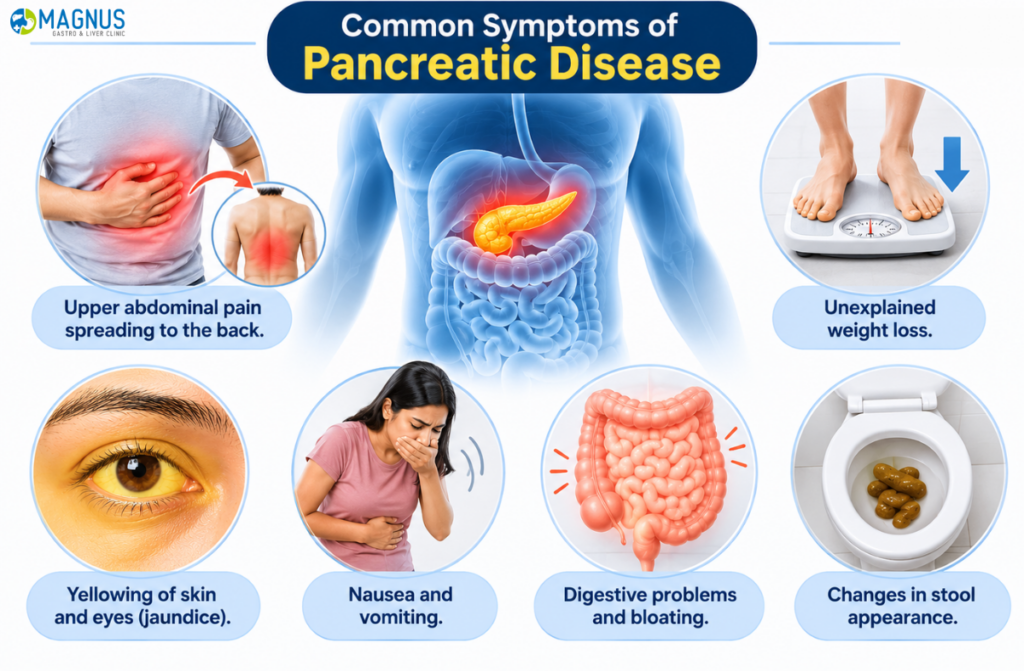
The symptoms of pancreatic disease depend on the underlying condition. Some of the important changes include:
- Upper abdominal pain: Often felt in the centre of the upper abdomen, sometimes extending towards the back.
- Unexplained weight loss: May occur when digestion and nutrient absorption are affected or with certain pancreatic diseases.
- Greasy or foul-smelling stools: Can indicate poor fat absorption, particularly when accompanied by diarrhoea.
- Persistent bloating and diarrhoea: May occur when digestive enzyme production is insufficient.
- Jaundice: Yellowing of the eyes or skin, sometimes accompanied by dark urine, pale stools and itching.
- Nausea and appetite changes: Can accompany pancreatic inflammation and other pancreatic conditions.
- Blood sugar changes: Damage to insulin-producing cells may interfere with glucose regulation.
These symptoms are not exclusive to pancreatic disorders. Their persistence, combination and progression matter more than any single symptom.
Clinical Pearl — The stool clue: Repeated greasy, bulky stools that are difficult to flush can suggest steatorrhoea, or excess fat in the stool. When accompanied by weight loss, this warrants investigation for malabsorption, including possible exocrine pancreatic insufficiency.
Three Conditions, Three Different Symptom Patterns
Pancreatic disease is an umbrella term. Inflammation, impaired enzyme production and abnormal cell growth affect the organ differently.
| Condition | Characteristic symptoms |
| Acute pancreatitis | Sudden, often severe upper abdominal pain, nausea, vomiting and sometimes fever |
| Chronic pancreatitis | Recurrent or persistent pain, digestive difficulties, greasy stools and weight loss |
| Exocrine pancreatic insufficiency (EPI) | Poor fat digestion, bloating, diarrhoea, greasy stools and nutritional problems |
| Pancreatic cancer | May cause no early symptoms; later signs can include jaundice, appetite loss, weight loss and abdominal or back pain |
Acute pancreatitis involves sudden inflammation and requires prompt medical assessment. Chronic pancreatitis causes lasting damage over time and may gradually affect digestive function.
EPI can develop when the pancreas cannot supply enough digestive enzymes. Pancreatic cancer, meanwhile, may remain difficult to recognise in its early stages because symptoms can be absent or nonspecific.
Expert Insight — Structure versus function: Pancreatic disease can affect the organ’s structure, its digestive enzyme production or its hormone-producing function. These are different aspects of pancreatic health, which explains why one person may experience abdominal pain while another primarily develops malabsorption or blood sugar disturbances.
The Characteristic Pattern of Pancreatic Pain
The pancreas lies deep in the upper abdomen, behind the stomach. Pain associated with pancreatic inflammation is commonly felt in the upper central abdomen and may radiate towards the back.
- Acute pancreatitis: Usually causes sudden, persistent pain that may become severe.
- Chronic pancreatitis: May cause recurring or ongoing pain, sometimes worse after meals.
- Pancreatic cancer: Can cause upper abdominal or back pain, particularly as the disease progresses.
Some people find that sitting up or leaning forward changes the discomfort. However, neither the location nor the position-related pattern confirms pancreatic disease.
Clinical Pearl — Don’t diagnose by location: Upper abdominal pain radiating to the back is an important clinical clue, but it can also occur with other abdominal conditions. The associated symptoms, examination and investigations are essential for identifying the cause.
The Less Obvious Side of Pancreatic Disease
Not every pancreatic disorder begins with severe abdominal pain. Some people first notice changes in digestion, nutritional health or blood glucose.
Chronic pancreatic damage may gradually reduce enzyme production, affecting the body’s ability to absorb nutrients. In other cases, damage to insulin-producing cells can contribute to diabetes.
Pancreatic cancer may also cause few noticeable symptoms in its early stages. This makes persistent, unexplained changes particularly important to investigate.
Expert Insight — Symptoms do not measure damage: The severity of pain does not always correspond to the extent of pancreatic dysfunction. Significant enzyme deficiency can occur without severe abdominal pain, making digestive and nutritional changes important parts of clinical assessment.
Warning Signs That Need Medical Attention
Certain symptoms should not be dismissed or monitored at home without medical advice.
- Sudden, severe or persistent upper abdominal pain.
- Severe pain accompanied by repeated vomiting or fever.
- Abdominal pain with a rapid heartbeat or breathing difficulty.
- Rapidly worsening abdominal pain or marked tenderness.
These may indicate acute pancreatitis or another serious abdominal condition.
Prompt medical evaluation is also important for:
- New yellowing of the eyes or skin.
- Dark urine accompanied by pale stools.
- Unexplained or continuing weight loss.
- Repeated greasy stools or persistent diarrhoea.
- Digestive discomfort or appetite changes that do not settle.
Important: New jaundice requires timely medical evaluation, even when there is no abdominal pain. It can indicate an obstruction in the bile drainage system and has several possible causes.
From Symptoms to a Diagnosis
No single test identifies every pancreatic condition. Investigations depend on the symptoms and suspected cause.
| Investigation | What it helps assess |
| Blood tests | Pancreatic inflammation, liver function and blood glucose |
| Ultrasound | Gallstones and certain abnormalities involving the gallbladder or bile ducts |
| CT or MRI | Pancreatic structure and surrounding tissues |
| MRCP or endoscopic ultrasound | More detailed assessment of pancreatic and bile ducts |
| Faecal elastase test | Pancreatic digestive enzyme function |
Not everyone requires every investigation. For example, suspected acute pancreatitis and long-standing greasy stools may require different diagnostic approaches.
Clinical Pearl — Two different questions: Imaging examines the structure of the pancreas, whereas faecal elastase helps assess digestive enzyme production. A normal result from one type of investigation does not automatically answer every question about pancreatic function.
Conclusion
Pancreatic disease does not always begin with dramatic pain. Sometimes, its earliest clues are persistent digestive changes, unusual stools, unexplained weight loss or altered blood sugar levels. Other signs, especially sudden severe abdominal pain and jaundice, require prompt attention.
Recognising these patterns is not about diagnosing a condition at home. It is about knowing when a recurring change deserves medical investigation. The earlier unexplained symptoms are evaluated, the sooner the underlying cause can be identified and appropriate care considered.
Also, Read as: Fatty Liver Disease