“The liver rarely asks for attention, yet every second it works to protect your body. What makes it truly extraordinary is not just what it does — but its ability to recover, rebuild, and adapt when given the chance.”
Introduction
Most organs in the human body are highly sensitive to injury. When cells are damaged, recovery can be slow or limited.
But the liver is different.
Hidden quietly beneath the ribs on the right side of your abdomen, the liver works continuously — processing nutrients, filtering substances from the bloodstream, supporting digestion, storing energy, and helping maintain the body’s internal balance.
What makes the liver truly fascinating is its remarkable ability to repair itself.
Unlike many organs, the liver has a unique regenerative capacity. When healthy liver cells are injured, the remaining healthy cells can multiply and help restore lost function.
But there is an important truth:
The liver is powerful, but it is not invincible.
Its ability to heal depends on the type of damage, how long the injury has been present, and whether the cause of stress is removed.
For example, early liver changes caused by factors such as unhealthy eating patterns, alcohol-related stress, or metabolic problems may improve when healthier habits are introduced. However, years of ongoing injury can lead to fibrosis — a process where healthy liver tissue is replaced by scar tissue.
Understanding how liver repair works helps us appreciate one of the body’s most resilient organs and recognize how everyday choices influence long-term liver health.
In this article, we will explore how the liver regenerates, when recovery is possible, what can slow healing, and how you can support your liver naturally.
Why Is the Liver Considered One of the Body’s Most Important Organs?
The liver is often called the body’s natural processing center because it is involved in hundreds of essential processes.
Every day, it quietly performs tasks that keep the body functioning — many of which happen without us noticing.
From processing the food we eat to managing energy storage and supporting immunity, the liver acts like a biological control system that constantly adapts to the body’s needs.
Some of its major roles include:
| Liver Function | Why It Matters |
| Processing nutrients | Converts nutrients from food into forms the body can use |
| Producing bile | Helps digest and absorb fats |
| Filtering the blood | Helps process substances carried through the bloodstream |
| Storing nutrients | Keeps reserves of vitamins and minerals available |
| Supporting metabolism | Helps regulate energy balance and chemical processes |
| Producing proteins | Creates important proteins needed for normal body function |
Did You Know?
- The liver has a large “functional reserve,” meaning it can continue performing important tasks even when some liver cells are affected.
- This is one reason liver problems can sometimes develop quietly without obvious symptoms in the early stages.
Can the Liver Repair Itself?
Yes — the liver has an impressive ability to repair and regenerate.
When liver cells become damaged, healthy liver cells can respond by increasing their activity and multiplying to replace injured cells.
This process allows the liver to restore its size and continue performing essential functions.
However, regeneration does not mean unlimited healing.
The liver’s ability to recover depends on several factors:
- The cause of injury
- The severity of damage
- How long the damage has continued
- Overall health
- Lifestyle habits
- Whether the underlying problem is treated
A short-term injury may allow the liver to recover significantly.
But repeated injury over months or years can change the way healing happens.
A simple way to understand this is to imagine a house.
If a small crack appears, it can often be repaired easily.
But if the structure is repeatedly damaged without fixing the cause, stronger repair material may build up — eventually changing the original structure.
This is similar to what happens when repeated liver injury leads to scar formation.
The Science Behind Liver Regeneration
The liver’s ability to regenerate mainly comes from specialized liver cells called hepatocytes.
When injury occurs, these cells receive signals that encourage them to grow and restore liver tissue.
What makes this process remarkable is that the liver does not simply replace lost cells — it works to restore function.
The goal is not just rebuilding tissue.
The goal is maintaining the body’s balance.
Interesting Fact
The liver is one of the few organs in humans with such a strong regenerative ability.
This unique feature has made the liver an important focus of medical research, especially in understanding tissue repair and organ recovery.
However, regeneration works best in a healthy environment.
If harmful stress continues — such as uncontrolled metabolic problems, persistent inflammation, or ongoing alcohol-related injury — the liver may struggle to keep repairing itself.
Over time, the body may begin forming scar tissue instead of healthy replacement cells.
When Can the Liver Repair Itself?
The liver has the greatest chance of recovery when damage is identified early and the cause is addressed.
Many liver conditions can improve when the factors causing stress are reduced.
Fatty Liver Changes
Fat accumulation in the liver is becoming increasingly common and may occur due to:
- Excess calorie intake
- Reduced physical activity
- Insulin resistance
- Metabolic imbalance
- Long-term unhealthy eating patterns
In the early stages, fatty liver changes may improve when lifestyle habits support better metabolic health.
Small improvements matter.
A healthier diet, regular movement, and gradual weight management can reduce stress on liver cells and help restore a healthier environment.
The earlier action is taken, the better the opportunity for recovery.
Alcohol-Related Liver Stress
- The liver plays a major role in processing alcohol after it enters the body. While it can handle small amounts, repeated or excessive alcohol exposure can place continuous stress on liver cells.
- Over time, this stress may lead to inflammation and interfere with normal liver function.
- When alcohol-related liver stress is identified early, reducing or avoiding alcohol can give the liver an opportunity to recover.
- However, if injury continues for a long period, repeated damage can trigger scar formation and reduce the liver’s ability to function normally.
Did You Know?
- The liver itself does not have pain receptors in the same way many other parts of the body do.
- This means a person may have liver stress or early liver changes without experiencing obvious discomfort — making regular health awareness important.
Medication-Related Liver Injury
The liver processes many substances that enter the body, including medications, supplements, and certain chemicals.
Most medicines are safe when used correctly, but in some situations, certain medications or supplements may affect liver health.
If the cause of liver irritation is identified early and managed appropriately, liver function may improve.
This is why responsible medication use matters:
- Follow recommended doses
- Avoid unnecessary self-medication
- Inform healthcare professionals about supplements
- Do not assume “natural” products are always risk-free
The liver is designed to protect the body, but it also needs protection from unnecessary stress.
What Can Prevent the Liver From Healing?
The liver is resilient, but continuous injury can overwhelm its ability to repair itself.
When the liver repeatedly faces damage, the body’s healing response may change.
Instead of rebuilding healthy liver cells, the body may begin producing scar tissue.
Factors that can interfere with liver recovery include:
- Long-term alcohol-related injury
- Untreated viral infections
- Persistent fatty liver disease
- Ongoing inflammation
- Certain toxins or harmful exposures
- Poorly controlled metabolic conditions
The important point is that liver damage is not usually a sudden event.
It often develops gradually over time.
That is why prevention and early action play such an important role.
Liver Regeneration vs Liver Scarring: Understanding the Difference
- The liver is constantly balancing two processes:
- Repair and injury.
- When the injury is temporary, repair usually has the advantage.
- Healthy liver cells replace damaged ones, and normal function can return.
- But when injury continues for months or years, the liver may start responding differently.
- Instead of creating healthy replacement tissue, it may form fibrosis — a buildup of scar tissue.
- Fibrosis develops slowly and may not cause noticeable symptoms in the beginning.
| Liver Repair | Liver Scarring |
| Healthy liver cells replace damaged cells | Scar tissue replaces normal tissue |
| Function may improve | Function may gradually decline |
| More likely in early stages | Can become difficult to reverse when advanced |
| Happens when stress is reduced | Happens when injury continues |
- The goal is not to wait until the liver struggles.
- The goal is to protect its ability to heal while it still has the chance.
Signs That Your Liver May Be Recovering
The liver does not always announce when it is healing.
Because liver recovery happens internally, improvements may not always be obvious immediately.
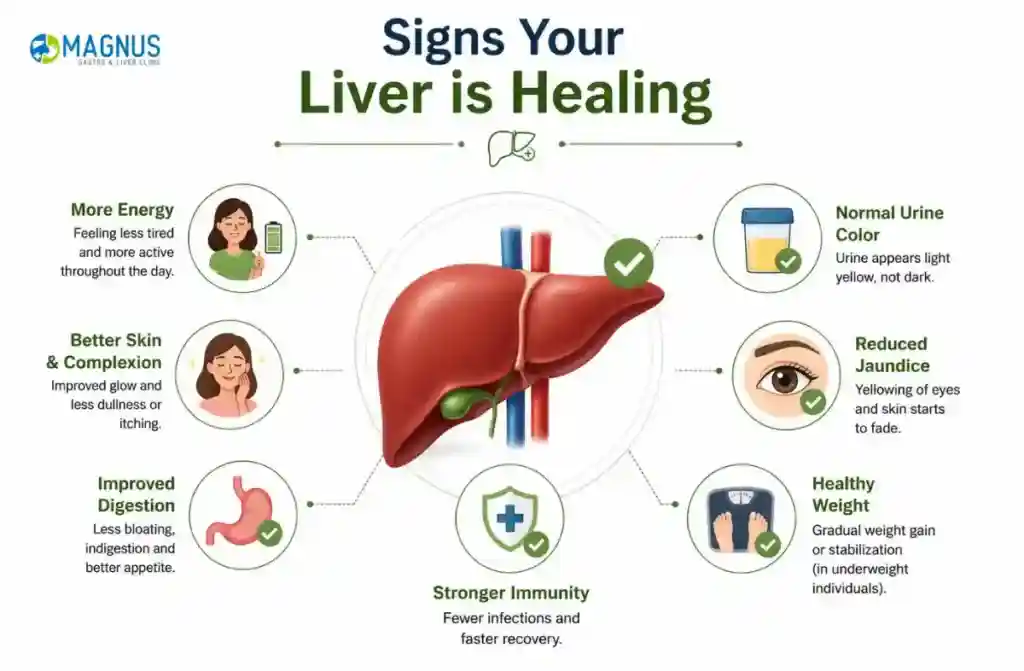
Some people may notice:
- Better energy levels
- Improved digestion
- More stable appetite
- Better metabolic health
- Improvement in liver-related blood test results
However, feeling better does not always mean the liver is completely recovered.
Some liver conditions require monitoring through medical evaluation, blood tests, or imaging.
True recovery is best understood through both how you feel and what your health assessments show.
How Can You Support Liver Repair Naturally?
The liver already has built-in healing abilities.
The goal is to create the right environment for that healing to happen.
1. Build a Liver-Friendly Eating Pattern
The liver depends on nutrients to perform its daily work.
A balanced eating pattern supports metabolism, reduces unnecessary stress, and helps maintain healthy body function.
Helpful choices include:
- Fiber-rich vegetables and fruits
- Whole grains
- Lean proteins
- Healthy fats
- Adequate water intake
Rather than focusing on one “miracle” food, long-term consistency matters more.
The liver responds best to everyday habits repeated over time.
2. Maintain a Healthy Weight
- Excess fat, especially around the abdomen, can increase the chance of fat accumulation inside liver cells.
- When fat builds up, it may contribute to inflammation and metabolic stress.
- Gradual weight management through balanced nutrition and regular activity can help improve liver health.
- Even small changes can create meaningful improvements.
3. Stay Physically Active
Exercise supports liver health by improving the way the body handles energy.
Regular movement can help:
- Improve insulin sensitivity
- Support healthy weight management
- Reduce fat buildup
- Improve overall metabolism
You do not need extreme workouts.
Walking, cycling, and consistent daily movement can all contribute to better liver function.
4. Be Careful With Alcohol
- Because alcohol is processed by the liver, reducing intake can significantly decrease stress on liver cells.
- For some individuals with liver conditions, healthcare professionals may recommend avoiding alcohol completely.
- The best choice depends on individual health circumstances.
5. Use Medicines and Supplements Responsibly
- Many substances are processed through the liver.
- Protecting your liver means being mindful about what you put into your body.
- Avoid unnecessary supplements marketed as “liver cleanses” or “detox solutions.”
- The liver already performs detoxification naturally every day.
- Supporting it with healthy habits is far more effective.
Common Myths About Liver Repair
| Myth | Reality |
| The liver can repair any damage | The liver is strong, but ongoing injury can limit recovery |
| Detox drinks clean the liver | The liver naturally performs detoxification; healthy habits support it |
| No symptoms means a healthy liver | Some liver problems can remain silent |
| Liver recovery happens instantly | Healing depends on the cause and may take time |
When Should You Seek Medical Advice?
Because liver problems may develop quietly, it is important to pay attention to possible warning signs.
Seek medical guidance if you experience:
- Persistent tiredness
- Yellowing of the skin or eyes
- Dark urine
- Unexplained weight changes
- Ongoing abdominal discomfort
- Swelling in the legs or abdomen
- Persistent nausea or appetite changes
Early evaluation can make a major difference because many liver conditions are easier to manage before significant damage occurs.
Final Thoughts: Protecting the Organ That Protects You
The liver is one of the body’s most remarkable organs — constantly working behind the scenes to filter, process, and protect you. Its ability to repair and regenerate shows the incredible resilience of the human body, but this healing power has limits.
The liver can recover when damage is identified early and the right changes are made. However, continued stress over time can slowly replace healthy tissue with lasting damage.
Supporting your liver does not require complicated solutions. It comes from everyday choices that create the right environment for healing — nourishing your body, staying active, avoiding unnecessary stress on the liver, and seeking medical guidance when needed.
Your liver works silently every day to keep you healthy. Taking care of it is one of the simplest ways to protect the organ that protects you.
Read more: Signs Your Liver is Healing