
Medically reviewed by Dr. Magnus Jayaraj Mansard, Specialist in Liver Transplantation, HPB Surgery and Surgical Gastroenterology. Last medically reviewed on September 2026
Stomach pain in kids is very common. Most children experience abdominal pain at some point, and in many cases, the cause is something minor such as gas, constipation, indigestion, overeating or a short-term stomach infection.
However, stomach pain can sometimes be linked to a condition that needs medical attention. This is why parents should look beyond the pain itself and notice where the pain occurs, how severe it is, how long it lasts and whether other symptoms are present.
Fever, repeated vomiting, diarrhoea, changes in bowel movements, urinary problems, poor appetite or worsening pain can provide important clues about the possible cause.
Understanding the common causes, pain locations, home-care measures and warning signs can help parents know when a child can be monitored at home and when medical evaluation is necessary.
What Causes Stomach Pain in Kids?
There isn’t one single cause of stomach pain in children. The cause can vary depending on the child’s age, diet, bowel habits, recent illness and other symptoms.
Some common causes include:
1. Constipation
Constipation is a frequent cause of stomach pain in kids. A child may experience abdominal cramps, bloating or discomfort when bowel movements become difficult or less frequent.
Signs can include:
- Hard or dry stools
- Straining while passing stool
- Fewer bowel movements than usual
- Bloating
- Pain that improves after passing stool
Adequate fluids, fibre-rich foods and regular toilet habits can help support healthy bowel movements.
2. Gastroenteritis
Viral or bacterial infections affecting the digestive system can cause stomach pain along with:
- Vomiting
- Diarrhoea
- Fever
- Nausea
- Reduced appetite
Preventing dehydration is especially important when vomiting or diarrhoea is present.
3. Gas and Indigestion
Eating too quickly, overeating or certain foods can lead to gas and temporary stomach discomfort.
Children may describe the pain as cramping, pressure or bloating. Mild gas-related discomfort usually improves on its own.
4. Food Intolerance
Some children experience stomach pain after eating particular foods.
Depending on the cause, food intolerance may also lead to:
- Gas
- Bloating
- Diarrhoea
- Nausea
- Recurrent abdominal discomfort
If symptoms repeatedly occur after specific foods, discuss them with a doctor rather than eliminating major food groups without professional advice.
5. Urinary Tract Infection
A urinary tract infection (UTI) can sometimes cause lower abdominal pain in children.
Other possible symptoms include:
- Pain or burning while urinating
- Frequent urination
- Fever
- Urgency to urinate
- Changes in urine smell or appearance
Medical evaluation may be necessary if a UTI is suspected.
6. Stress or Anxiety
The digestive system and brain are closely connected. Stress related to school, examinations, friendships or changes at home may contribute to recurrent abdominal discomfort in some children.
The pain is still real even when no structural digestive problem is identified.
Recurrent stomach pain should nevertheless be evaluated before assuming that stress is the cause.
7. Appendicitis
Appendicitis is a more serious cause of abdominal pain.
Pain may initially occur around the belly button and later move towards the lower right side of the abdomen. The pain often becomes progressively worse.
Other symptoms can include:
- Fever
- Nausea
- Vomiting
- Loss of appetite
- Increasing pain
- Difficulty walking normally because of pain
Suspected appendicitis requires prompt medical assessment.
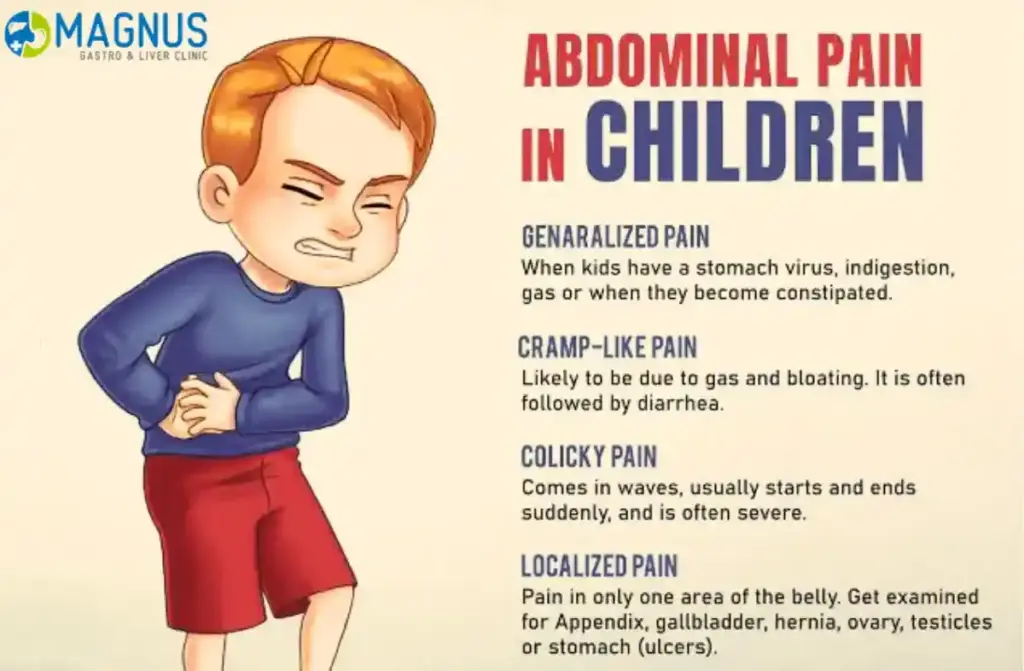
Common Symptoms That May Occur With Stomach Pain
Stomach pain can occur alone or together with other symptoms.
Parents should look for:
- Fever
- Vomiting
- Diarrhoea
- Constipation
- Bloating
- Nausea
- Reduced appetite
- Tiredness
- Changes in bowel movements
- Pain while urinating
The combination of symptoms can help a healthcare professional determine the possible cause.
What Does the Location of Stomach Pain Mean?
Where a child feels the pain can provide useful clues, although the location alone cannot diagnose the condition.
Pain Around the Belly Button
- A child complaining of stomach pain near the belly button may have something relatively minor, such as gas, constipation or indigestion.
- Pain around the belly button may also occur with functional abdominal pain or during the early stages of appendicitis.
- Watch how the pain changes over time.
- If it becomes stronger, persists or moves towards the lower right side, medical assessment is recommended.
Lower Right-Side Stomach Pain
- Increasing pain in the lower right abdomen can be associated with appendicitis, particularly when accompanied by fever, nausea, vomiting or loss of appetite.
- Do not rely on home remedies when appendicitis is suspected.
Lower Abdominal Pain
- Lower abdominal discomfort may occur with constipation or urinary problems, among other causes.
- Pain accompanied by difficulty urinating, fever or other concerning symptoms should be medically evaluated.
What Can I Do for My Child’s Stomach Pain?
If the stomach pain is mild and your child otherwise appears well, simple supportive care may help.
- Encourage Rest: Allow your child to rest comfortably and avoid strenuous activity until the pain improves.
- Keep Your Child Hydrated: Offer small amounts of water or other appropriate fluids regularly. If vomiting or diarrhoea is present, maintaining hydration becomes particularly important.
- Encourage a Toilet Visit: Constipation can cause abdominal discomfort. Encourage your child to sit on the toilet without forcing or straining. Passing stool may relieve pain when constipation is the cause.
- Offer Food According to Appetite: There is usually no need to force a child to eat when they have mild stomach discomfort. If they are hungry, offer simple foods they normally tolerate and avoid heavy meals until they feel better.
Stomach Pain in Kids Home Remedies
Home care is appropriate only when symptoms are mild and there are no warning signs.
Helpful measures may include:
- Rest
- Regular fluids
- A warm compress over the abdomen
- Gentle meals according to appetite
- Regular toilet habits
- Adequate dietary fibre when constipation is suspected
A warm compress should be comfortably warm rather than hot to avoid burns. Avoid giving unnecessary medicines, antibiotics or laxatives without appropriate medical advice.
What Medicine Can I Give My Child for Stomach Pain?
There is no single medicine that is suitable for every type of stomach pain in children. Treatment depends on the underlying cause.
For example, treatment for constipation will be different from treatment for an infection or appendicitis.
Medication suitability and dosage in children can depend on age, weight, medical history and the cause of the symptoms. Parents should follow advice from their paediatrician, treating doctor or pharmacist rather than repeatedly treating unexplained abdominal pain at home.
Do not give antibiotics unless they have been prescribed for your child.
When Should I Worry About Stomach Pain in My Child?
Most mild stomach aches improve without serious problems. However, certain symptoms need prompt medical attention.
Seek urgent medical care if your child develops:
- Severe or rapidly worsening abdominal pain
- Persistent pain, especially if the child cannot move normally
- Pain concentrated in the lower right abdomen
- Green vomit
- Blood in vomit or stool
- Significant abdominal swelling
- Repeated vomiting
- Signs of severe dehydration
- Unusual sleepiness, weakness or difficulty waking
- Severe pain after an abdominal injury
Parents should also seek medical advice whenever a child appears seriously unwell, even if the exact cause is unclear.
When Should I Take My Child to a Doctor?
Arrange medical evaluation if stomach pain:
- Keeps returning
- Continues for an extended period
- Interferes with school or normal activities
- Regularly wakes the child
- Is associated with persistent vomiting or diarrhoea
- Occurs with unexplained weight loss
- Is associated with poor appetite
- Occurs with ongoing constipation
- Is accompanied by urinary symptoms
- Is becoming progressively worse
Recurring abdominal pain should not simply be treated repeatedly with home remedies without identifying the underlying cause.
How Is Stomach Pain in Children Diagnosed?
Diagnosis usually begins with a detailed medical history and physical examination.
The doctor may ask:
- Where does the pain occur?
- When did it start?
- Is the pain constant or intermittent?
- What makes it better or worse?
- Is there vomiting or diarrhoea?
- When was the child’s last bowel movement?
- Is there fever?
- Does urination cause discomfort?
- Has the child experienced similar episodes before?
Depending on the symptoms, further investigations may be recommended.
These can include blood tests, urine tests, stool tests or imaging studies such as an ultrasound. Not every child with stomach pain needs testing. Investigations are selected according to the child’s symptoms and examination findings.
Treatment for Stomach Pain in Kids
- Treatment depends entirely on the underlying cause.
- Mild digestive discomfort may improve with hydration, rest and dietary adjustments.
- Constipation may require changes in fluid intake, fibre and bowel habits, while infections or other medical conditions may require specific treatment.
- Conditions such as appendicitis require urgent medical assessment and may need surgical treatment.
- The goal is therefore not simply to stop the pain but to understand why the child has abdominal pain when symptoms are significant, persistent or recurrent.
Final Thoughts
Stomach pain in kids is common, and many episodes are related to temporary digestive problems such as gas, constipation or infections. The key is to look at the severity, location, duration and accompanying symptoms rather than the stomach pain alone.
Mild symptoms may improve with rest, hydration and supportive home care. However, severe, worsening, persistent or recurring abdominal pain deserves medical evaluation.
Early assessment is particularly important when stomach pain occurs with repeated vomiting, fever, blood in the stool or vomit, dehydration, significant abdominal swelling or pain that moves towards the lower right side.
Read more: Signs of Liver Failure