Medically reviewed by Dr. Magnus Jayaraj Mansard, Specialist in Liver Transplantation, HPB Surgery and Surgical Gastroenterology. Last medically reviewed on September 2026
Liver fibrosis is a condition where scar tissue gradually builds up in the liver due to repeated or long-term damage. It can be caused by fatty liver disease, long-term alcohol use, hepatitis B or C, and other chronic liver conditions.
In the early stages, liver fibrosis may not cause noticeable symptoms, which means many people may not know they have it. However, detecting the condition early is important because timely treatment can help prevent further liver damage and reduce the risk of progression to cirrhosis.
Liver fibrosis treatment focuses on identifying and treating the underlying cause, protecting healthy liver tissue, and preventing further scarring. In some people, early-stage fibrosis may also improve when the cause of liver damage is effectively controlled.
What Is Liver Fibrosis?
The liver has a natural ability to repair itself. However, when the liver is damaged again and again, scar tissue can slowly build up. This condition is called liver fibrosis.
In the early stages, the liver can usually continue to work normally. But if the damage continues for many years, more scar tissue may develop. Severe liver fibrosis can eventually lead to cirrhosis, which is an advanced stage of liver scarring.
What Causes Liver Fibrosis?
There are many possible causes of liver fibrosis.
The most common include:
- Fatty liver disease
- Long-term alcohol use
- Hepatitis B
- Hepatitis C
- Obesity
- Diabetes
- High cholesterol
- Autoimmune liver diseases
- Certain inherited liver conditions
- Some medicines that can damage the liver
Finding the exact cause is an important part of liver fibrosis treatment. For example, treatment for fatty liver-related fibrosis will be different from treatment for fibrosis caused by hepatitis.
What Are the Symptoms of Liver Fibrosis?
Early liver fibrosis often does not cause any symptoms. Many people discover it only after having a blood test, ultrasound, or FibroScan for another health problem. As liver damage becomes more serious, some people may experience:
- Tiredness
- Poor appetite
- Unexplained weight loss
- Stomach discomfort
- Swelling in the legs
- Swelling of the abdomen
- Yellowing of the skin or eyes
- Easy bruising
- Difficulty concentrating
Having these symptoms does not always mean you have liver fibrosis. A proper medical evaluation is needed to find the cause.
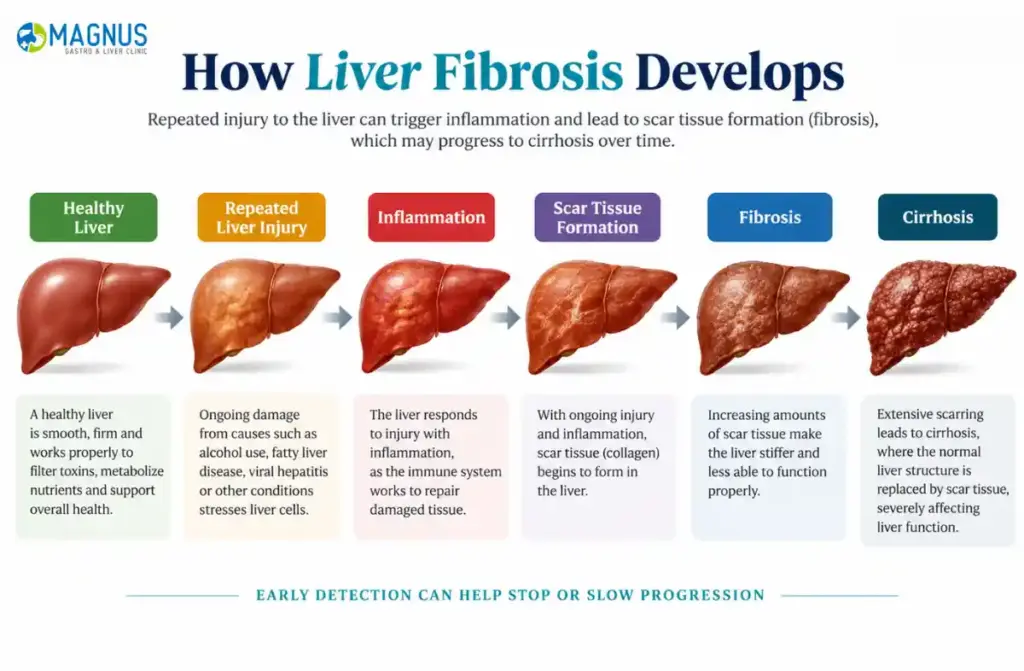
What Are the Stages of Liver Fibrosis?
Liver fibrosis is often divided into stages from F0 to F4.
- F0 – No Fibrosis: At this stage, there is no significant scarring in the liver. However, fatty liver or another underlying liver condition may still be present and should be properly managed to prevent future damage.
- F1 – Mild Fibrosis: A small amount of scar tissue has started to develop in the liver. Early treatment of the underlying cause and healthy lifestyle changes may help prevent fibrosis from progressing.
- F2 – Moderate Fibrosis: At F2, moderate liver scarring is present and requires closer attention. Proper treatment and regular monitoring are important to reduce the risk of further liver damage.
- F3 – Advanced Fibrosis: F3 means significant liver scarring has developed, but it has not yet reached cirrhosis. Specialist care and regular monitoring are important because the risk of progressing to cirrhosis is higher.
- F4 – Cirrhosis: F4 is the most advanced stage of liver fibrosis, where extensive scarring changes the normal structure of the liver. Patients need ongoing specialist care to manage the condition and monitor for possible complications.
Can Liver Fibrosis Be Reversed?
This is one of the most common questions patients ask. Early liver fibrosis may improve in some people when the cause of liver damage is properly treated. For example, improvement may be possible when a person:
- Loses excess weight
- Controls diabetes
- Manages high cholesterol
- Stops drinking alcohol
- Gets proper treatment for hepatitis
- Maintains a healthier diet
- Exercises regularly
- Treats the condition causing liver inflammation
However, recovery is different for every person. It depends on the cause of liver damage, stage of fibrosis, overall health, and response to treatment. Advanced fibrosis and cirrhosis usually need closer medical monitoring.
How Is Liver Fibrosis Diagnosed?
Doctors may use several tests to understand how healthy your liver is and how much scarring may be present.
- Blood Tests: Blood tests check liver enzymes and other important markers to understand how well the liver is working. They can also help identify possible causes of liver damage and guide further testing.
- FIB-4 Score: The FIB-4 score uses age and certain blood test results to estimate the risk of liver fibrosis. It helps doctors decide whether additional tests, such as a FibroScan, may be needed.
- FibroScan: A FibroScan is a quick, painless, and non-invasive test that measures liver stiffness. Higher liver stiffness may suggest more fibrosis and help doctors assess the severity of liver scarring.
- Ultrasound or Other Scans: An ultrasound, CT scan, or MRI may be used to examine the liver and look for changes linked to liver disease. These scans can also help identify signs of advanced liver damage or other complications.
- Liver Biopsy: A liver biopsy involves taking a small sample of liver tissue for detailed examination. It may be recommended when other tests cannot clearly determine the cause or severity of liver disease.
What Is the Treatment for Liver Fibrosis?
There is no single liver fibrosis treatment that works for everyone. Treatment depends mainly on what is causing the liver damage.
The main goals are to:
- Stop or reduce further liver injury
- Treat the underlying liver condition
- Prevent fibrosis from becoming worse
- Protect remaining healthy liver tissue
- Reduce the risk of cirrhosis
- Monitor liver health regularly
Treatment for Fatty Liver-Related Fibrosis
Fatty liver disease is a common cause of liver fibrosis. People who are overweight or have diabetes, high cholesterol, or other metabolic problems may have a higher risk.
Treatment may include:
- Healthy and gradual weight loss
- Regular physical activity
- Better diabetes control
- Managing cholesterol
- Controlling blood pressure
- Eating a balanced diet
Even small, consistent lifestyle changes can support better liver health.
Treatment for Alcohol-Related Liver Fibrosis
- If alcohol is causing liver damage, stopping alcohol is very important.
- Continuing to drink alcohol can cause further liver damage and may increase the risk of cirrhosis. People who find it difficult to stop drinking should speak with a healthcare professional for appropriate support.
Treatment for Hepatitis-Related Liver Fibrosis
- Hepatitis B and hepatitis C can cause long-term inflammation and liver damage. Treatment depends on the type of hepatitis.
- Modern antiviral treatments can control or treat these infections in many patients and help reduce ongoing liver damage. Regular follow-up may still be needed to monitor liver health.
What Should You Eat If You Have Liver Fibrosis?
There is no special food that can remove liver scarring overnight. Instead, focus on an overall healthy eating pattern.
Good choices may include:
- Fresh vegetables
- Fruits
- Whole grains
- Beans and lentils
- Nuts
- Fish
- Lean protein
- Healthy fats
Try to limit:
- Sugary drinks
- Sweets
- Deep-fried foods
- Highly processed foods
- Foods high in saturated fat
- Excess salt
Patients with advanced liver disease may need a more specific diet based on their condition.
Is Exercise Good for Liver Fibrosis?
Regular exercise can support liver and overall health. It is especially useful for people who have fatty liver disease, obesity, diabetes, or other metabolic problems.
Activities may include:
- Walking
- Cycling
- Swimming
- Light strength training
- Other exercises suitable for your health and fitness level
You do not need to start with intense workouts. Regular and sustainable physical activity is usually more useful than exercising heavily for a few days and then stopping.
Is There Medicine for Liver Fibrosis?
There is no single medicine that is suitable for every person with liver fibrosis. Your doctor may instead prescribe medicines to treat the condition causing the liver damage.
This may include treatment for:
- Hepatitis
- Diabetes
- High cholesterol
- Metabolic liver disease
- Autoimmune liver disease
- Other chronic liver conditions
Avoid taking herbal medicines, supplements, or products advertised as a “liver detox” without speaking with your doctor. Some supplements can cause liver damage.
How Long Does Liver Fibrosis Take to Improve?
Liver fibrosis usually does not improve within a few days or weeks. Changes can take time.
How quickly the liver improves depends on:
- Stage of fibrosis
- Cause of liver damage
- Body weight
- Diabetes control
- Alcohol use
- Overall health
- Response to treatment
Your doctor may repeat blood tests, FibroScan, or other investigations to monitor your liver over time.
What Happens If Liver Fibrosis Is Not Treated?
If the condition causing liver damage continues, fibrosis may gradually become worse. It can progress from mild fibrosis to advanced fibrosis and eventually cirrhosis.
Advanced liver disease can lead to complications such as:
- Fluid buildup in the abdomen
- Internal bleeding
- Confusion
- Liver failure
- Increased risk of liver cancer
Treating the cause early can help reduce the risk of these complications.
When Should You See a Liver Specialist?
You should consider a liver evaluation if you have:
- Fatty liver disease
- Abnormal liver blood tests
- Hepatitis B or hepatitis C
- Diabetes with fatty liver
- A history of heavy alcohol use
- Abnormal FibroScan results
- F2 or F3 liver fibrosis
- Suspected cirrhosis
- Yellow skin or eyes
- Swelling of the abdomen or legs
You may need evaluation even if you feel completely healthy because early liver fibrosis may not cause symptoms.
Liver Fibrosis Treatment in Chennai
If liver fibrosis is suspected, the first step is to understand what is causing the liver damage and how advanced the scarring is. Evaluation may include blood tests, FibroScan, ultrasound, other imaging tests, and additional investigations when required.
Based on the results, treatment may focus on fatty liver disease, hepatitis, alcohol-related liver disease, metabolic problems, or another underlying condition. Patients with advanced fibrosis or cirrhosis may need closer monitoring to reduce the risk of serious liver complications.
Key Takeaway
Liver fibrosis is the gradual buildup of scar tissue in the liver, but early diagnosis and proper treatment can help prevent further damage. In some cases, early-stage fibrosis may improve when the underlying cause is effectively managed.
If you have fatty liver disease, hepatitis, abnormal liver blood tests, or an abnormal FibroScan result, a proper liver evaluation can help determine the stage of fibrosis and the most suitable treatment plan. Regular monitoring and timely care are important for protecting long-term liver health.
Read more: Fatty liver diet plan