Medically reviewed by Dr. Magnus Jayaraj Mansard, Specialist in Liver Transplantation, HPB Surgery and Surgical Gastroenterology. Last medically reviewed on September 2026.
Indigestion can leave you feeling unusually full, bloated, nauseous or uncomfortable after eating. You may also notice burning or pain in the upper abdomen, frequent burping or feeling full after eating only a small amount of food.
If you are searching for how to cure indigestion fast, the first thing to know is that there is no single instant cure that works for everyone. Indigestion, also called dyspepsia, is a group of digestive symptoms rather than one specific disease.
For mild, occasional indigestion, reducing the load on your stomach, avoiding foods that worsen your symptoms and eating smaller meals may help. But repeated or severe indigestion needs a different approach because the underlying cause may need treatment.
What Is Indigestion?
Indigestion, medically known as dyspepsia, refers to discomfort involving the upper digestive system.
Typical symptoms include:
- Upper abdominal pain or discomfort
- Burning in the upper abdomen
- Feeling full unusually quickly
- Uncomfortable fullness after eating
- Bloating
- Nausea
- Frequent belching
Heartburn can occur at the same time, but heartburn and indigestion are not the same condition. Heartburn usually refers to a burning sensation associated with acid reflux, whereas dyspepsia describes a broader group of upper abdominal symptoms.
How to Cure Indigestion Fast?
When indigestion is mild and has occurred only occasionally, start by reducing anything that may be irritating or overloading your digestive system.
1. Stop Eating for a While If You Already Feel Overfull
If your symptoms started after a large meal, continuing to eat can make fullness and discomfort worse.
Give your stomach time to settle rather than immediately having another heavy meal or snack. When you feel ready to eat again, choose a smaller portion and eat slowly.
2. Eat Smaller Meals
Large meals can make post-meal fullness and upper abdominal discomfort more noticeable. Instead of eating a very large meal at once, try smaller portions. Eat slowly and notice whether you begin feeling full earlier than usual.
If early fullness happens repeatedly even when you eat small amounts, it deserves medical attention rather than simply reducing your food intake indefinitely.
3. Identify and Avoid Your Personal Trigger Foods
There isn’t one universal “indigestion diet.” Different foods trigger symptoms in different people. However, some people notice more discomfort after:
- Fatty or greasy foods
- Fizzy drinks
- Coffee or other caffeinated drinks
- Certain fruit juices
- Large or heavy meals
Rather than unnecessarily eliminating many foods, pay attention to what consistently triggers your own symptoms. A simple food-and-symptom diary can be useful if indigestion keeps returning.
4. Avoid Lying Down Immediately After a Heavy Meal
If your indigestion occurs together with acid reflux or heartburn, lying flat soon after eating may make the burning or regurgitation more noticeable.
Stay upright after eating and avoid making large late-night meals a regular habit.
5. Consider Whether Stress Is Contributing
The digestive system and brain communicate closely.
This becomes particularly important in functional dyspepsia, where persistent digestive symptoms can occur even when doctors do not find a structural disease that completely explains them.
Stress, anxiety and other gut-brain factors may influence symptoms in some people. Regular sleep, relaxation techniques, physical activity and stress management can therefore be part of long-term symptom management.
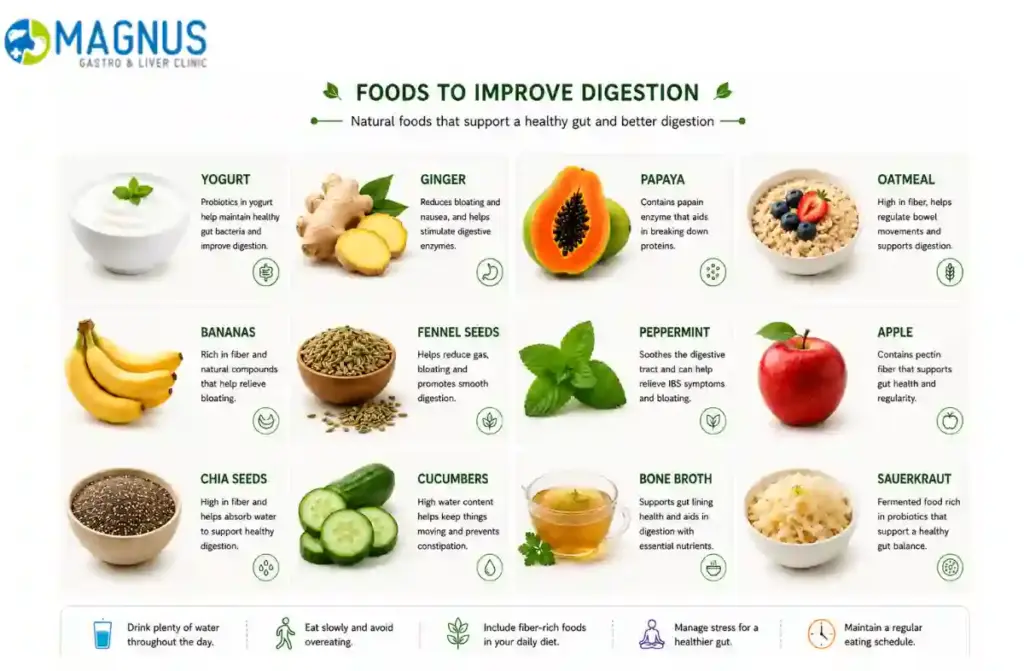
What Can I Eat When I Have Indigestion?
You do not necessarily need to follow an extremely restrictive diet because you have indigestion. During an episode, choose foods and portion sizes that you personally tolerate well. The more important strategy is to avoid repeatedly eating foods that clearly trigger your symptoms.
For example, if a large fried meal repeatedly causes upper abdominal heaviness and bloating, reducing the portion or choosing a lower-fat alternative may be more useful than searching for a food that “cures” indigestion afterward.
A balanced diet should still provide adequate nutrition. If many different foods appear to trigger symptoms, speak with a doctor or dietitian before making major dietary restrictions.
Do Home Remedies Cure Indigestion?
Home remedies are commonly searched for indigestion, but they should not be confused with treatment for an underlying digestive condition.
Some people report symptom relief from ginger or certain herbal preparations. Peppermint may also be used for digestive symptoms, but it may not suit everyone, particularly people whose symptoms include reflux or heartburn.
Be careful with popular remedies such as highly acidic drinks, concentrated herbal preparations or apple cider vinegar. “Natural” does not automatically mean effective or appropriate for every digestive problem. If symptoms continue returning, finding the cause is more useful than repeatedly trying different home remedies.
Can Medicine Give Faster Relief From Indigestion?
Sometimes. The right medicine depends on why the indigestion is happening.
Doctors may use acid-reducing medicines such as proton pump inhibitors (PPIs) or H2 blockers in appropriate patients. Other treatments may be considered when symptoms are associated with nausea, altered stomach emptying or functional dyspepsia.
However, medication should not become a way of repeatedly masking unexplained symptoms. If you frequently need over-the-counter medicines to control indigestion, discuss the pattern with a healthcare professional.
Why Does My Indigestion Keep Coming Back?
This is an important question because recurring indigestion should not automatically be blamed on “poor digestion.”
Possible causes or associated conditions include:
Functional Dyspepsia
- Functional dyspepsia is a disorder of gut-brain interaction and is a common explanation for chronic dyspepsia.
- People may experience upper abdominal pain, burning, early fullness or uncomfortable fullness after meals even when routine investigations do not reveal another clear structural cause.
H. pylori Infection
- Helicobacter pylori (H. pylori) is a bacterium that can infect the stomach and is associated with conditions such as gastritis and peptic ulcers.
- Testing for H. pylori may therefore be considered in people with persistent dyspepsia, depending on their clinical situation.
- If an infection is confirmed, specific medical treatment may be required.
Gastritis or Peptic Ulcer
- Inflammation or ulceration in the stomach or duodenum can produce symptoms that people describe simply as indigestion.
- This is another reason persistent symptoms should not be managed indefinitely with home remedies.
Medicines
- Sometimes the problem is not your food.
- Certain medicines can contribute to indigestion, including some non-steroidal anti-inflammatory drugs (NSAIDs), antibiotics, iron supplements and other medications.
- Do not stop prescribed medicine by yourself. Instead, tell your doctor what medicines and supplements you are taking.
Other Digestive Conditions
- Symptoms described as “indigestion” can sometimes overlap with other gastrointestinal problems.
- The location of your pain, relationship with meals, vomiting, bowel changes, weight changes and other symptoms can help a doctor determine whether another condition needs investigation.
Indigestion vs Acid Reflux: What Is the Difference?
These conditions are often confused.
Indigestion commonly involves:
- Upper abdominal discomfort
- Early fullness
- Post-meal fullness
- Bloating
- Nausea
- Belching
Acid reflux more commonly causes:
- Burning behind the breastbone
- Sour or bitter fluid reaching the throat or mouth
- Symptoms that may worsen after meals or when lying down
You can have both at the same time, but treating them as identical conditions may lead to the wrong self-care approach.
When Should You See a Doctor for Indigestion?
Occasional mild indigestion is common. Repeated, worsening or unexplained symptoms deserve medical evaluation. Seek medical care promptly if indigestion occurs with:
- Difficulty or pain while swallowing
- Frequent or persistent vomiting
- Vomiting blood
- Black or tar-like stools
- Unexplained weight loss
- Loss of appetite
- Severe or constant abdominal pain
- Persistent abdominal swelling
- Yellowing of the skin or eyes
- Shortness of breath
Chest discomfort should be taken particularly seriously. Pain involving the chest, jaw, neck or arm can sometimes indicate a problem unrelated to digestion and requires urgent medical assessment.
How Is Persistent Indigestion Diagnosed?
There is no single test required for every patient.
A doctor usually starts by understanding:
- Where the discomfort occurs
- Whether it happens before or after meals
- How long symptoms have been present
- Whether you feel full unusually quickly
- Medicines you currently take
- Weight or appetite changes
- Vomiting or swallowing problems
- Evidence of gastrointestinal bleeding
Depending on the findings, further investigation may include H. pylori testing, blood tests, imaging or an upper GI endoscopy.
An upper GI endoscopy allows a doctor to examine the oesophagus, stomach and first part of the small intestine and can help identify conditions such as gastritis, ulcers and other upper gastrointestinal abnormalities. Not everyone with indigestion automatically requires an endoscopy. The decision depends on the patient’s age, symptoms, medical history and risk factors.
Can Indigestion Be Prevented?
If your indigestion is associated with eating habits, prevention often works better than repeatedly searching for a quick cure.
Try to:
- Avoid regularly overeating
- Eat more slowly
- Recognise foods that consistently trigger symptoms
- Reduce very fatty meals if they worsen symptoms
- Avoid excessive fizzy or caffeinated drinks if they are triggers
- Maintain regular physical activity
- Manage stress and sleep adequately
- Avoid smoking
- Discuss recurring symptoms rather than continuously self-medicating
Most importantly, learn your symptom pattern. If indigestion happens once after an unusually heavy meal and settles, it is different from experiencing upper abdominal discomfort several times every week.
Can Indigestion Be Completely Cured?
That depends on the cause.
An occasional episode triggered by a particular meal may settle without specific medical treatment. If symptoms are caused by an identifiable condition such as H. pylori infection or a peptic ulcer, treating that condition may substantially improve the indigestion.
Functional dyspepsia may require longer-term symptom management rather than a single quick cure. Therefore, the better question for repeated symptoms is not simply “How do I cure indigestion fast?”
It is:
“Why does my indigestion keep happening?”
Finding that answer can prevent repeated symptoms and unnecessary self-treatment.
When to Consult a Gastrointestinal Specialist
Consider specialist evaluation if your indigestion keeps returning, does not improve with appropriate initial measures, interferes with eating or daily activities, or occurs with warning symptoms.
A gastrointestinal specialist can distinguish routine dyspepsia from symptoms that may require further investigation.
Dr. Magnus Jayaraj Mansard is a Surgical Gastroenterologist with experience in gastrointestinal and hepato-pancreato-biliary conditions. Patients with persistent or complex digestive symptoms can be evaluated to determine whether further investigation or specialist management is appropriate.
Final Takeaway
If you want to know how to cure indigestion fast, start by recognising that indigestion is a symptom pattern rather than a single disease.
Mild, occasional symptoms may improve by eating smaller meals and avoiding individual food triggers. But when indigestion keeps returning, simply trying another home remedy may delay the real answer.
Persistent indigestion can be associated with functional dyspepsia, H. pylori infection, peptic ulcers, medication effects and other digestive conditions.
Quick relief matters, but identifying why the symptoms keep happening matters more.
Read more: Signs of Liver Failure