Medically reviewed by Dr. Magnus Jayaraj Mansard, Specialist in Liver Transplantation, HPB Surgery and Surgical Gastroenterology. Last medically reviewed on September 2026
A fatty liver diagnosis often leads to one immediate question: What should I eat to reduce liver fat?
There is no single food, juice or “liver detox” that removes fat from the liver. A fatty liver diet should instead focus on improving overall metabolic health through vegetables, whole grains, adequate protein, healthy fats, portion control and fewer foods high in added sugar and refined carbohydrates.
For people who are overweight, gradual weight loss can also play an important role in reducing liver fat. The right diet, regular physical activity and management of conditions such as diabetes, high cholesterol and obesity can help improve fatty liver disease.
This guide explains what to eat for fatty liver, what foods to limit, how to build a liver-friendly plate and a practical 7-day Indian fatty liver diet plan.
What Is Fatty Liver Disease?
Fatty liver disease occurs when excess fat builds up inside liver cells.
The term MASLD (Metabolic Dysfunction-Associated Steatotic Liver Disease) is now commonly used for fatty liver associated with metabolic risk factors such as excess weight, type 2 diabetes, abnormal cholesterol or insulin resistance. Many people may still recognise the older term NAFLD (Non-Alcoholic Fatty Liver Disease).
Some people develop inflammation and liver-cell injury along with excess liver fat. This is known as MASH (Metabolic Dysfunction-Associated Steatohepatitis), previously called NASH.
Fatty liver often causes few or no symptoms in its early stages. However, persistent inflammation in some people can lead to liver fibrosis, cirrhosis and other complications.
Can Diet Reduce Fatty Liver?
Diet can be an important part of fatty liver management, particularly when it helps improve body weight, blood sugar, cholesterol and insulin sensitivity.
If you are overweight or have obesity, even modest gradual weight loss may reduce the amount of fat stored in your liver. Greater sustained weight reduction may be required in some patients to improve liver inflammation and fibrosis.
The goal should not be crash dieting.
Rapid weight loss, extreme fasting and highly restrictive diets are not appropriate approaches for everyone. Instead, aim for eating habits that you can realistically continue for months and years.
What Is the Best Diet for Fatty Liver?
There is no single compulsory “fatty liver diet.”
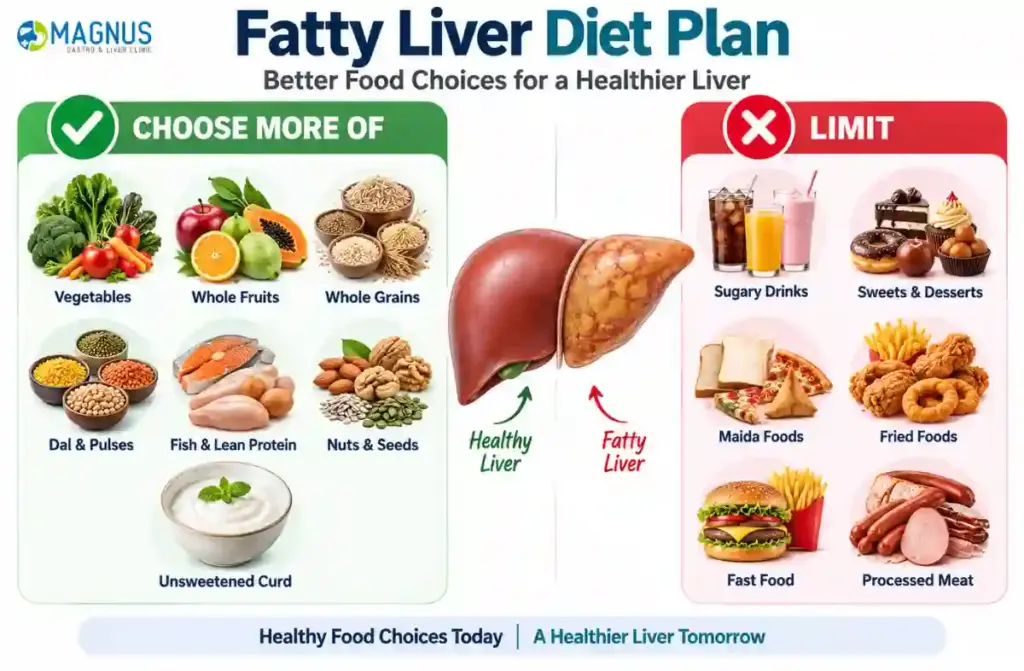
A balanced eating pattern similar to a Mediterranean-style diet can be useful because it emphasises:
- Plenty of vegetables
- Whole fruits
- Whole grains
- Beans, lentils and legumes
- Fish and other lean protein sources
- Nuts and seeds in controlled portions
- Unsaturated fats
- Limited added sugar
- Limited highly processed foods
- Fewer refined carbohydrates
For an Indian diet, you do not have to replace your normal food completely. The same principles can be applied using familiar foods such as vegetables, dal, pulses, millets, oats, whole-wheat chapati, curd, eggs and fish.
The Fatty Liver Plate Method
An easy way to plan your meals is to divide your plate into three sections.
½ Plate: Non-Starchy Vegetables
Choose vegetables such as:
- Spinach, beans, carrot, cabbage, cauliflower, broccoli, cucumber, tomato, brinjal, bottle gourd, ridge gourd, bitter gourd, okra and other seasonal vegetables.
- Vegetables provide fibre while helping increase meal volume without adding large amounts of calories.
¼ Plate: Protein
Include a suitable protein source such as:
- Dal
- Chickpeas
- Rajma
- Green gram
- Eggs
- Fish
- Skinless chicken
- Tofu
- Paneer in appropriate portions
- Unsweetened curd
Protein helps maintain muscle and can improve fullness after meals.
¼ Plate: Whole-Grain or High-Fibre Carbohydrate
Options can include:
- Brown rice
- Hand-pounded rice
- Millets
- Oats
- Whole-wheat chapati
- Quinoa
- Other minimally processed whole grains
You do not necessarily have to completely stop eating rice. Portion size and the overall quality of the meal matter.
Best Foods for Fatty Liver
1. Vegetables
- Vegetables should form a major part of a fatty liver diet.
- Include different types and colours across the week rather than relying on one particular “liver-friendly” vegetable.
- Good options include leafy greens, beans, cabbage, cauliflower, broccoli, gourds, carrots, tomatoes and cucumber.
2. Whole Fruits
Whole fruits provide fibre, vitamins and other nutrients.
Suitable options include:
- Apple
- Guava
- Orange
- Papaya
- Pear
- Pomegranate
- Berries when available
Choose whole fruit rather than fruit juice because juice removes or reduces much of the fibre and makes it easier to consume a larger amount of sugar quickly.
Fruit portions may need individual adjustment for people with diabetes.
3. Whole Grains
Replacing some refined carbohydrates with less-processed, higher-fibre options can improve the overall quality of your diet.
Try:
- Oats
- Millets
- Brown rice
- Whole wheat
- Quinoa
You do not need to eat expensive “superfoods.” Locally available whole grains can work perfectly well.
4. Dal, Pulses and Legumes
- Dal, chickpeas, rajma, green gram and other pulses provide plant protein and fibre.
- They can be especially useful in vegetarian fatty liver diets.
- Cooking methods still matter. Try to avoid turning otherwise healthy foods into meals containing excessive oil, butter or cream.
5. Fish and Lean Protein
- Fish, eggs and skinless chicken can provide high-quality protein.
- For people who eat fish, oily fish also provides omega-3 fatty acids.
- Choose grilled, steamed, baked or lightly cooked options more often than deep-fried versions.
6. Nuts and Seeds
- Almonds, walnuts, flaxseeds and chia seeds contain unsaturated fats and other nutrients.
- However, nuts are calorie-dense, so portion control is important, particularly when weight loss is part of your treatment plan.
7. Unsweetened Curd
- Plain curd can provide protein and may be included as part of a balanced meal if it suits your health and dietary requirements.
- Avoid versions containing large amounts of added sugar.
8. Coffee
- Research has associated coffee consumption with some liver-health benefits.
- If you already drink coffee and your doctor has not advised against it, coffee with little or no added sugar may fit into a healthy diet.
- This does not mean coffee is a treatment or cure for fatty liver.
Foods to Limit With Fatty Liver
Improving fatty liver is not only about adding healthy foods. Reducing foods that provide large amounts of added sugar, refined carbohydrates and excess calories is equally important.
Sugary Drinks
Try to avoid or significantly reduce:
- Soft drinks
- Sweetened packaged juices
- Energy drinks
- Sweetened tea and coffee
- Milkshakes
- Sugar-heavy beverages
Liquid calories are easy to consume without making you feel full.
Water should be your main drink.
Sweets and Desserts
Limit frequent consumption of:
- Cakes
- Biscuits
- Pastries
- Mithai
- Chocolates
- Ice cream
- Sugary breakfast cereals
These foods can contain substantial amounts of added sugar and calories.
Refined Carbohydrates
Reduce frequent large portions of:
- Maida products
- White bread
- Bakery foods
- Refined breakfast cereals
- Highly processed snacks
Instead of simply removing carbohydrates, focus on better carbohydrate quality and sensible portions.
Fried and Fast Foods
Limit foods such as:
- Chips
- French fries
- Fried chicken
- Pakoda
- Samosa
- Poori
- Frequently consumed fast food
Occasional consumption is different from making these foods a regular part of your diet.
Processed Meat
- Processed meats can be high in sodium, saturated fat and calories.
- Choose fresh lean protein sources more frequently.
Alcohol
- Alcohol deserves special attention in anyone with liver disease.
- The appropriate recommendation depends on the cause and severity of your liver condition. If you have fatty liver, fibrosis, cirrhosis or another liver problem, discuss alcohol consumption directly with your liver specialist rather than assuming that a particular amount is safe.
Healthy Food Swaps for Fatty Liver
| Instead of | Try |
| Sugary soft drink | Water or unsweetened beverage |
| Fruit juice | Whole fruit |
| White bread | Whole-wheat bread |
| Large white-rice portion | Smaller portion with more vegetables and protein |
| Fried snacks | Roasted chana or a controlled portion of nuts |
| Sweetened cereal | Oats |
| Deep-fried chicken/fish | Grilled or lightly cooked chicken/fish |
| Sweetened flavoured yogurt | Plain unsweetened curd |
| Biscuits with tea | Fruit or a small portion of nuts |
The aim is not perfection. Consistently making better choices matters more than following a restrictive diet for a few days.
7-Day Indian Fatty Liver Diet Plan
The following plan is an example, not an individual medical prescription. Portion sizes should depend on your body weight, activity level, diabetes status and other medical conditions.
| Day | Breakfast | Lunch | Evening Snack | Dinner |
| Day 1 | Vegetable oats + boiled egg | Brown rice + dal + vegetables + curd | Guava + few nuts | 2 chapatis + mixed vegetable curry + salad |
| Day 2 | 2 vegetable dosas + sambar | 2 chapatis + chana + vegetables | Unsweetened curd | Grilled fish + vegetables + small portion of rice |
| Day 3 | Vegetable upma + protein source | Millet + dal + greens + salad | Apple + few almonds | Vegetable soup + paneer/tofu + chapati |
| Day 4 | Oats porridge without added sugar + fruit | Brown rice + sambar + vegetable poriyal + curd | Roasted chana | 2 chapatis + grilled chicken + vegetables |
| Day 5 | 2 idlis + vegetable-rich sambar | Chapati + rajma + salad | Papaya | Millet dosa + vegetables + protein source |
| Day 6 | Vegetable omelette + whole-grain toast | Rice in controlled portion + fish curry + vegetables | Buttermilk without added sugar + nuts | Chapati + dal + vegetable curry |
| Day 7 | Millet upma + vegetables | Chapati + dal + mixed vegetables + curd | Whole fruit | Grilled fish/tofu + salad + vegetables |
Vegetarian and non-vegetarian foods can be exchanged according to preference while maintaining similar nutritional balance.
Can I Eat Rice if I Have Fatty Liver?
- Yes, many people with fatty liver can eat rice. The bigger issue is often how much rice you eat, what type you choose and what you eat with it.
- Instead of a plate dominated by white rice, reduce the portion and add vegetables, dal or another protein source. Brown rice, hand-pounded rice and other less-refined grains can also be considered.
- You do not need to completely eliminate rice unless your doctor or dietitian has advised this for a specific reason.
Can I Eat Fruits With Fatty Liver?
Yes.
Whole fruits can form part of a balanced fatty liver diet. The key distinction is between whole fruit and fruit juice.
Whole fruits provide fibre and usually take longer to consume. Fruit juices can deliver a larger amount of naturally occurring sugar quickly and are easier to overconsume.
There is also no single fruit that “cleans” or “reverses” fatty liver.
Are Eggs Good for Fatty Liver?
Eggs can provide high-quality protein and may be included in a balanced diet for many people with fatty liver.
Your overall diet, calorie intake, cholesterol profile and other medical conditions are more important than focusing on one individual food.
If you have high cholesterol, diabetes or cardiovascular disease, ask your doctor or dietitian about the appropriate intake for you.
Is Coconut Oil Good for Fatty Liver?
Coconut oil should not be considered a treatment for fatty liver.
Because it contains a high proportion of saturated fat, it should not be consumed in excessive amounts with the expectation that it will remove liver fat.
The overall quantity and type of dietary fat matter more than relying on one particular cooking oil.
What About Intermittent Fasting?
Intermittent fasting may help some people reduce calorie intake and body weight, but it is not required to improve fatty liver.
The most effective eating approach is generally one that is nutritionally balanced, medically appropriate and sustainable.
Fasting may not be appropriate for everyone, particularly people taking certain diabetes medications, pregnant women or people with particular medical conditions.
Discuss major dietary changes with your doctor.
Do Liver Detox Drinks Cure Fatty Liver?
- No drink has been proven to “detox” the liver or remove liver fat within a few days.
- Your liver already performs important metabolic and detoxification functions.
- Lemon water, herbal drinks or vegetable juices should not be promoted as cures for fatty liver.
- More importantly, some herbal products and dietary supplements can cause liver injury. Always tell your doctor about supplements or herbal medicines you are taking.
How Much Weight Should You Lose for Fatty Liver?
For people with overweight or obesity, gradual weight reduction is one of the most important lifestyle strategies for fatty liver.
Even a modest reduction in body weight may reduce liver fat. Larger sustained weight loss may provide additional improvement in liver inflammation and fibrosis in appropriate patients.
However, more is not always better and faster is not always safer.
Crash diets and rapid weight-loss programmes can create nutritional problems and may be harmful in some people. Your target should be personalised according to your current weight, metabolic health and liver condition.
Exercise Matters Along With Diet
Diet works best when combined with regular physical activity.
Exercise can improve metabolic health and may provide benefits even when the weighing scale does not change dramatically.
Depending on your fitness and medical condition, activities may include:
- Brisk walking
- Cycling
- Swimming
- Strength training
- Other moderate aerobic activity
A practical target for many adults is around 150 minutes of moderate physical activity per week, combined with muscle-strengthening activity when appropriate.
If you have advanced liver disease, heart disease or another significant medical condition, ask your doctor before starting a new exercise programme.
How Do You Know if Your Fatty Liver Is Improving?
Do not judge liver recovery only by symptoms because fatty liver frequently causes no obvious symptoms.
Your doctor may monitor:
- Body weight and waist circumference
- Liver enzymes
- Blood glucose or HbA1c
- Cholesterol and triglycerides
- Liver ultrasound when appropriate
- Fibrosis assessment
- FibroScan or other liver-stiffness tests when indicated
The type and frequency of monitoring depend on your individual risk.
When Should You Consult a Liver Specialist?
Consider medical evaluation if fatty liver has been detected on an ultrasound or another scan, particularly if you also have:
- Persistently abnormal liver tests
- Diabetes
- Obesity
- High cholesterol or triglycerides
- Evidence of liver fibrosis
- A history of significant alcohol consumption
- Unexplained abdominal swelling
- Yellowing of the skin or eyes
- Unexplained weight loss
- Other chronic liver conditions
A fatty liver diagnosis should not be managed by diet alone without understanding its cause and assessing whether liver inflammation or fibrosis is present.
A Practical Approach to Managing Fatty Liver
A fatty liver diet plan does not need expensive superfoods, detox drinks or extreme restrictions.
Start with realistic changes: increase vegetables and fibre, include adequate protein, control carbohydrate portions, choose whole fruits instead of juices, reduce added sugar and sugary drinks, limit highly processed and fried foods, stay physically active and work toward a healthy weight when appropriate.
Most importantly, treatment should be based on your stage of liver disease and metabolic health, not just an ultrasound report.
If you have been diagnosed with fatty liver, a liver specialist can assess the severity of the condition, look for fibrosis and help determine whether dietary changes alone are sufficient or whether additional medical management is required.
Also Read : Signs of Liver Failure