Medically reviewed by Dr. Magnus Jayaraj Mansard, Specialist in Liver Transplantation, HPB Surgery and Surgical Gastroenterology. Last medically reviewed on September 2026.
Dr. Magnus Jayaraj Mansard is an experienced Liver Transplant Surgeon in Tamil Nadu with 17+ years of surgical experience in liver transplantation, hepatobiliary (HPB) surgery and surgical gastroenterology. He evaluates and treats patients with advanced liver disease, liver failure, cirrhosis and selected liver cancers that may require transplant assessment.
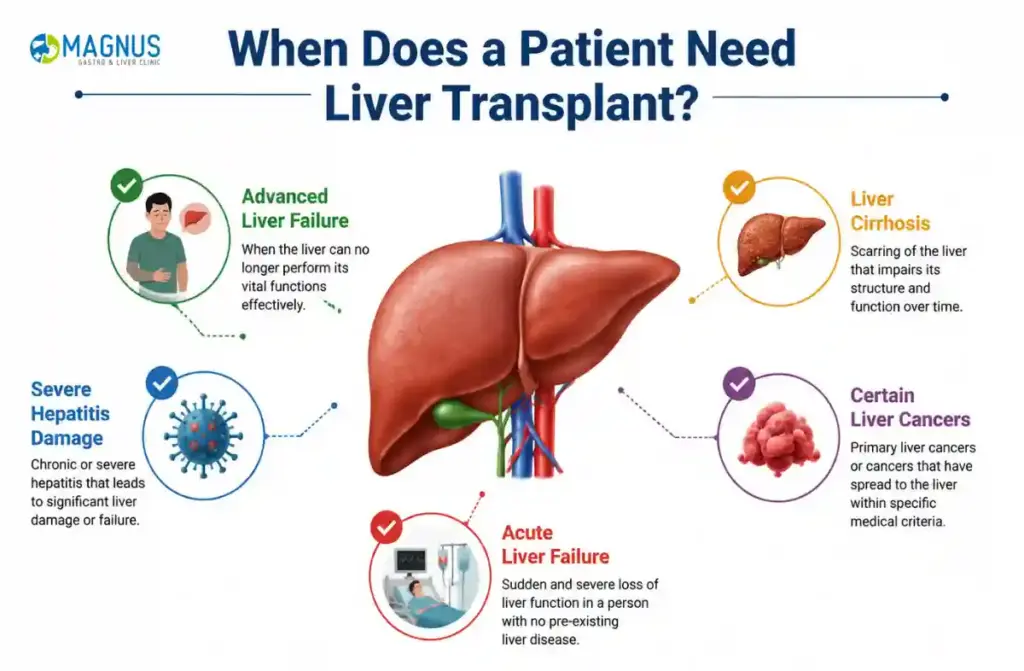
Liver transplantation is considered when the liver is severely damaged and other treatments can no longer adequately support liver function. However, not every patient with liver disease needs a transplant. A detailed assessment is necessary to understand the severity of the disease, possible treatment options and the right timing for transplantation.
Patients from Chennai and other parts of Tamil Nadu can consult Dr. Magnus Jayaraj for liver transplant evaluation, living or deceased donor transplant planning, second opinions and long-term transplant care.
What Is Liver Transplant Surgery?
A liver transplant is a major surgical procedure in which a severely damaged or failing liver is removed and replaced with a healthy donor liver. The liver performs several essential functions, including processing nutrients, producing proteins required for blood clotting, supporting digestion and removing harmful substances from the blood.
When advanced liver disease causes irreversible loss of liver function, medical treatment may no longer be sufficient. In selected patients, transplantation may offer the possibility of restoring liver function and improving long-term health.
Types of Liver Transplant
- Living Donor Liver Transplant: A healthy adult donates a portion of their liver to a patient with liver failure. As the liver can regenerate, both the donor and recipient can regain normal liver function over time after careful evaluation.
- Deceased Donor Liver Transplant: A healthy liver is donated by a person declared brain-dead according to legal and medical guidelines. Patients receive the organ through an authorised transplant waiting list based on clinical priority.
- Split Liver Transplant: In this procedure, one deceased donor liver is divided into two sections, allowing two patients—typically a child and an adult to receive a transplant from the same donor.
- Pediatric Liver Transplant: A pediatric liver transplant is performed for children with severe liver diseases such as biliary atresia, metabolic disorders, or acute liver failure. It requires specialised surgical care and long-term follow-up to support healthy growth and development
Experienced Liver Transplant Surgeon in Tamil Nadu
Dr. Magnus Jayaraj Mansard
Experience: 17+ Years
Qualifications: MBBS (JIPMER), MS (JIPMER), MNAMS (GI Surgery), MRCS (Edin.), FACS, GCSRT (Harvard)
With over 17+ years of surgical experience, Dr. Magnus Jayaraj is an experienced Surgical Gastroenterologist in Chennai specializing in conditions affecting the gastrointestinal tract, liver, pancreas, gallbladder, and bile ducts.
His expertise includes advanced laparoscopic surgery, minimally invasive GI surgery, hepatobiliary (HPB) surgery, and liver transplantation. He manages both common and complex digestive and liver conditions using evidence-based treatment and modern surgical techniques.
Dr. Magnus follows a patient-centred approach, focusing on accurate diagnosis, appropriate treatment planning, surgical safety, and structured follow-up to support effective recovery and long-term health.

Liver Transplant Consultation for Patients Across Tamil Nadu
Patients travelling from other parts of Tamil Nadu can begin with a detailed review of their medical history, blood reports and imaging. Where appropriate, an initial online consultation may help determine whether an in-person transplant assessment is required.
The transplant team then plans recipient testing, donor evaluation, hospital consultation and follow-up visits. Patients should confirm travel, accommodation and expected stay directly with the transplant coordinator because requirements differ for each case.
Signs That Advanced Liver Disease Needs Specialist Evaluation
Liver disease can progress gradually, and some patients may not experience significant symptoms until liver function has substantially declined. Medical evaluation becomes particularly important when symptoms or complications such as the following develop:
- Persistent Jaundice: Yellowing of the eyes and skin can occur when the damaged liver is unable to process bilirubin normally.
- Ascites: Fluid accumulation inside the abdomen may occur in advanced cirrhosis. Recurrent or difficult-to-control ascites can indicate significant liver dysfunction.
- Vomiting Blood or Gastrointestinal Bleeding: Portal hypertension can cause enlarged veins called varices to develop in the food pipe or stomach. These veins can rupture and cause potentially serious bleeding.
- Hepatic Encephalopathy: A severely damaged liver may not adequately remove toxins from the blood. Patients can develop confusion, altered behaviour, excessive sleepiness or difficulty concentrating.
- Severe Weakness and Loss of Muscle Mass: Advanced liver disease can affect nutrition and metabolism, causing fatigue, muscle loss and physical weakness.
- Recurrent Hospitalisation: Repeated admissions for ascites, infection, bleeding, confusion or other liver-related complications may indicate worsening disease.
These symptoms require medical assessment. They do not by themselves confirm that transplantation is required.
Conditions Treated by a Liver Transplant Surgeon
A transplant surgeon works with hepatologists, gastroenterologists, anaesthetists, critical-care specialists, radiologists, infectious-disease doctors, dietitians, physiotherapists, and transplant coordinators. Conditions that may require transplant assessment include:
- Liver cirrhosis: Advanced scarring caused by several forms of chronic liver injury.
- Hepatitis B: Long-standing infection may lead to cirrhosis, liver failure, or liver cancer.
- Hepatitis C: Chronic infection can cause progressive fibrosis and cirrhosis, even though modern antiviral treatment can cure many cases.
- Fatty liver disease: Advanced metabolic liver disease can gradually lead to liver inflammation, scarring (fibrosis), cirrhosis, and, in severe cases, liver failure.
- Alcohol-related liver disease: Severe liver damage may require transplant consideration after detailed medical and psychosocial assessment.
- Autoimmune liver disease: The immune system can attack the liver and cause progressive damage despite treatment.
- Primary biliary cholangitis: Damage to small bile ducts may eventually lead to cirrhosis and liver failure.
- Biliary atresia: A childhood bile-duct disorder that is a major reason for paediatric transplant assessment.
- Wilson’s disease: Copper accumulation can cause chronic liver damage or sudden liver failure.
- Liver cancer: Selected patients with cancers confined within accepted criteria may benefit from transplantation.
- Acute liver failure: Rapid deterioration may require emergency evaluation.
- Metabolic liver diseases: Certain inherited disorders can be treated by replacing the liver that produces or fails to process a specific substance.
A Liver Transplant Specialist determines whether transplantation is appropriate now, may be needed later, or can be avoided through other treatment.
Who Can Be a Liver Donor?
A potential living donor must be an adult who is medically and psychologically suitable and is making an informed, voluntary decision. Being related to the patient does not automatically make someone eligible.
The donor assessment commonly examines:
- Blood-group compatibility: The team checks whether the donor and recipient are compatible under the centre’s transplant protocol.
- Age and body size: The donor must meet legal and medical requirements, and the liver segment must be appropriately sized for both people.
- Overall health: Significant heart, lung, liver, kidney, metabolic, infectious, or cancer-related concerns may prevent donation.
- Psychological readiness: Specialists assess understanding, motivation, family pressure, emotional wellbeing, and ability to cope with recovery.
- Liver function and anatomy: Blood tests and detailed imaging evaluate liver health, fat content, volume, blood vessels, and bile ducts.
- Independent consent: The donor should understand the possible pain, complications, recovery period, financial or work impact, and right to withdraw.
In India, living organ donation is regulated under the Transplantation of Human Organs and Tissues framework. Required forms, relationship verification, medical-fitness certification, and authorisation processes depend on the donor-recipient relationship and circumstances.
Liver Transplant Evaluation Process
Evaluation is not a single test. It is a structured process used to confirm that transplantation is necessary, technically possible, and likely to provide meaningful benefit.
- Medical consultation: The team reviews the diagnosis, previous treatment, hospital admissions, medicines, nutrition, functional status, and complications.
- Blood tests: Tests may assess blood counts, clotting, kidney function, electrolytes, infections, blood group, and other transplant-related markers.
- Imaging scans: Ultrasound, CT, MRI, or specialised vascular and bile-duct imaging helps assess liver anatomy, tumours, blood flow, and surgical feasibility.
- Cardiac and respiratory assessment: ECG, echocardiography, stress testing, lung evaluation, or specialist review may be advised based on age and health.
- Liver function assessment: The team studies laboratory trends, complications, and validated severity measures rather than relying on one report.
- Donor evaluation: For living donation, the donor undergoes a separate, safety-focused work-up by an independent team.
- Surgical planning: Surgeons review graft size, blood vessels, bile ducts, previous abdominal operations, infection risks, and anticipated technical challenges.
The evaluation may also include dental review, cancer screening, vaccination review, nutrition assessment, physiotherapy, psychosocial counselling, financial counselling, and meetings with the transplant coordinator. The purpose is not to “pass” or “fail” a patient; it is to identify risks that can be reduced before surgery.
Liver Transplant Procedure
- Pre-operative Preparation: Before surgery, the transplant team performs detailed evaluations, including blood tests, imaging, donor compatibility, and anaesthesia assessment. Patients are prepared medically to ensure they are in the best possible condition for a safe transplant.
- Surgery: During the procedure, the diseased liver is removed and replaced with a healthy donor liver or liver segment. The surgeon carefully connects the blood vessels and bile duct to restore normal liver function. The operation usually takes several hours.
- ICU Care: After surgery, the patient is closely monitored in the intensive care unit to assess liver function, blood circulation, and overall recovery. Medications, pain management, nutrition, and anti-rejection treatment are started immediately.
- Hospital Stay: Once stable, the patient is shifted to the transplant ward for continued recovery. Walking, proper nutrition, wound care, and medication management help improve healing and reduce the risk of complications.
- Discharge: Patients are discharged when the transplanted liver is functioning well, medications are stable, and they can safely eat, walk, and manage daily activities. Regular follow-up visits are essential to monitor long-term recovery.
Recovery After Liver Transplant
- Recovery begins immediately after surgery. Patients are initially monitored closely in an intensive care setting. The transplant team evaluates liver function, blood circulation, kidney function, bleeding, infection and other important parameters.
- Once the patient’s condition stabilises, recovery continues in the hospital ward. After discharge, patients require regular follow-up appointments and blood tests. Recovery differs from person to person. Age, general health, severity of liver disease before transplantation, surgical complexity and post-operative complications can all influence the recovery timeline.
- Patients should follow their transplant team’s personalised advice rather than comparing recovery with another patient’s experience.
Why Choose Dr. Magnus Jayaraj for Liver Transplant Surgery in Tamil Nadu?
Choosing the right liver transplant surgeon is essential for achieving the best possible outcome. Dr. Magnus Jayaraj is an experienced liver transplant and HPB surgeon known for delivering patient-centred care with advanced surgical expertise. He provides comprehensive support throughout the transplant journey, from evaluation and donor assessment to surgery, recovery, and long-term follow-up.
- Expertise in living donor and deceased donor liver transplantation
- Comprehensive evaluation and personalised treatment planning
- Advanced surgical techniques for complex liver transplant procedures
- Multidisciplinary care with hepatologists, anaesthesiologists, intensivists, and rehabilitation specialists
- Focus on donor safety and recipient well-being
With a commitment to clinical excellence and personalised care, Dr. Magnus Jayaraj strives to provide safe, effective, and comprehensive liver transplant treatment, helping patients achieve improved liver health and a better quality of life.
Tips for a Healthy Life After Liver Transplant
- Eat a balanced diet: Follow the transplant dietitian’s advice on protein, salt, food safety, weight, diabetes, and cholesterol.
- Avoid alcohol: Alcohol can damage the transplanted liver and may interact with medicines or underlying health risks.
- Exercise regularly: Begin with walking and increase activity gradually after medical clearance.
- Attend routine follow-up: Blood tests may identify rejection, infection, medicine toxicity, or bile-duct problems before obvious symptoms develop.
- Take every medicine correctly: Never skip, double, stop, or change immunosuppressants without instructions from the transplant team.
- Prevent infection: Practise hand hygiene, avoid unsafe food and unnecessary exposure to illness, and follow the team’s vaccination guidance.
- Protect overall health: Control blood pressure, diabetes, cholesterol, and body weight, avoid smoking, use sun protection, and complete recommended cancer screening.
Healthy eating, regular activity, medication adherence, and avoidance of alcohol support long-term recovery, but advice must be personalised because medicine interactions and dietary restrictions vary.
Consult a Liver Transplant Surgeon in Tamil Nadu
Advanced liver disease should be assessed at the right time. Delaying evaluation until severe complications develop can make treatment and transplantation more challenging. Dr. Magnus Jayaraj Mansard provides specialist evaluation for patients with cirrhosis, liver failure, complex liver disease and selected liver cancers who may require liver transplantation.
Patients looking for a Liver Transplant Surgeon in Tamil Nadu can consult Dr. Magnus for evaluation of their current liver condition, review of previous reports, transplant suitability assessment, donor-related guidance and second opinions.
The aim of the consultation is not simply to recommend surgery. It is to understand the stage of liver disease, determine whether transplantation is appropriate and help the patient and family understand the safest next step.