Medically reviewed by Dr. Magnus Jayaraj Mansard, Specialist in Liver Transplantation, HPB Surgery and Surgical Gastroenterology. Last medically reviewed on November 2026
Fatty liver disease is a common liver condition in which excess fat accumulates inside liver cells. It is frequently associated with obesity, insulin resistance, type 2 diabetes, high cholesterol and excessive alcohol consumption. One of the most common questions patients ask after diagnosis is: How long does it take to reverse fatty liver?
The recovery period depends on the amount of fat accumulated in the liver, the presence of inflammation or fibrosis, and the individual’s response to lifestyle changes. In many people with early-stage fatty liver, liver fat can improve over several months through weight management, a balanced diet and regular physical activity.
However, advanced liver damage may require longer-term medical management. Understanding the condition, identifying its underlying causes and following an appropriate treatment plan are important for protecting long-term liver health.
What Is Fatty Liver Disease?
Fatty liver disease occurs when excess fat accumulates in the liver. It is broadly associated with two major causes: metabolic risk factors and alcohol consumption.
The terminology has also evolved. Metabolic dysfunction-associated steatotic liver disease (MASLD), previously called non-alcoholic fatty liver disease (NAFLD), describes fatty liver associated with metabolic risk factors.
The main types include:
- Metabolic dysfunction-associated steatotic liver disease (MASLD): Commonly associated with obesity, diabetes, insulin resistance and abnormal cholesterol levels.
- Alcohol-related liver disease (ALD): Develops due to harmful alcohol consumption, which can contribute to fat accumulation and liver inflammation.
Fatty liver may remain uncomplicated in its early stages. However, some individuals develop inflammation, scarring (fibrosis) and eventually cirrhosis. Early diagnosis helps identify people who may be at risk of progression.
How Long Does It Take to Reverse Fatty Liver?
There is no fixed recovery timeline for fatty liver disease. Some people experience a measurable reduction in liver fat within a few months, while others require longer periods of lifestyle modification and medical supervision.
The recovery process depends on the severity of liver disease and whether complications such as inflammation or fibrosis are present.
- Early-stage fatty liver: Liver fat may begin to decrease within a few months when individuals consistently follow appropriate dietary changes, physical activity and weight management.
- Fatty liver with inflammation: Improvement may take longer because treatment needs to address both fat accumulation and liver inflammation.
- Fatty liver with fibrosis: Recovery depends on the extent of scarring. Some fibrosis may improve with sustained treatment of the underlying causes, but advanced fibrosis requires careful medical monitoring.
- Fatty liver with cirrhosis: Established cirrhosis cannot be assumed to reverse completely. Treatment focuses on managing complications, preventing further liver damage and assessing the need for advanced liver care.
The important point is that improvement in liver health is possible, but the timeline differs from one patient to another.
Factors That Affect Fatty Liver Recovery Time
Several factors influence how quickly the liver responds to treatment.
- Stage of Liver Disease: The amount of fat, inflammation and fibrosis present in the liver plays an important role in recovery. Simple fatty liver generally responds better to lifestyle changes than advanced liver disease.
- Body Weight and Insulin Resistance: Excess body weight and insulin resistance can increase fat accumulation in liver cells. Gradual and sustained weight reduction can help improve metabolic health and reduce liver fat.
- Dietary Habits: A diet high in added sugar, refined carbohydrates, processed foods and saturated fats may contribute to metabolic dysfunction. Improving food choices can support liver health.
- Physical Activity: Regular exercise helps improve insulin sensitivity and reduce liver fat, even when significant weight loss is not achieved.
- Alcohol Consumption: Alcohol can contribute to liver injury. People with alcohol-related liver disease should stop drinking and seek medical guidance. Complete abstinence is particularly important for those with alcohol-related liver damage.
How to Reverse Fatty Liver Naturally
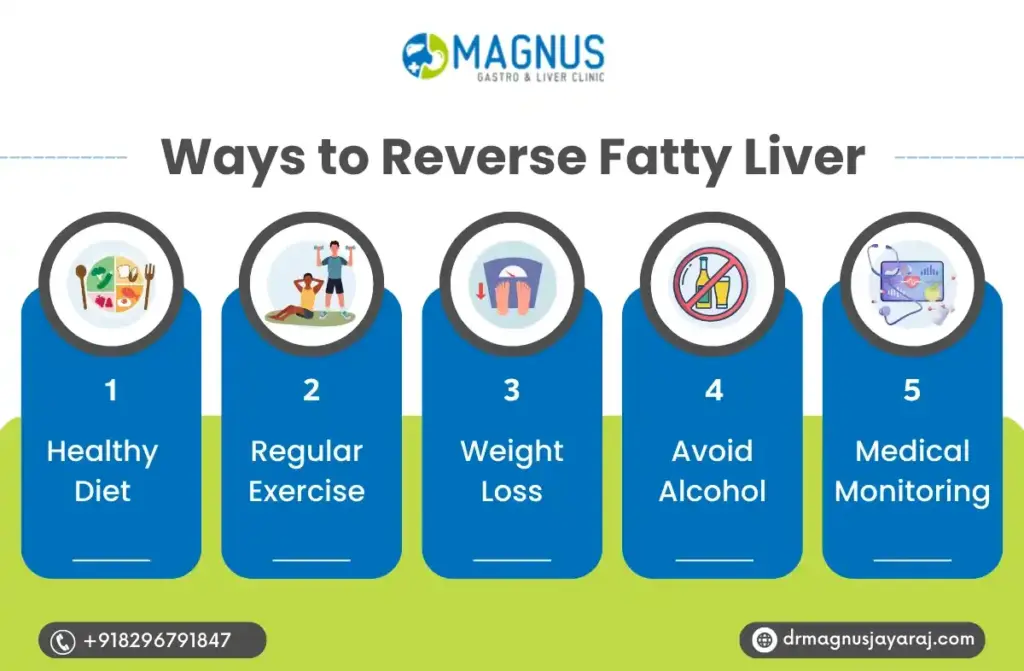
Lifestyle modification is an important part of managing fatty liver disease. The following measures can help improve liver health.
Maintain a Healthy Body Weight
For individuals who are overweight or obese, gradual weight loss can significantly improve fatty liver.
Clinical guidelines indicate that sustained weight loss of approximately:
- 5% can help reduce liver fat.
- 7–10% may improve liver inflammation.
- 10% or more may improve liver fibrosis in some individuals.
These are treatment targets rather than guaranteed outcomes. Weight reduction should be gradual and medically appropriate.
Exercise Regularly
Physical activity helps reduce fat accumulation and improve insulin sensitivity.
Recommended activities include:
- Brisk walking for 30 minutes.
- Cycling or swimming.
- Strength training.
- Regular movement throughout the day.
A practical goal is at least 150 minutes of moderate-intensity physical activity per week, adjusted according to individual fitness and medical conditions.
Control Diabetes and Cholesterol
Uncontrolled blood sugar, high triglycerides and insulin resistance can contribute to fatty liver progression. Managing these conditions through appropriate medical treatment, dietary changes and regular monitoring is an important part of liver care.
Avoid Alcohol
Alcohol can worsen existing liver damage. Individuals with fatty liver should discuss alcohol consumption with their treating doctor, particularly if there is evidence of inflammation or fibrosis.
Avoid Unproven Liver Detox Products
There is no need for special detox drinks, herbal remedies or commercial liver-cleansing supplements to reverse fatty liver. Some supplements can even cause liver injury. Treatment should focus on evidence-based lifestyle changes and medical assessment.
Best Indian Diet for Fatty Liver
A balanced diet can help manage body weight, improve metabolic health and reduce excess fat accumulation in the liver. An appropriate Indian diet can include:
| Food group | Recommended options |
|---|---|
| Whole grains | Oats, brown rice, millets and whole-wheat chapati |
| Vegetables | Spinach, beans, carrots and gourds |
| Fruits | Guava, apple, papaya and oranges |
| Protein | Dal, pulses, eggs, fish and lean chicken |
| Healthy fats | Nuts, seeds and limited amounts of healthy cooking oils |
| Dairy | Unsweetened curd and low-fat milk |
The Mediterranean-style dietary pattern is also recommended in international fatty liver guidelines because it emphasises vegetables, whole grains, healthy fats and minimally processed foods. Dietary requirements should be adjusted for individuals with diabetes, obesity or advanced liver disease.
Foods to Avoid With Fatty Liver
Certain food choices can worsen metabolic health and make weight management difficult.
Try to limit:
- Sugar-sweetened beverages and packaged fruit juices.
- Sweets, cakes and bakery products.
- Deep-fried foods and frequent fast-food meals.
- Refined carbohydrates in excessive quantities.
- Processed meats.
- Foods high in saturated fats.
- Alcohol, particularly in people with alcohol-related liver disease.
Instead of following restrictive diets, focus on balanced meals, portion control and sustainable eating habits.
Can Fatty Liver Progress to Liver Cirrhosis?
Yes. Fatty liver can progress through different stages if the underlying causes remain uncontrolled.
The progression may involve:
- Simple steatosis: Excess fat accumulates in liver cells.
- Steatohepatitis: Fat accumulation is accompanied by inflammation and liver cell injury.
- Fibrosis: Repeated liver injury causes scar tissue formation.
- Cirrhosis: Extensive scarring changes the structure and function of the liver.
Not everyone with fatty liver develops cirrhosis. However, individuals with diabetes, obesity and evidence of liver fibrosis may have a higher risk of progression.
Early evaluation and appropriate management can help reduce the risk of complications.
How Is Fatty Liver Recovery Monitored?
Feeling healthier does not necessarily mean that liver fat or fibrosis has completely resolved. Medical evaluation is important to understand whether treatment is working.
Depending on the individual’s condition, a doctor may recommend:
- Liver function tests: Blood tests that assess liver enzymes and other markers of liver function.
- Ultrasound abdomen: Helps identify fatty changes in the liver.
- Fibrosis assessment: Tests such as FIB-4 and transient elastography (FibroScan) help evaluate the risk of liver scarring.
- Blood sugar and lipid profile: Assess metabolic risk factors associated with fatty liver.
Follow-up investigations should be selected according to the patient’s clinical condition. Liver enzyme levels alone cannot reliably exclude significant fibrosis.
When Should You Consult a Specialist?
Fatty liver often develops without noticeable symptoms, making medical assessment important even when a person feels healthy.
Consider consulting a specialist if you have:
- Fatty liver detected during an ultrasound.
- Persistent elevation of liver enzymes.
- Type 2 diabetes or obesity with suspected fatty liver.
- A history of excessive alcohol consumption.
- Evidence of liver fibrosis.
- Persistent abdominal discomfort or unexplained fatigue.
Yellowing of the eyes, abdominal swelling, vomiting blood or confusion require urgent medical evaluation, as these may indicate serious liver complications.
About Dr. Magnus Jayaraj
Dr. Magnus Jayaraj Mansard is a Surgical Gastroenterologist with expertise in complex gastrointestinal and hepatopancreatobiliary (HPB) surgical procedures. His clinical interests include liver surgery, pancreatic surgery and the evaluation of complex liver conditions.
Patients concerned about fatty liver disease, progressive liver damage or complications may seek specialist assessment to understand their condition and available treatment options.
Conclusion
Reversing fatty liver is a gradual process that depends on the underlying cause, disease stage and consistency of lifestyle changes. Early-stage fatty liver often responds well to sustained weight management, a balanced diet and regular exercise. However, patients with inflammation, fibrosis or cirrhosis may require more detailed evaluation and long-term medical care.
Rather than focusing only on how quickly fatty liver can be reversed, the priority should be identifying the stage of liver disease, addressing metabolic risk factors and protecting long-term liver health.
Medical disclaimer: This content is for general educational purposes and does not replace individual medical advice, diagnosis or treatment. Liver transplant decisions must be made following a detailed assessment by an appropriate transplant team.