Medically reviewed by Dr. Magnus Jayaraj Mansard, Specialist in Liver Transplantation, HPB Surgery and Surgical Gastroenterology. Last medically reviewed on August 2026
Laparoscopic surgery is a minimally invasive approach that allows surgeons to treat various abdominal conditions through small incisions using specialised instruments and a camera. Compared with traditional open surgery, this technique may offer benefits such as smaller scars, less postoperative discomfort and quicker recovery for suitable patients.
Choosing the right surgeon is important for achieving safe and effective treatment. Dr. Magnus Jayaraj, an experienced Surgical Gastroenterologist in Chennai with over 20+ years of experience, specialises in gastrointestinal and advanced abdominal surgical care. He focuses on evaluating each patient’s condition and recommending an appropriate surgical approach based on their needs.
What Is Laparoscopic Surgery?
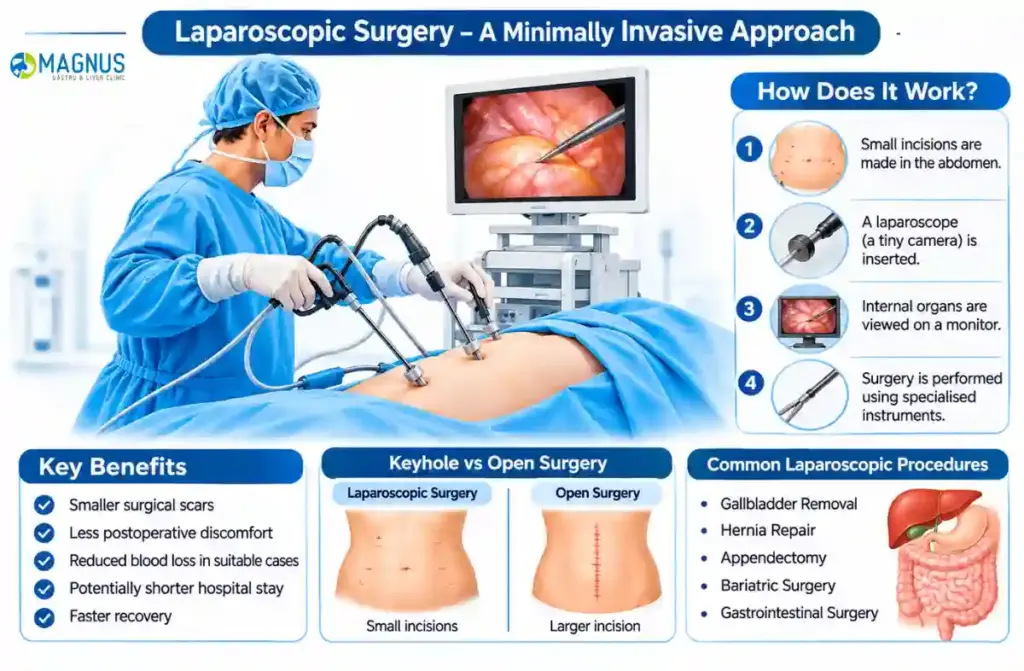
Laparoscopic surgery is a minimally invasive surgical technique used to diagnose and treat conditions affecting the abdomen. Instead of making a large incision, the surgeon creates a few small openings through which a thin camera called a laparoscope and specialised surgical instruments are inserted.
The camera displays magnified images of the internal organs on a monitor, helping the surgeon perform the procedure with precision.
How does laparoscopic surgery work?
- Small incisions: A few small openings are made in the abdominal area.
- Camera insertion: A laparoscope provides clear images of the internal organs.
- Surgical instruments: Specialised instruments are used to perform the required procedure.
- Completion: The instruments are removed, and the incisions are closed.
This approach is commonly used for gallbladder removal, hernia repair, appendicectomy and selected gastrointestinal procedures. However, its suitability depends on the patient’s condition and overall health.
When Is Laparoscopic Surgery Recommended?
Laparoscopic surgery may be recommended when a patient has an abdominal condition that can be safely treated using minimally invasive techniques. The decision depends on the diagnosis, severity of the condition and overall health of the patient.
Some common conditions that may require this approach include:
- Gallbladder Conditions: Gallstones and gallbladder inflammation may require laparoscopic gallbladder removal.
- Hernia: Certain abdominal and groin hernias can be repaired using laparoscopic techniques.
- Appendicitis: Laparoscopic appendicectomy may be recommended to remove an inflamed appendix.
- Gastrointestinal Conditions: Selected stomach and intestinal disorders may require minimally invasive surgical treatment.
- Other Abdominal Conditions: Certain abdominal problems can be managed through laparoscopic procedures based on clinical evaluation.
A detailed consultation and diagnostic assessment help determine whether this surgical approach is appropriate. An experienced surgeon considers the safest and most effective treatment option for each patient.
Common Types of Laparoscopic Procedures
Laparoscopic techniques are used to treat several conditions affecting the abdomen and digestive system. The procedure selected depends on the patient’s diagnosis, medical history and surgical requirements.
- Laparoscopic Gallbladder Surgery: Laparoscopic cholecystectomy is commonly performed to remove the gallbladder in patients with symptomatic gallstones or gallbladder inflammation. Small incisions allow the surgeon to remove the gallbladder using specialised instruments.
- Laparoscopic Hernia Repair: This procedure is used to repair certain types of abdominal and groin hernias. The surgeon uses a camera and surgical instruments to position and secure a mesh to strengthen the weakened abdominal wall.
- Laparoscopic Appendicectomy: Laparoscopic appendicectomy involves removing an inflamed or infected appendix through small abdominal incisions. It is commonly considered for patients diagnosed with appendicitis.
- Laparoscopic Gastrointestinal Surgery: Selected conditions affecting the stomach and intestines can be treated using minimally invasive techniques. These procedures may include certain bowel resections and surgeries for gastrointestinal diseases.
- Other Minimally Invasive Abdominal Procedures: Depending on the condition and clinical findings, laparoscopic techniques may also be used for selected abdominal and digestive system surgeries.
An experienced surgeon evaluates the benefits, risks and suitability of each approach before recommending a procedure.
Benefits of Laparoscopic Surgery
Laparoscopic surgery offers several advantages over traditional open surgery for patients who are suitable candidates. Since the procedure uses smaller incisions and specialised instruments, it can help reduce surgical trauma and support recovery.
Some important benefits include:
- Smaller Incisions: Small surgical openings generally result in smaller scars compared with open surgery.
- Reduced Postoperative Pain: Many patients experience less discomfort after surgery.
- Faster Recovery: Patients may return to their regular activities sooner, depending on the procedure.
- Shorter Hospital Stay: Certain laparoscopic procedures allow patients to leave the hospital earlier.
- Lower Wound Complications: Smaller incisions may reduce the risk of certain wound-related complications.
- Better Cosmetic Results: Smaller scars can provide a better cosmetic outcome.
The benefits vary depending on the patient’s health, the complexity of the procedure and the surgeon’s assessment. Laparoscopic surgery is not suitable for every condition, so proper medical evaluation is essential.
Laparoscopic Surgery vs Open Surgery
Laparoscopic and open surgery are two different approaches used to treat abdominal conditions. Both aim to address the underlying medical problem, but they differ in how the surgeon accesses the affected area.
In laparoscopic surgery, small incisions are used to insert a camera and specialised instruments. Open surgery involves a larger incision that provides direct access to the surgical area.
| Factors | Laparoscopic Surgery | Open Surgery |
| Incisions | Small incisions | Larger incision |
| Surgical approach | Camera and specialised instruments | Direct surgical access |
| Scarring | Usually smaller scars | Usually a larger scar |
| Postoperative pain | Often less discomfort | May involve more discomfort |
| Recovery | Often quicker | May take longer |
| Hospital stay | Often shorter | May be longer |
Which approach is better?
The choice depends on the patient’s condition, previous surgeries, medical history and complexity of the procedure. While laparoscopic surgery offers advantages in many cases, open surgery may be necessary for certain complex conditions or emergencies.
A qualified surgeon evaluates these factors before recommending the most appropriate surgical approach.
Who Is a Suitable Candidate for Laparoscopic Surgery?
Laparoscopic surgery may be suitable for patients who require treatment for certain abdominal or gastrointestinal conditions. However, not everyone is an ideal candidate. The decision depends on the patient’s medical condition, overall health and the complexity of the surgery.
A surgeon may consider the following factors before recommending the procedure:
- Medical Condition: The type and severity of the condition being treated.
- Overall Health: Existing medical conditions that may affect anaesthesia or recovery.
- Previous Surgeries: Earlier abdominal operations that may have caused internal scar tissue.
- Diagnostic Findings: Results from scans, blood tests and other medical investigations.
- Surgical Complexity: Whether the condition can be safely managed using minimally invasive techniques.
Some patients may require open surgery instead, particularly when the condition is complex or laparoscopic access is not considered safe.
A detailed consultation with an experienced surgeon like Dr. Magnus Jayaraj helps identify the appropriate treatment approach based on individual medical needs.
What to Expect Before, During and After Laparoscopic Surgery
Understanding each stage of laparoscopic surgery can help patients feel more prepared and confident about their treatment. The process generally involves three important stages.
Before the Procedure
Before surgery, the surgeon evaluates the patient’s health and confirms the diagnosis. This may include:
- Reviewing medical history and existing health conditions.
- Performing blood tests and imaging investigations.
- Assessing fitness for anaesthesia.
- Explaining the procedure, possible risks and expected recovery.
- Providing instructions about fasting and medications.
During the Procedure
Laparoscopic surgery is usually performed under general anaesthesia. The surgeon makes small incisions and inserts a laparoscope to view the surgical area on a monitor. Specialised instruments are then used to complete the required procedure.
The number of incisions and duration of surgery depend on the condition being treated.
Recovery After Surgery
Recovery varies according to the type and complexity of the operation. Patients are monitored after surgery and receive instructions for proper healing.
Important recovery measures include:
- Following prescribed medications and wound-care instructions.
- Gradually returning to normal physical activities.
- Maintaining a balanced diet as advised.
- Attending scheduled follow-up consultations.
- Reporting unusual pain, fever or wound discharge to the medical team.
Following the surgeon’s advice helps support a smoother recovery and reduces the risk of complications.
How to Choose the Right Laparoscopic Surgeon in Chennai
Choosing an experienced surgeon is an important step when considering minimally invasive treatment. The surgeon’s qualifications, practical experience and understanding of the patient’s condition all contribute to appropriate surgical planning.
Consider the following factors when selecting a surgeon:
- Qualifications and Training: Check the surgeon’s medical qualifications and specialised surgical training.
- Surgical Experience: Consider experience in performing procedures related to your specific condition.
- Specialisation: A surgeon with expertise in gastrointestinal and abdominal surgery may be suitable for digestive system conditions.
- Hospital Facilities: Ensure that the hospital has appropriate surgical equipment, anaesthesia support and postoperative care facilities.
- Patient Communication: Choose a surgeon who clearly explains the diagnosis, treatment options, potential risks and recovery expectations.
- Follow-Up Care: Postoperative monitoring and follow-up consultations are important for tracking recovery.
Patients should feel comfortable discussing their concerns and understanding the available treatment options before making a surgical decision.
Why Consider Dr. Magnus Jayaraj for Laparoscopic Surgical Care?
Dr. Magnus Jayaraj is an experienced Surgical Gastroenterologist in Chennai with over 20+ years of experience in gastrointestinal and advanced abdominal surgery. His surgical expertise and specialised training support the evaluation and management of various digestive system conditions.
His qualifications include:
- MBBS and MS from JIPMER.
- MNAMS in GI Surgery.
- MRCS (Edinburgh).
- Fellow of the American College of Surgeons (FACS).
- GCSRT from Harvard.
Areas of surgical expertise include:
- Minimally invasive and laparoscopic gastrointestinal procedures.
- Gallbladder and biliary tract surgery.
- Advanced abdominal surgery.
- Liver and pancreatic surgical conditions.
- Surgical management of gastrointestinal disorders and cancers.
Dr. Magnus Jayaraj focuses on understanding each patient’s condition, explaining suitable treatment options and planning surgery according to individual medical needs. His approach emphasises appropriate surgical decision-making, patient safety and postoperative care.
Patients seeking consultation for gastrointestinal or abdominal surgical conditions can discuss their treatment options with Dr. Magnus Jayaraj.
Recovery and Follow-Up After Laparoscopic Surgery
Recovery after laparoscopic surgery depends on the type of procedure, the patient’s overall health and the complexity of the condition. Although many patients recover sooner than after open surgery, proper postoperative care is important for healing.
Important steps to support recovery include:
- Wound Care: Keep the incision areas clean and follow the surgeon’s dressing instructions.
- Physical Activity: Start with gentle walking and gradually increase activity as advised.
- Diet and Nutrition: Follow dietary recommendations to support digestion and healing.
- Medication: Take prescribed medicines as directed.
- Avoid Heavy Activities: Do not lift heavy objects or perform strenuous exercise until medically cleared.
- Follow-Up Visits: Attend scheduled appointments to monitor healing and identify potential complications.
Patients should contact their medical team if they experience persistent fever, increasing abdominal pain, wound redness, unusual discharge or repeated vomiting.
Following medical advice and attending regular follow-ups can help patients recover safely and return to their daily routines.
Conclusion
Laparoscopic surgery has become an important approach to treating various abdominal and gastrointestinal conditions. With smaller incisions and the potential for quicker recovery, it offers several benefits for patients who are suitable candidates. Choosing an experienced surgeon and understanding the available treatment options are essential steps towards appropriate surgical care.
Dr. Magnus Jayaraj, with over 20+ years of experience in gastrointestinal and advanced abdominal surgery, provides specialised surgical consultation in Chennai. Patients experiencing gallbladder, hernia or other digestive system conditions can consult him to understand their diagnosis and explore suitable treatment options.
also read as, Best Foods for Liver Health