
Medically reviewed by Dr. Magnus Jayaraj Mansard, Specialist in Liver Transplantation, HPB Surgery and Surgical Gastroenterology. Last medically reviewed on September 2026
Digestive system disorders can affect nutrition, daily comfort, and overall health. Conditions involving the oesophagus, stomach, intestines, liver, pancreas, gallbladder, and bile ducts may require specialised medical evaluation and, in some cases, surgical treatment. Consulting an experienced surgical gastroenterologist in Chennai helps patients understand their diagnosis, explore appropriate treatment options, and make informed decisions about their digestive health.
At Dr. Magnus Jayaraj Mansard’s practice, the focus is on evaluating gastrointestinal conditions and identifying suitable treatment approaches based on each patient’s symptoms, medical history, diagnostic findings, and individual needs. Surgical gastroenterology involves the management of complex digestive disorders, including conditions that may require minimally invasive surgery, gastrointestinal cancer surgery, or specialised hepatobiliary and pancreatic procedures.
Who Is a Surgical Gastroenterologist?
A surgical gastroenterologist is a specialist trained to diagnose and surgically manage diseases affecting the digestive tract and related organs. These include the oesophagus, stomach, small intestine, large intestine, rectum, liver, pancreas, gallbladder, and bile ducts.
Unlike a general surgeon, a specialist in surgical gastroenterology receives advanced training focused on gastrointestinal and abdominal diseases. This expertise is particularly valuable when a condition requires complex surgery, multidisciplinary treatment, or careful assessment of the risks and benefits of different procedures.
A surgical gastroenterologist may recommend medication, lifestyle modifications, observation, endoscopic evaluation, or surgery depending on the underlying condition. Surgery is not necessary for every digestive disorder. The primary objective is to identify the most appropriate treatment while considering the patient’s overall health and long-term recovery.
About Dr. Magnus Jayaraj Mansard
Dr. Magnus Jayaraj Mansard is an experienced HPB Surgeon in Chennai with over 20+ years of surgical experience in managing diseases of the liver, pancreas, gallbladder, bile ducts, and gastrointestinal system. His practice includes complex HPB surgery, liver transplantation, GI cancer surgery, and advanced laparoscopic procedures.
Qualifications & Training
MBBS, MS – JIPMER | MNAMS – GI Surgery | MRCS – Edinburgh | FACS | GCSRT – Harvard
His areas of expertise include Hepato Pancreatico Biliary Surgery, liver transplantation, pancreatic and liver surgery, gallbladder and bile duct surgery, surgical gastroenterology, and gastrointestinal cancer surgery.

His experience across gastrointestinal and HPB surgery allows him to evaluate complex conditions where multiple organs may be involved and develop an individualised surgical plan based on the diagnosis, disease extent, and overall health of the patient.
Education and Advanced Surgical Training
Advanced training in surgical gastroenterology provides the foundation for managing complex diseases of the digestive system. Specialist training helps surgeons understand gastrointestinal anatomy, disease progression, surgical techniques, and the management of complications associated with abdominal procedures.
Dr. Magnus Jayaraj Mansard’s professional profile includes specialised training and experience in gastrointestinal and hepatobiliary care. When evaluating a specialist, patients should review the doctor’s verified qualifications, areas of clinical expertise, professional experience, and the facilities available for diagnosis and treatment.
For complex digestive conditions, the availability of experienced anaesthesia teams, critical care services, radiology, pathology, and other medical specialists can also influence the overall treatment pathway.
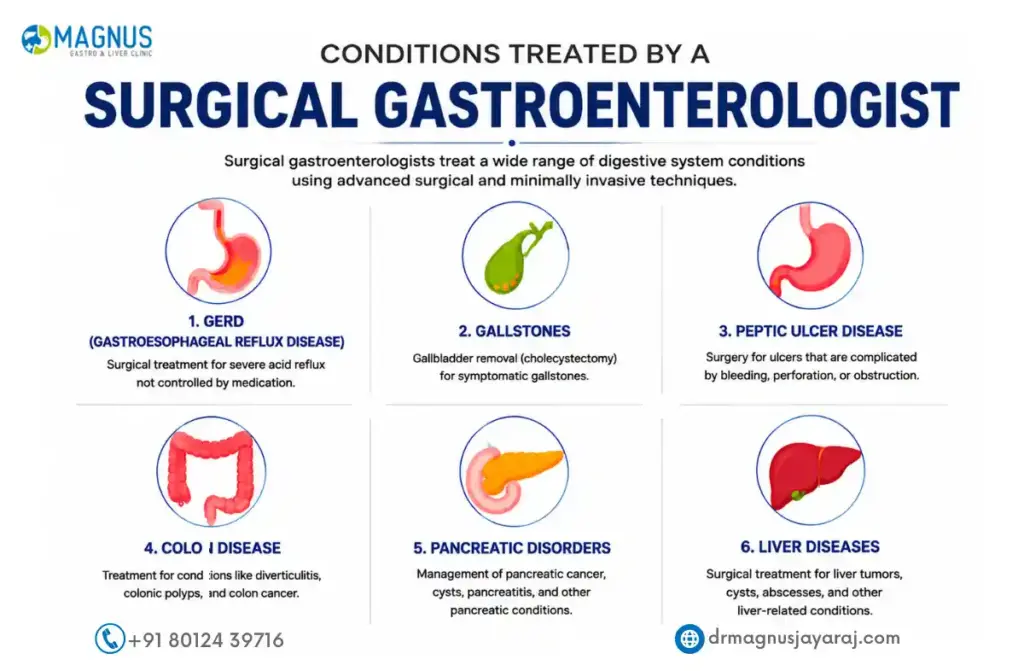
Conditions Managed by a Surgical Gastroenterologist in Chennai
Surgical gastroenterologists manage a broad range of digestive and abdominal conditions. The treatment approach varies according to the affected organ, severity of the disease, and the patient’s general health.
Gallbladder and Bile Duct Disorders
- Gallstones are a common cause of abdominal discomfort. Some people have no symptoms, while others experience pain in the upper right abdomen, nausea, or discomfort after meals. Complications may include gallbladder inflammation, bile duct obstruction, and infection.
- A surgical gastroenterologist evaluates symptoms and imaging results to determine whether monitoring, further investigation, or surgery is appropriate. Laparoscopic cholecystectomy, which involves removing the gallbladder through small incisions, is a commonly used treatment for symptomatic gallstones when surgery is indicated.
- Bile duct disorders may require additional imaging, endoscopic procedures, or specialised surgery, depending on the underlying problem.
Liver Diseases and Hepatobiliary Conditions
- The liver performs essential functions, including processing nutrients, producing proteins, and supporting metabolism. Liver conditions can range from fatty liver disease and benign cysts to cirrhosis, liver tumours, and bile duct disorders.
- Not every liver condition requires surgery. Many are managed through medical treatment, lifestyle changes, and regular monitoring. However, selected patients with liver tumours or other complex hepatobiliary disorders may require surgical evaluation.
- Treatment planning considers liver function, the extent of the disease, associated medical conditions, and the potential benefits and risks of intervention.
Pancreatic Diseases
- The pancreas plays an important role in digestion and blood glucose regulation. Pancreatic conditions include pancreatitis, pancreatic cysts, benign growths, and pancreatic cancer.
- Some pancreatic disorders can be managed with medication, dietary adjustments, endoscopic procedures, and observation. Others may require specialist surgical assessment, particularly when a tumour, persistent complication, or structural abnormality is identified.
- Pancreatic surgery can be complex because of the organ’s location and its close relationship with major blood vessels and the bile duct. A detailed diagnostic assessment helps determine whether surgery is appropriate and which procedure may be suitable.
Gastrointestinal Cancers
- Gastrointestinal cancers can affect the oesophagus, stomach, small intestine, colon, rectum, liver, pancreas, and other digestive organs. Symptoms vary depending on the location and stage of the disease.
- Possible warning signs include persistent abdominal pain, unexplained weight loss, difficulty swallowing, changes in bowel habits, blood in the stool, or ongoing digestive symptoms. These symptoms do not always indicate cancer, but persistent or unexplained changes require medical evaluation.
- Treatment may involve surgery, chemotherapy, radiotherapy, targeted therapies, or a combination of approaches. A surgical gastroenterologist works with oncology, radiology, pathology, and other specialists to develop a treatment plan based on the cancer type, stage, and the patient’s health.
Hernias and Abdominal Wall Conditions
- A hernia occurs when tissue pushes through a weakened area of the abdominal wall. Common types include inguinal, umbilical, and incisional hernias.
- Symptoms may include a visible bulge, discomfort while lifting, pain during physical activity, or a feeling of pressure in the affected area. Some hernias can be monitored, while others require surgical repair.
- A specialist evaluates the type of hernia, its size, symptoms, and the patient’s medical history before recommending an appropriate approach. Sudden severe pain, vomiting, or a painful hernia bulge that cannot be pushed back requires urgent medical attention.
Oesophageal and Stomach Disorders
- Conditions affecting the oesophagus and stomach include gastro-oesophageal reflux disease, hiatus hernia, swallowing disorders, and selected stomach tumours. Many digestive symptoms can initially be managed with medication and dietary adjustments.
- Surgical treatment may be considered when a condition causes persistent symptoms despite appropriate treatment or when investigations identify a problem that requires correction. The decision depends on the diagnosis, response to previous treatment, and the potential benefits of surgery.
Minimally Invasive and Laparoscopic Gastrointestinal Surgery
Laparoscopic surgery is a minimally invasive technique that uses a camera and specialised instruments inserted through small incisions. It is used for several gastrointestinal procedures, including selected gallbladder operations, hernia repairs, and bowel surgeries.
Compared with traditional open surgery, laparoscopic techniques may offer smaller incisions, less postoperative pain, shorter hospital stays, and faster recovery for appropriately selected patients. However, outcomes vary according to the procedure, the patient’s condition, and the surgeon’s assessment.
Not every patient or operation is suitable for a minimally invasive approach. Previous abdominal surgery, extensive disease, anatomical considerations, or unexpected findings may influence the technique used.
Before surgery, patients should discuss the available approaches, possible complications, expected hospital stay, and recovery requirements with their treating specialist.
Robotic Surgery and Advanced Surgical Techniques
Robotic-assisted surgery may be an option for selected gastrointestinal procedures. It allows the surgeon to control specialised instruments from a console, with features that can support precise movements and visualisation.
Its suitability depends on the specific condition, the complexity of the operation, available equipment, and the surgical team’s expertise. Robotic surgery is not automatically better than laparoscopic or open surgery for every patient.
Patients considering advanced surgical techniques should ask about the expected clinical benefits, possible risks, alternative procedures, and the surgeon’s experience with the recommended operation.
When Should You Consult a Surgical Gastroenterologist?
A specialist consultation may be appropriate when digestive symptoms persist, investigations reveal a condition requiring surgical assessment, or a previously diagnosed disorder develops complications.
Consider seeking medical evaluation for:
- Persistent or recurrent abdominal pain.
- Repeated episodes of gallbladder pain.
- Difficulty swallowing or persistent vomiting.
- Unexplained weight loss or loss of appetite.
- Changes in bowel habits that do not resolve.
- Blood in the stool or black, tarry stools.
- A suspected abdominal hernia.
- A liver, pancreatic, or gastrointestinal mass identified during investigations.
- Digestive symptoms that continue despite appropriate medical treatment.
These symptoms can have several causes and do not necessarily mean surgery is required. A specialist can assess the symptoms, arrange appropriate investigations, and explain the available treatment options.
Seek emergency medical care for severe or sudden abdominal pain, vomiting blood, black stools accompanied by weakness or dizziness, or abdominal pain associated with fever and jaundice.
What to Expect During a Consultation
- A consultation with a surgical gastroenterologist generally begins with a review of symptoms, medical history, previous treatments, and existing investigation reports.
- Depending on the clinical findings, the specialist may recommend blood tests, ultrasound, CT or MRI scans, endoscopy, colonoscopy, or other targeted investigations. Not every patient needs all these tests.
- After reviewing the results, the specialist explains the diagnosis and discusses the available treatment options. If surgery is recommended, the discussion should cover the purpose of the procedure, expected benefits, possible complications, alternative treatments, preparation, and postoperative care.
- Patients can prepare for the appointment by bringing previous medical records, imaging reports, current medication details, and a list of questions about their symptoms and treatment.
How to Choose a Surgical Gastroenterologist in Chennai
Selecting a specialist involves more than searching for a doctor by location. Patients should consider the doctor’s relevant qualifications, clinical experience, expertise in the specific condition, and access to appropriate hospital facilities.
Important factors include:
- Relevant specialist qualifications: Look for recognised training in surgical gastroenterology and experience related to the condition being treated.
- Procedure-specific experience: Ask about experience with the proposed operation rather than relying only on general surgical experience.
- Clear communication: The specialist should explain the diagnosis, treatment alternatives, potential risks, and expected recovery.
- Multidisciplinary support: Complex liver, pancreatic, and gastrointestinal cancers may require coordination between surgeons, oncologists, radiologists, pathologists, and other specialists.
- Hospital facilities: Consider access to diagnostic imaging, intensive care, emergency services, and postoperative monitoring when these are relevant to the planned procedure.
- Follow-up care: Recovery may involve wound assessment, dietary guidance, medication review, rehabilitation, and long-term monitoring.
Patients should feel comfortable asking questions and seeking a second opinion for major or complex operations.
Finding Specialist Surgical Gastroenterology Care in Chennai
Chennai has hospitals and specialist practices that provide evaluation and treatment for a wide range of digestive disorders. When choosing where to seek care, patients should verify the doctor’s current consultation locations, appointment availability, and the hospital where a proposed procedure would be performed.
For patients considering consultation with Dr. Magnus Jayaraj Mansard, the doctor’s official website is a useful starting point for reviewing his professional profile, areas of practice, and available contact information. Patients should confirm current clinic details directly before travelling or booking an appointment.
The most appropriate treatment setting depends on the condition, required investigations, urgency, and complexity of care. For serious or complex gastrointestinal diseases, access to a coordinated team and suitable hospital resources is particularly important.
Why Consider Dr. Magnus Jayaraj Mansard for Surgical Gastroenterology Care?
Patients seeking a surgical gastroenterologist in Chennai may benefit from a consultation that focuses on accurate diagnosis, appropriate treatment selection, and a clear explanation of the next steps.
Dr. Magnus Jayaraj Mansard’s professional areas include gastrointestinal and hepatobiliary care. Patients can review his verified qualifications and clinical interests to determine whether his expertise aligns with their medical needs.
A specialist consultation can help patients understand whether their symptoms require further investigation, medical management, minimally invasive surgery, or a more complex procedure. The recommended approach should be based on the patient’s diagnosis and clinical findings rather than on a procedure being available or preferred.
For patients with complex liver, pancreatic, or gastrointestinal conditions, coordinated care and careful treatment planning can be important throughout diagnosis, intervention, and recovery.
Conclusion
Choosing the right surgical gastroenterologist in Chennai is an important step in managing digestive system disorders that may require specialised assessment or surgery. From gallbladder disease and hernias to complex liver, pancreatic, and gastrointestinal conditions, treatment should be guided by an accurate diagnosis and an individualised clinical plan.
Dr. Magnus Jayaraj Mansard provides a point of reference for patients exploring specialised gastrointestinal and hepatobiliary care. Reviewing his verified qualifications, discussing treatment options, and understanding the benefits and risks of any recommended procedure can help patients make informed decisions about their digestive health.
Read more: Liver Transplant Surgeon in Chennai