Medically reviewed by Dr. Magnus Jayaraj Mansard, Specialist in Liver Transplantation, HPB Surgery and Surgical Gastroenterology. Last medically reviewed on October 2026
The liver is one of the most important organs involved in digestion, metabolism and overall health. Although food does not pass directly through the liver, the liver plays a major supporting role in helping the body process nutrients after they are absorbed from the digestive tract.
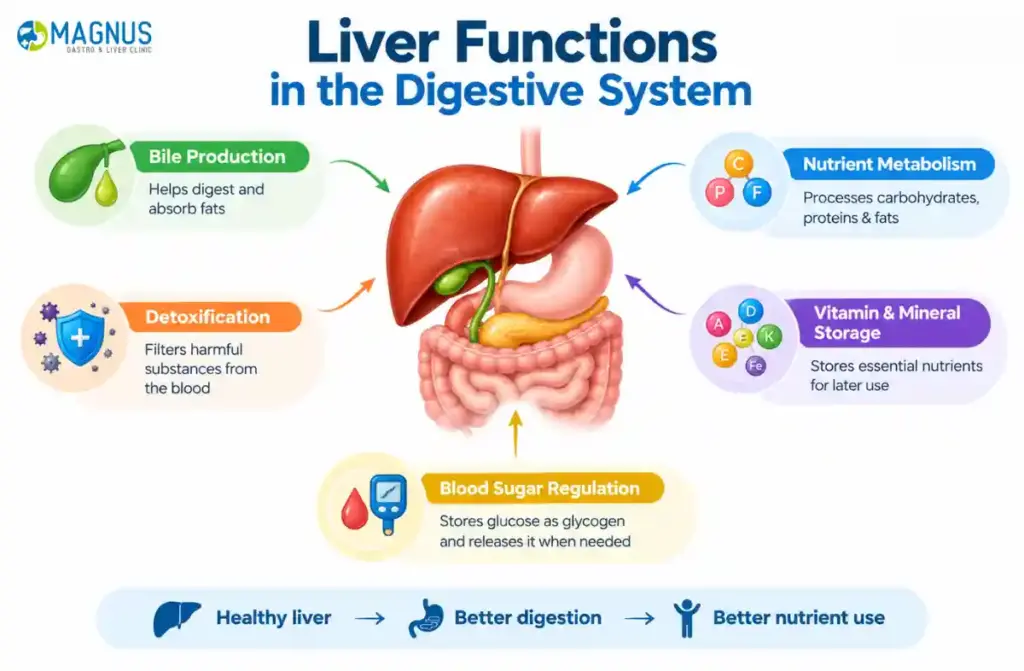
One of its most important digestive functions is producing bile, a fluid that helps the body digest and absorb fats and fat-soluble vitamins in the small intestine. The liver also processes nutrients absorbed from food, stores certain vitamins and minerals, produces important proteins, and helps process medicines and other substances.
Understanding the Liver Function in digestive system is important because the liver works closely with the digestive tract to support nutrient absorption, energy storage and the removal of waste products from the body.
The liver works closely with the small intestine, gallbladder, pancreas and bile ducts. Together, these organs form an interconnected system that allows the body to digest food, absorb nutrients and maintain normal metabolism.
What Is the Role of the Liver Function in digestive system
The liver supports digestion mainly by producing bile and processing nutrients absorbed from the small intestine.
After digestion, many nutrients pass through the intestinal wall into the bloodstream. Blood from much of the digestive tract travels first to the liver through the portal circulation. The liver then processes these nutrients and regulates how they are stored, transformed or released for use by the body.
The liver also produces bile. Bile travels through the bile ducts and may be stored and concentrated in the gallbladder. When needed, it enters the small intestine, where bile salts help make dietary fats and fat-soluble vitamins easier to digest and absorb.
In simple terms, the liver helps the digestive system by:
- Producing bile for fat digestion
- Processing nutrients absorbed from food
- Helping regulate glucose and energy metabolism
- Processing fats and cholesterol
- Storing selected vitamins and minerals
- Producing proteins such as albumin and clotting factors
- Processing medicines and various substances from the blood
The liver therefore has important digestive, metabolic and protective functions beyond digestion alone.
How Does the Liver Help in Digestion?
The liver does not directly break food down like the stomach or pancreatic enzymes do. Instead, it produces bile, which is essential for the normal digestion and absorption of dietary fats.
Bile contains bile acids or bile salts that help disperse fats into smaller droplets in the small intestine. This process increases the surface area available for digestive enzymes to act on fats.
Bile also supports the absorption of fat-soluble vitamins such as vitamins A, D, E and K.
According to the National Institute of Diabetes and Digestive and Kidney Diseases, the liver produces bile, which is carried through bile ducts to the gallbladder or directly toward the small intestine. The gallbladder stores bile between meals and releases it when it is needed for digestion.
What Happens to Bile After the Liver Produces It?
The pathway of bile can be understood in four simple steps:
Liver → Bile ducts → Gallbladder → Small intestine
The liver continuously produces bile. Between meals, much of the bile is directed toward the gallbladder, where it is stored and concentrated. After eating, especially when a meal contains fat, the gallbladder contracts and releases bile through the bile ducts into the small intestine.
There, bile salts help make fats easier to digest and absorb.
If bile flow is blocked by a gallstone, narrowing of the bile duct or another condition, digestive symptoms and problems related to bile flow may occur. Bile duct obstruction can also cause jaundice and other complications depending on the cause and severity.
Liver Function in Nutrient Metabolism
The liver has a central role in processing nutrients absorbed from the digestive system.
Carbohydrates
- The liver helps maintain a stable supply of glucose for the body.
- When there is more glucose available than the body immediately needs, the liver can store some of it as glycogen. When the body needs additional glucose, the liver can release glucose through normal metabolic processes. This helps support energy requirements between meals.
Proteins
- The liver processes amino acids and uses them to produce proteins and other substances required by the body.
- It also produces important blood proteins, including albumin and several clotting factors.
- Albumin helps maintain fluid balance in the bloodstream, while clotting factors are necessary for normal blood clot formation.
Fats
- The liver plays an important role in lipid metabolism. It processes fatty acids, cholesterol and other lipids and participates in the production and transport of lipoproteins.
- This means liver health is closely connected with the body’s overall metabolic health.
Liver and Nutrient Absorption
The small intestine is the main site where nutrients from digested food are absorbed. However, the liver becomes particularly important after these nutrients enter the bloodstream.
Nutrients absorbed from the intestine are transported to the liver through the portal circulation. The liver processes them before they are distributed or stored according to the body’s needs.
This relationship can be summarized as:
Food → Digestion → Nutrient absorption → Portal blood flow → Liver processing → Distribution or storage
This is one reason why the liver is considered an important organ of the digestive system even though food does not physically pass through it.
Other Important Functions of the Liver
The digestive role of the liver is only one part of its work. The liver also contributes to several essential processes.
- Bile Production: The liver produces bile, which helps the body digest and absorb dietary fats and fat-soluble vitamins.
- Nutrient Processing: It processes carbohydrates, proteins and fats after nutrients are absorbed from the digestive tract.
- Storage: The liver stores glycogen and certain vitamins and minerals and can release or use stored substances when required.
- Protein Production: The liver produces albumin and several proteins involved in blood clotting and other body functions.
- Bilirubin Processing: Bilirubin is produced during the breakdown of red blood cells. The liver processes bilirubin and excretes it into bile. Problems with bilirubin processing or bile flow can contribute to jaundice.
- Medication and Substance Metabolism: The liver chemically processes many medicines and other substances. This does not mean that the liver simply “filters toxins”; rather, liver enzymes transform many substances so that they can be used, inactivated or eliminated from the body.
These functions demonstrate why liver health is important for the digestive system as well as overall health.
What Happens When Liver Function Is Impaired?
Different liver conditions can affect liver function in different ways.
Examples include:
- Fatty liver disease
- Viral hepatitis
- Alcohol-related liver disease
- Cirrhosis
- Autoimmune liver diseases
- Certain inherited liver disorders
- Liver and bile duct cancers
Early liver disease may cause few or no noticeable symptoms. When liver dysfunction becomes more significant, a person may experience symptoms such as tiredness, reduced appetite, nausea, abdominal discomfort, jaundice, dark urine, itching or swelling.
However, these symptoms are not specific to liver disease. Digestive symptoms should therefore be evaluated in the context of a person’s medical history, examination and appropriate investigations.
Can Liver Problems Affect Digestion?
Yes. Liver and biliary disorders can affect digestion, particularly when they interfere with normal bile production or bile flow.
Because bile helps the body handle dietary fats, disorders affecting the liver, gallbladder or bile ducts may sometimes be associated with digestive symptoms.
Possible symptoms can include:
- Abdominal discomfort
- Nausea
- Poor appetite
- Bloating
- Changes in stool
- Indigestion
- Jaundice
Not every digestive symptom indicates a liver problem. Conditions involving the stomach, intestine, pancreas or gallbladder can produce similar symptoms.
Persistent or unexplained symptoms should be assessed by a qualified medical professional rather than attributed to the liver without evaluation.
How Are Liver Problems Evaluated?
If liver disease is suspected, a doctor may recommend a combination of medical history, physical examination, blood tests and imaging. Common blood tests may include measurements such as:
- ALT
- AST
- Alkaline phosphatase
- Bilirubin
- Albumin
- Other tests depending on the suspected condition
These tests provide different types of information. Liver blood tests should not be interpreted as a single “liver health score,” because an abnormal result can have several possible causes.
Depending on the clinical situation, a doctor may also recommend ultrasound, elastography, CT, MRI or other investigations. The appropriate tests depend on symptoms, risk factors and the suspected liver or biliary condition.
How Can You Support Liver and Digestive Health?
There is no single food or drink that “detoxes” the liver. The liver already has sophisticated metabolic pathways for processing substances in the body.
Instead, long-term liver health is supported by healthy lifestyle habits.
- Eat a Balanced Diet: Include vegetables, fruits, whole grains, legumes, appropriate sources of protein and healthy fats. Limit excessive intake of highly processed foods and added sugars.
- Maintain a Healthy Weight: Excess body weight and metabolic problems are associated with fatty liver disease. If weight reduction is appropriate, gradual and sustainable changes can be more useful than extreme diets.
- Exercise Regularly: Regular physical activity supports metabolic health and can help reduce the risk of fat accumulation in the liver.
- Avoid Excessive Alcohol: Excessive alcohol consumption can damage the liver. People with certain liver conditions may need to avoid alcohol completely based on medical advice.
- Use Medicines Responsibly: Some medicines and supplements can affect the liver. Do not start or stop medicines based only on information found online. Discuss regular medicines, supplements and herbal products with your healthcare professional when appropriate.
- Protect Against Viral Hepatitis: Vaccination and other preventive measures can reduce the risk of certain viral hepatitis infections. Vaccination recommendations depend on individual circumstances.
When Should You See a Liver or Gastrointestinal Specialist?
Consider medical evaluation if you have persistent digestive symptoms, unexplained abnormal liver blood tests, recurrent abdominal discomfort, jaundice, unexplained weight loss, persistent nausea, or other symptoms that concern you.
Urgent medical attention may be required for severe abdominal pain, significant vomiting, confusion, vomiting blood, black stools, severe jaundice or other serious symptoms.
A specialist can determine whether the symptoms are related to the liver, gallbladder, bile ducts, pancreas, stomach or intestines and recommend appropriate investigations.
Key Takeaway
The liver is an essential partner in the digestive system. Its role extends beyond bile production: it processes nutrients absorbed from the intestine, participates in carbohydrate, protein and fat metabolism, stores certain nutrients, produces important blood proteins and processes bilirubin and many substances carried in the blood.
Understanding the connection between the liver, gallbladder, bile ducts, pancreas and intestines makes it easier to understand why liver health matters for digestion and overall wellbeing.
If you have persistent digestive symptoms, abnormal liver tests or symptoms such as jaundice, consult a qualified gastroenterology or hepatobiliary specialist for an appropriate evaluation rather than relying on self-diagnosis.
Also, Read as: Hepatic Encephalopathy Symptoms