
Medically reviewed by Dr. Magnus Jayaraj Mansard, Specialist in Liver Transplantation, HPB Surgery and Surgical Gastroenterology. Last medically reviewed on September 2026.
The liver, pancreas and bile ducts play important roles in digestion, metabolism and maintaining overall health. Conditions affecting these organs can range from gallstones and bile duct blockages to complex tumours and chronic pancreatic disorders. Some may be managed with medication or other treatments, while others require specialised surgical care.
Hepato Pancreatico Biliary (HPB) surgery focuses on diagnosing and treating diseases involving the liver, pancreas, gallbladder and bile ducts. These procedures require detailed knowledge of digestive anatomy and careful treatment planning.
Dr. Magnus Jayaraj, a Surgical Gastroenterologist in Chennai, provides specialised evaluation and surgical care for complex digestive conditions, including disorders involving the liver, pancreas and biliary system. Early consultation with an experienced specialist can help patients understand their condition and explore suitable treatment options.
What Is Hepato Pancreatico Biliary (HPB) Surgery?
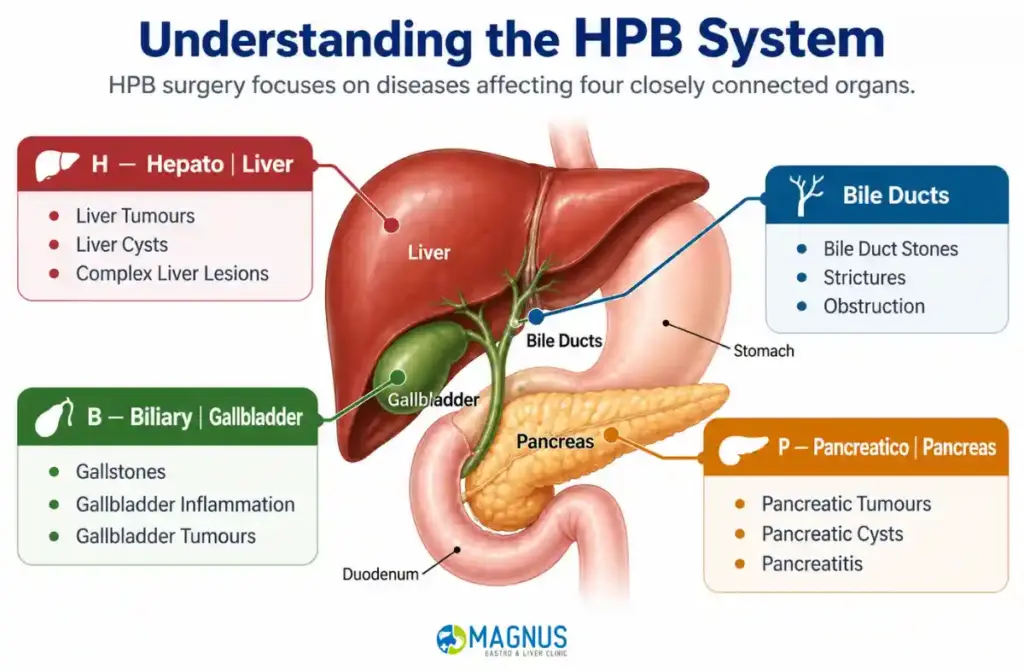
Hepato Pancreatico Biliary (HPB) surgery is a specialised branch of surgical gastroenterology that focuses on treating diseases affecting the liver, pancreas, gallbladder and bile ducts. These organs work together to support digestion, process nutrients and maintain essential body functions.
HPB surgery may be recommended for certain cancers, cysts, blockages, infections and other complex conditions that cannot be adequately managed through non-surgical treatments.
Organs covered under HPB surgery include:
- Liver: Responsible for processing nutrients, filtering harmful substances and producing bile.
- Pancreas: Produces digestive enzymes and hormones that regulate blood sugar.
- Gallbladder: Stores and releases bile to support fat digestion.
- Bile ducts: Carry bile from the liver and gallbladder to the small intestine.
The treatment approach depends on the affected organ, the nature of the disease and the patient’s overall health. A specialist evaluation helps determine whether medication, endoscopic treatment or surgery is appropriate.
About Dr. Magnus Jayaraj
Dr. Magnus Jayaraj is an experienced Surgical Gastroenterologist in Chennai with over 20+ years of experience in managing complex digestive system conditions. He specialises in gastrointestinal surgery, hepatobiliary and pancreatic surgery, liver transplantation and minimally invasive surgical procedures.
He completed his MBBS and MS from JIPMER and holds additional qualifications, including MNAMS in Gastrointestinal Surgery, MRCS (Edinburgh), FACS and GCSRT from Harvard. His clinical practice focuses on evaluating and treating conditions affecting the liver, pancreas, gallbladder, bile ducts and digestive tract.
Dr. Magnus Jayaraj emphasises accurate diagnosis, appropriate surgical planning and individualised treatment approaches. He evaluates each patient’s condition to recommend suitable medical or surgical management based on their specific needs.

What Conditions Require HPB Surgical Treatment?
Several conditions affecting the liver, pancreas, gallbladder and bile ducts may require specialised surgical treatment. The decision depends on the severity of the disease, its location and whether other treatment options are suitable.
Common conditions include:
- Liver Tumours and Cancer: Certain benign and cancerous liver growths may require surgical removal, depending on their size, location and extent.
- Pancreatic Cysts and Cancer: Some pancreatic cysts and malignant growths may need surgical evaluation and removal.
- Bile Duct Stones and Strictures: Stones or narrowed bile ducts can obstruct bile flow, sometimes requiring endoscopic or surgical treatment.
- Gallbladder Diseases: Recurrent gallstones, inflammation and selected gallbladder tumours may require surgery.
- Liver Cysts: Large, symptomatic or complicated cysts may need further evaluation and, in selected cases, surgical management.
- Pancreatitis and Its Complications: Severe or recurrent pancreatic conditions may require specialised procedures when complications develop.
Early diagnosis helps identify the underlying problem and determine the most appropriate treatment. Consulting a Hepato Pancreatico Biliary Surgeon in Chennai can help patients understand their condition and available management options.
Common Symptoms That Should Not Be Ignored
Diseases involving the liver, pancreas and bile ducts may cause symptoms that develop gradually or appear suddenly. Some symptoms can overlap with common digestive problems, making proper medical evaluation important.
Common warning signs include:
- Jaundice: Yellowing of the skin and eyes due to increased bilirubin levels.
- Upper Abdominal Pain: Persistent discomfort or pain in the upper abdomen, sometimes spreading to the back.
- Unexplained Weight Loss: Losing weight without changes in diet or physical activity.
- Changes in Urine and Stool Colour: Dark urine and unusually pale stools may indicate problems with bile flow.
- Loss of Appetite and Nausea: Reduced appetite, nausea or vomiting associated with digestive disorders.
- Abdominal Bloating: Persistent fullness or discomfort that may require further investigation.
These symptoms do not always indicate a serious HPB condition. However, persistent or unexplained symptoms should be assessed by a medical professional. Sudden severe abdominal pain, fever with jaundice or repeated vomiting requires urgent medical attention.
When Should You Consult a Hepatobiliary Surgeon?
Consulting a hepatobiliary surgeon may be necessary when diagnostic tests or ongoing symptoms indicate a condition affecting the liver, pancreas, gallbladder or bile ducts. Early specialist assessment helps identify the problem and determine whether surgical treatment is required.
You should consider a specialist consultation in the following situations:
- Persistent abdominal pain or recurring digestive discomfort.
- Abnormal liver function test results that need further investigation.
- Suspected liver, pancreatic or bile duct tumours.
- Repeated gallstone attacks or bile duct obstruction.
- Pancreatic cysts requiring specialist assessment.
- Liver or pancreatic conditions that may need surgical intervention.
- When another doctor recommends an opinion from a surgical gastroenterologist.
A specialist evaluates medical history, imaging reports and overall health before recommending treatment. Not every condition requires surgery; medication, endoscopic procedures or regular monitoring may be more appropriate in some cases.
Dr. Magnus Jayaraj provides specialist evaluation for complex digestive and HPB conditions, helping patients understand their diagnosis and available treatment options.
Common Hepato Pancreatico Biliary Procedures
HPB surgery includes several procedures designed to treat diseases affecting the liver, pancreas, gallbladder and bile ducts. The choice of surgery depends on the diagnosis, disease severity and the patient’s overall health.
Common procedures include:
- Liver Resection (Hepatectomy): Surgical removal of a portion of the liver affected by tumours or other selected conditions.
- Pancreaticoduodenectomy (Whipple Procedure): A complex operation used to treat certain tumours involving the head of the pancreas and nearby structures.
- Distal Pancreatectomy: Removal of the body or tail of the pancreas to manage selected tumours and other pancreatic conditions.
- Bile Duct Reconstruction: A procedure to restore bile flow when the bile duct is damaged, narrowed or obstructed.
- Cholecystectomy: Surgical removal of the gallbladder, commonly performed for symptomatic gallstones and gallbladder inflammation.
- Surgery for HPB Cancers: Specialised procedures to remove selected cancers affecting the liver, pancreas, gallbladder and bile ducts.
These operations require careful preoperative assessment and surgical planning. Depending on the condition, procedures may be performed using open, laparoscopic or other minimally invasive approaches. The most suitable technique is determined by the surgeon based on patient safety and expected outcomes.
Minimally Invasive and Laparoscopic HPB Surgery
Minimally invasive surgery uses small incisions and specialised instruments to perform selected surgical procedures. In HPB surgery, laparoscopic techniques may be considered for certain conditions involving the liver, gallbladder and pancreas.
Potential benefits of minimally invasive approaches include:
- Smaller surgical incisions.
- Reduced postoperative discomfort in suitable cases.
- Less blood loss in some procedures.
- Shorter hospital stays in selected patients.
- Faster return to routine activities.
- Reduced wound-related complications.
The suitability of laparoscopic surgery depends on the type of disease, its location, previous surgeries and the patient’s general health. Complex conditions may require open surgery to provide better access and surgical control.
Dr. Magnus Jayaraj evaluates each patient’s condition to determine the appropriate surgical approach, with attention to treatment goals, safety and recovery.
How Are Liver, Pancreas and Bile Duct Conditions Diagnosed?
Accurate diagnosis is essential for identifying diseases affecting the liver, pancreas, gallbladder and bile ducts. A specialist may recommend different investigations based on the patient’s symptoms, medical history and initial clinical findings.
Common diagnostic methods include:
- Blood Investigations: Liver function tests, bilirubin levels, pancreatic enzymes and other blood tests help identify abnormalities.
- Ultrasound Scan: Helps detect gallstones, liver changes, bile duct enlargement and certain pancreatic abnormalities.
- CT Scan: Provides detailed images to identify tumours, inflammation and the extent of organ involvement.
- MRI and MRCP: Help examine the liver, pancreas and bile ducts, particularly when blockages or structural abnormalities are suspected.
- Endoscopic Investigations: Procedures such as ERCP and endoscopic ultrasound may help evaluate and manage selected bile duct and pancreatic conditions.
- Biopsy: A tissue sample may be collected when necessary to investigate suspicious growths or confirm a diagnosis.
The results help the specialist understand the underlying condition and plan appropriate treatment. Not every patient requires all these investigations; testing is selected according to individual clinical needs.
What Factors Determine the Right Surgical Treatment?
Choosing the appropriate treatment for liver, pancreatic or bile duct conditions requires a detailed evaluation. Not every patient with an HPB disorder needs surgery. The treatment plan depends on several medical factors.
Important factors considered during treatment planning include:
- Type of Disease: Whether the condition is benign, malignant, inflammatory or related to an obstruction.
- Disease Stage and Location: The size, position and extent of the affected area.
- Organ Function: The condition of the liver, pancreas and surrounding structures.
- Overall Health: Age, existing medical conditions and fitness for surgery.
- Previous Medical History: Earlier treatments, medications and surgical procedures.
- Available Treatment Options: Whether medication, endoscopic procedures, surgery or a combination of treatments is appropriate.
A detailed consultation helps patients understand the benefits, possible risks and expected recovery associated with each option. The final treatment decision should be based on individual clinical findings and specialist recommendations.
What to Expect Before and After HPB Surgery?
HPB procedures require careful preparation and postoperative care. Understanding each stage helps patients and their families prepare for treatment and recovery.
Before Surgery
- Complete the recommended blood tests and imaging investigations.
- Review existing medical conditions and medications with the treating team.
- Follow dietary and fasting instructions before the procedure.
- Discuss the surgical approach, expected benefits and possible complications.
- Understand the anticipated hospital stay and recovery plan.
After Surgery
- Hospital Monitoring: Vital signs, organ function and recovery are closely monitored.
- Pain Management: Appropriate medication helps manage postoperative discomfort.
- Nutritional Support: Dietary guidance helps patients gradually return to normal eating.
- Activity and Mobility: Gentle movement is encouraged when medically appropriate.
- Follow-up Visits: Regular reviews help monitor healing and identify potential complications.
- Long-term Monitoring: Some patients may require ongoing investigations and specialist care.
Recovery time varies depending on the procedure, the patient’s general health and the complexity of the condition. Following medical advice and attending scheduled follow-up appointments are important for recovery.
Why Choose Dr. Magnus Jayaraj for HPB Surgical Consultation in Chennai?
Choosing a specialist for liver, pancreatic and bile duct conditions is an important part of treatment planning. These conditions often require detailed evaluation, surgical expertise and a coordinated approach to patient care.
Dr. Magnus Jayaraj is a Surgical Gastroenterologist in Chennai with experience in managing complex digestive system conditions and performing advanced gastrointestinal procedures.
His professional qualifications include:
- MBBS and MS from JIPMER.
- MNAMS in Gastrointestinal Surgery.
- MRCS (Edinburgh).
- FACS.
- GCSRT from Harvard.
Key aspects of his surgical practice include:
- Evaluation and management of liver, pancreatic and biliary disorders.
- Surgical treatment of selected complex digestive conditions.
- Experience in laparoscopic and minimally invasive gastrointestinal procedures.
- Individualised treatment planning based on diagnosis and patient needs.
- Focus on appropriate investigations, treatment options and postoperative care.
Patients with suspected liver, pancreatic or bile duct conditions can consult Dr. Magnus Jayaraj for specialist assessment and guidance on suitable treatment approaches.
Conclusion
Conditions affecting the liver, pancreas, gallbladder and bile ducts require accurate diagnosis and appropriate treatment planning. Early medical evaluation can help identify potential complications and determine whether medication, endoscopic procedures or surgery is needed.
Dr. Magnus Jayaraj offers specialised surgical consultation for complex digestive and HPB conditions in Chennai. With his background in surgical gastroenterology and minimally invasive procedures, patients can receive guidance on suitable treatment options based on their individual medical needs.
If you are experiencing persistent digestive symptoms or have been diagnosed with a liver, pancreatic or biliary condition, consider consulting a specialist to understand the next steps in your treatment.
Read more: Types of Liver Disease