
Medically reviewed by Dr. Magnus Jayaraj Mansard, Specialist in Liver Transplantation, HPB Surgery and Surgical Gastroenterology. Last medically reviewed on September 2026
Choosing the best liver transplant surgeon in India is an important decision for patients with advanced liver disease. Liver transplantation is a complex procedure that requires careful patient selection, experienced surgical care, donor evaluation, advanced hospital support, and structured long-term follow-up.
Dr. Magnus Jayaraj Mansard is a Surgical Gastroenterologist with experience in liver, hepatobiliary, pancreatic, minimally invasive, and complex gastrointestinal surgery. Patients requiring liver transplant evaluation can receive a detailed assessment to understand the severity of their liver disease, available treatment options, and whether transplantation should be considered.
The goal is not simply to perform surgery, but to guide the patient and family through the complete transplant journey, from evaluation and surgical planning to recovery and long-term care.
What is a Liver Transplant?
A liver transplant is a surgical procedure in which a severely damaged or failing liver is replaced with a healthy liver or a portion of a healthy liver from a donor.
The liver has a remarkable ability to regenerate. This makes it possible for a healthy person to donate a portion of their liver in selected living-donor transplantation cases. Liver transplantation is generally considered when liver disease has progressed to a stage where other treatments can no longer adequately maintain liver function or prevent serious complications.
Dr. Magnus Jayaraj – Liver Transplant Surgeon in India
Dr. Magnus Jayaraj Mansard is an experienced Liver Transplant and Surgical Gastroenterology specialist in India with more than 20+ years of surgical experience in managing complex liver, hepatobiliary, pancreatic, and gastrointestinal conditions.
His qualifications include:
- 20+ Years of Surgical Experience
- MBBS, MS – JIPMER
- MNAMS – GI Surgery
- MRCS – Edinburgh
- FACS
- GCSRT – Harvard
His clinical expertise includes liver transplantation, hepatobiliary surgery, pancreatic surgery, complex gastrointestinal surgery, robotic surgery, and minimally invasive procedures.

Dr. Magnus evaluates patients with liver cirrhosis, liver failure, liver tumours, and other advanced liver conditions to understand the severity of the disease and determine the most appropriate treatment. Depending on the patient’s condition, care may include medical management, liver surgery, or liver transplant evaluation.
With extensive experience in complex liver and gastrointestinal surgery, he follows an individualised approach to treatment, helping patients and families understand their options and make informed decisions about their care.
Types of Liver Transplant
The transplant approach depends on donor availability, recipient requirements, liver size, medical condition, and other clinical factors.
Living Donor Liver Transplant
- A healthy living donor gives a portion of their liver to the recipient.
- Both the transplanted portion and the donor’s remaining liver can regenerate over time.
- Living donor transplantation can allow surgery to be planned once the donor and recipient have successfully completed their evaluations.
Deceased Donor Liver Transplant
- A liver donated by a deceased organ donor is transplanted into an eligible recipient.
- Allocation depends on applicable organ-allocation regulations, medical urgency, compatibility, and donor availability.
Split Liver Transplant
- In selected situations, a deceased donor liver may be divided so that different portions can be transplanted into two recipients.
Auxiliary Liver Transplant
- In selected clinical situations, a donor liver portion may be transplanted while part of the patient’s original liver remains in place.
- This approach is used only for specific indications.
Living Donor vs Deceased Donor Liver Transplant
| Factor | Living Donor Transplant | Deceased Donor Transplant |
| Donor | Healthy living donor | Deceased organ donor |
| Timing | Can potentially be planned after evaluation | Depends on donor availability |
| Liver graft | Portion of liver | Usually whole or appropriately allocated graft |
| Waiting | May reduce dependence on deceased donor waiting time | Waiting period can vary |
| Donor surgery | Required | Not applicable |
| Evaluation | Recipient and donor require detailed evaluation | Recipient undergoes transplant evaluation |
Neither option is automatically better for every patient. The transplant team determines the appropriate approach after evaluating the individual case.
Liver Transplant Evaluation
A liver transplant evaluation determines whether transplantation is medically appropriate and whether the patient is fit enough to undergo major surgery.
The assessment may include:
- Blood Tests: Blood investigations help assess:
- Liver function
- Kidney function
- Blood counts
- Clotting
- Blood group
- Viral infections
- Other metabolic parameters
- Imaging: Ultrasound, CT, MRI, or other imaging may be used to evaluate liver anatomy, blood vessels, tumours, and other abdominal structures.
- Heart and Lung Evaluation: Because transplantation is major surgery, heart and lung health need to be assessed carefully.
- Endoscopy: Patients with advanced cirrhosis may undergo endoscopy to check for enlarged veins known as oesophageal or gastric varices.
- Infection Screening: Patients are evaluated for infections that could affect transplantation or recovery.
- Nutritional Assessment: Malnutrition and loss of muscle mass are common in advanced liver disease. Nutritional assessment can therefore form an important part of transplant preparation.
Liver Transplant Procedure Step by Step
Understanding what happens during transplantation can make the process easier for patients and their families to follow.
- Step 1: Transplant Evaluation: The transplant team confirms the diagnosis, assesses disease severity, evaluates overall health, and determines whether transplantation is appropriate.
- Step 2: Donor Evaluation: For living donor transplantation, the potential donor undergoes an independent and comprehensive assessment. This helps evaluate compatibility, liver anatomy, liver volume, general health, and donor safety.
- Step 3: Surgical Planning: Imaging and other investigations help surgeons understand the anatomy of the liver and surrounding blood vessels and plan the operation.
- Step 4: Transplant Surgery: The diseased liver is removed and replaced with the donor liver or liver graft.
- The surgical team reconnects the major blood vessels and bile duct so that the transplanted liver can function.
- Step 5: ICU Monitoring: After surgery, the recipient is closely monitored in intensive care. Doctors assess liver function, circulation, kidney function, infection risk, bleeding, and other important parameters.
- Step 6: Hospital Recovery: As recovery progresses, patients gradually begin walking, eating, and increasing their daily activity.
- Step 7: Follow-Up: After discharge, regular blood tests and consultations help monitor liver function and medication levels and detect complications early.
Advanced Techniques in Liver Surgery
Advances in surgery and imaging have helped specialists plan complex liver procedures more precisely.
- Minimally Invasive Liver Surgery: Selected liver procedures may be performed through smaller incisions using laparoscopic techniques.
- Robotic Liver Surgery: Robotic-assisted surgery can provide enhanced visualisation and instrument control during selected complex procedures. It is not appropriate for every patient, and its use depends on the type of operation and clinical situation.
- Advanced Imaging: Detailed CT and MRI imaging can help surgeons understand liver anatomy, blood vessels, bile ducts, and tumour location before surgery.
- Enhanced Recovery Protocols: Structured recovery pathways can include appropriate pain management, nutrition, early mobilisation, breathing exercises, and careful postoperative monitoring.
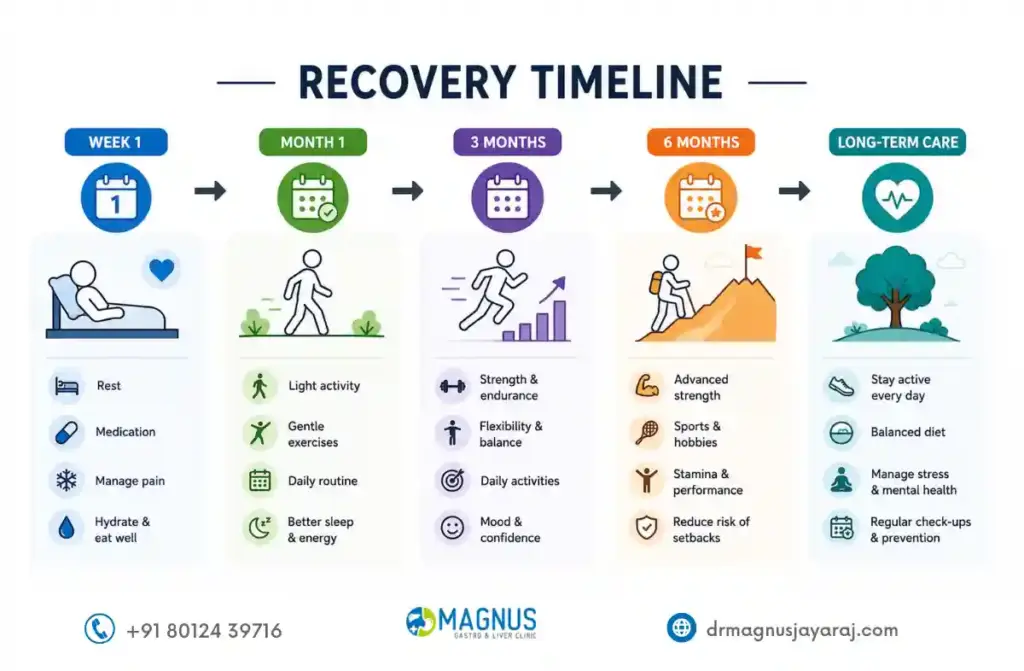
Recovery After Liver Transplant
Recovery varies depending on the patient’s condition before surgery, the type of transplant, complications, age, and other health factors.
During the First Week
The medical team closely monitors:
- Liver function
- Kidney function
- Blood counts
- Infection
- Bleeding
- Medication levels
Patients are encouraged to gradually begin moving as their condition improves.
During the First Month
- Follow-up appointments and blood tests are usually frequent during early recovery.
- Patients need to take their prescribed medicines carefully and follow infection-prevention advice.
An early specialist assessment can provide patients and their families with a clearer understanding of the disease, available treatment options, and the next steps in care.
First Three to Six Months
- Physical strength and daily activity can gradually improve.
- The transplant team may modify medications based on liver function, blood tests, and recovery.
- Return to work and normal activities varies considerably between individuals.
Why Patients Choose Dr. Magnus Jayaraj
Choosing the right liver transplant specialist is a crucial step in achieving the best possible treatment outcomes. Dr. Magnus Jayaraj is recognized for his expertise in liver transplantation, advanced surgical techniques, and patient-centered approach. Many patients searching for the best doctor for liver transplant in India choose Dr. Magnus Jayaraj for his commitment to delivering personalized care and comprehensive treatment throughout the transplant journey.
- Liver Transplant Expertise: From pre-transplant evaluation to long-term follow-up care, Dr. Magnus Jayaraj provides comprehensive liver transplant management. His expertise includes treating patients with cirrhosis, acute liver failure, liver cancer, and metabolic liver disorders.
- Robotic Surgery: As surgical technology continues to evolve, robotic-assisted procedures offer improved precision and patient outcomes. Dr. Magnus Jayaraj utilizes advanced robotic platforms whenever clinically appropriate.
- Minimally Invasive Procedures: Minimally invasive techniques help reduce pain, shorten recovery time, and improve cosmetic outcomes. These procedures are particularly beneficial for carefully selected patients.
- Personalized Care: Every patient has unique medical needs. Dr. Magnus Jayaraj emphasizes individualized treatment plans, detailed counseling, and continuous support throughout the transplant journey.
Patients seeking a liver transplant surgeon in India often value a specialist who combines advanced surgical expertise with compassionate care and long-term commitment to patient well-being.
Consult a Liver Transplant Surgeon in India
Patients with advanced cirrhosis, recurrent complications of liver disease, acute liver failure, or selected liver cancers may benefit from an early transplant evaluation.
Dr. Magnus Jayaraj Mansard evaluates patients with complex liver and hepatobiliary conditions and helps determine whether medical management, liver surgery, or transplantation should be considered. An early specialist assessment can provide patients and their families with a clearer understanding of the disease, available treatment options, and the next steps in care.
Read Also: Laparoscopic Surgeon in Chennai.