Robotic Surgery

Robotic Surgery in Chennai

Robotic Surgery

Robotic-assisted surgery is transforming modern surgical care by allowing surgeons to perform complex procedures with enhanced precision, flexibility and control. Using advanced robotic systems and high-definition 3D imaging, this technique supports minimally invasive treatment through small incisions. In Chennai, robotic surgery is increasingly used for selected gastrointestinal, liver, urological and gynaecological conditions. The choice of this approach depends on the patient’s health, the complexity of the condition and the surgeon’s expertise. Understanding its benefits, applications and limitations can help patients make informed decisions about their surgical treatment.

What Is Robotic-Assisted Surgery?

Robotic-assisted surgery is an advanced surgical approach that enables surgeons to perform procedures using robotic technology for enhanced precision, flexibility and control. It involves specialised instruments and a high-definition 3D camera operated by the surgeon through small incisions. This technique allows better visualisation of tissues and access to complex surgical areas, potentially reducing tissue damage, postoperative discomfort and recovery time compared with conventional open surgery.

Types of Robotic Gastrointestinal and Liver Surgery

Robotic-assisted techniques are used in selected gastrointestinal and liver procedures to improve surgical precision and access to complex anatomical areas. Common procedures include:

  • Robotic Liver Resection: Used to remove diseased portions of the liver affected by tumors, metastases, or cysts while preserving healthy tissue.
  • Robotic Left or Right Hepatectomy: This involves removing the left or right lobe of the liver with controlled precision and minimal blood loss.
  • Robotic Segmental Resection: Ideal for localized liver lesions, allowing surgeons to target specific segments while maintaining organ function.
  • Robotic Cyst or Abscess Removal: Used to treat parasitic or simple cysts, ensuring precise excision and minimal postoperative discomfort.
  • Robotic Bile Duct Reconstruction: In cases involving bile duct injury or blockage, the robotic approach provides meticulous suturing and faster healing.
  • Robotic Colorectal Surgery: Used to treat conditions affecting the colon and rectum, including certain cancers.
  • Robotic Hernia Repair: Used to repair abdominal wall and groin hernias
  • Robotic Pancreatic Surgery: Used for selected pancreatic tumours and other conditions requiring surgical treatment.


Conditions That May Be Treated with Robotic Surgery

Robotic-assisted surgery may be recommended for selected conditions affecting the digestive system, liver and abdominal organs. These include:

  • Colorectal Cancer: Removal of cancer-affected portions of the colon or rectum.

  • Stomach Cancer: Surgical removal of part or all of the stomach.

  • Liver Tumours: Removal of selected liver tumours or affected liver segments.

  • Pancreatic Tumours: Surgical treatment of certain pancreatic growths.

  • Oesophageal Disorders: Treatment of selected oesophageal cancers and other conditions.

  • Abdominal Hernias: Repair of hernias using minimally invasive techniques.

  • Gallbladder Conditions: Removal of the gallbladder in selected complex cases.

The suitability of robotic surgery depends on the patient's diagnosis, overall health, disease stage and the surgeon's evaluation.

Benefits of Robotic Liver Surgery

Robotic liver surgery offers several potential benefits, particularly when treating conditions involving complex liver structures and blood vessels.

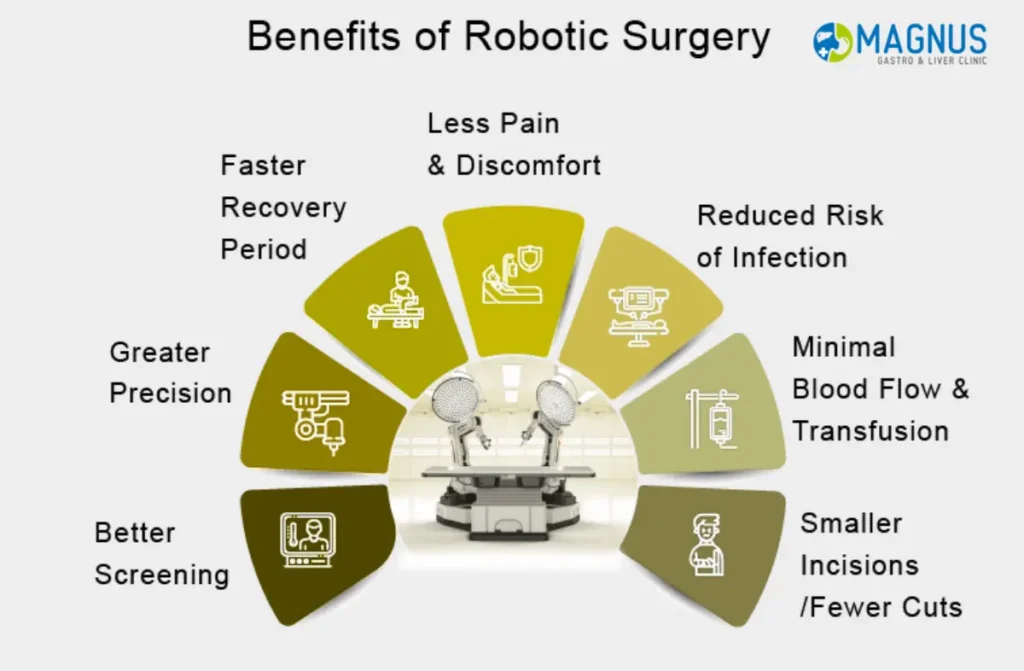
  • Enhanced Precision and Control: The robotic arms mimic natural hand movements while filtering tremors, allowing surgeons to operate with millimeter-level accuracy.
  • Improved Visualization: 3D high-definition imaging magnifies the operative field, making it easier to identify and preserve vital vessels and ducts.
  • Reduced Blood Loss: The robotic system enables meticulous dissection, leading to less intraoperative bleeding and fewer transfusions.
  • Minimal Pain and Scarring: Smaller incisions ensure reduced postoperative pain, minimal scarring, and shorter hospital stays.
  • Faster Recovery: Patients typically return to normal activities within a shorter period compared to open liver surgeries.
  • Lower Complication Rates: The robotic technique reduces the risk of infections, bile leaks, and wound complications.
  • Precision in Complex Cases: The system allows surgeons to operate safely even on challenging tumors near major blood vessels.

Treatment

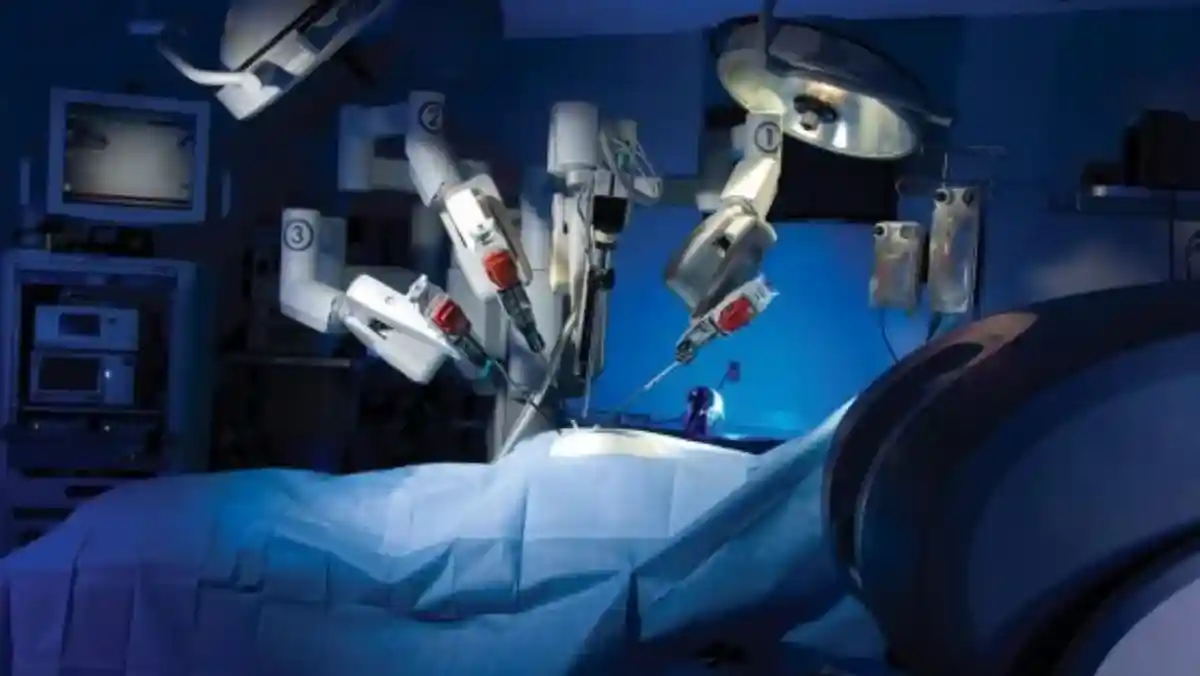
Robotic-assisted procedures are carried out using advanced robotic systems controlled by skilled surgeons. Unlike traditional surgery, where incisions are larger, laparoscopic robotic surgery in Chennai uses small keyhole cuts through which instruments and cameras are inserted. The surgeon operates from a console, where high-definition 3D imaging provides magnified views of the surgical area.

Step-by-step treatment approach:

  • Patient is prepared under anesthesia.
  • Robotic arms equipped with surgical tools are inserted.
  • The surgeon controls the robotic system using a console.
  • High-precision movements ensure delicate handling of tissues.
  • Post-procedure monitoring ensures smooth recovery.

This level of control supports precise surgical movements and helps improve accuracy throughout the procedure, contributing to better surgical outcomes.
Robotic Surgery in Chennai

Procedure for Robotic Liver Surgery

The procedure for laparoscopic robotic surgery in Chennai is meticulously planned and executed to ensure optimal outcomes:

  1. Preoperative Evaluation: Comprehensive liver imaging (CT or MRI) identifies tumor location, size, and relation to vessels. The surgical team plans the robotic port placement and approach.
  2. Anesthesia and Patient Positioning: The patient is placed under general anesthesia, usually in a supine position, to provide access to the upper abdomen.
  3. Robotic Docking and Setup: After making small incisions, robotic ports are positioned, and the robotic arms are connected for precise control.
  4. Surgical Execution: The surgeon operates from a console, using robotic arms to carefully dissect and remove diseased liver tissue while preserving critical structures.
  5. Hemostasis and Inspection: The site is examined to ensure there’s no bleeding or bile leakage. Robotic cautery tools maintain excellent hemostasis.
  6. Closure: The robotic instruments are removed, and small sutures are used to close the incisions.
  7. Postoperative Care: Patients are monitored for liver function, pain control, and recovery progress. Most are discharged within a few days.

Comprehensive Specialties in Robotic Liver Surgery

Robotic-assisted procedures can be used to treat various benign and malignant liver conditions, depending on the patient's diagnosis and surgical requirements.

  • Hepatocellular Carcinoma (HCC): Robotic-assisted hepatectomy ensures accurate tumor removal while conserving healthy liver tissue.
  • Liver Metastases: For patients with secondary tumors, robotic resection enables targeted removal with excellent postoperative liver function.
  • Liver Cysts and Abscesses: Robotic systems allow delicate excision of cystic lesions and abscess drainage, preventing recurrence.
  • Bile Duct Cancer: Robotic reconstruction provides enhanced control for precise bile duct suturing, improving long-term outcomes.
  • Living Donor Liver Surgery: The robotic approach minimizes donor discomfort, shortens hospital stay, and accelerates recovery.
  • Benign Tumors (Hemangioma, Adenoma): Robotic systems aid in excising benign lesions safely without compromising vital liver segments.
  • Portal Hypertension Surgeries: The technology helps in shunt creation and vessel handling with improved visualization.

Disadvantages of Robotic Liver Surgery

  • Higher Cost: Due to advanced technology and maintenance expenses, robotic procedures are more expensive than conventional surgery.
  • Limited Availability: Only select tertiary centers offer comprehensive robotic liver surgery facilities.
  • Longer Setup Time: Docking and instrument calibration take more time than traditional laparoscopy.
  • No Tactile Feedback: Surgeons rely solely on visual cues since robotic systems lack direct touch sensation.
  • Technical Challenges: Equipment malfunction or software issues, though rare, may require conversion to open surgery.
  • Steep Learning Curve: Surgeons need extensive training and experience to master robotic liver procedures.
  • Unsuitable for Emergency Cases: Robotic setups are best for elective surgeries rather than emergency interventions.

Despite these challenges, robotic liver surgery continues to evolve as one of the most advanced and effective minimally invasive treatments available in Chennai.

Why to Choose Dr. Magnus Jayaraj?

Dr. Magnus Jayara is a Senior Consultant Surgical Gastroenterologist and Liver Transplant Surgeon practising at GEM Hospital, Chennai. With extensive experience in gastrointestinal and advanced laparoscopic procedures, he focuses on providing personalised surgical care using modern techniques, including robotic-assisted surgery where appropriate. His patient-centred approach emphasises precise treatment planning, surgical expertise and better recovery outcomes.

  • Expertise in complex cases: Known for handling high-risk surgeries with precision.
  • State-of-the-art technology: Uses the latest robotic systems for optimal results.
  • Holistic patient care: Focuses on pre-surgery counseling, smooth procedures, and long-term recovery.
  • International recognition: Trained in advanced robotic techniques from global medical institutions.
  • Trusted reputation: Highly regarded by patients and peers for his professionalism and results.

Choosing Dr. Magnus Jayaraj ensures that patients benefit from both the benefits of robotic surgery in Chennai and expert guidance for a safe recovery.

Conclusion

Robotic-assisted surgery offers a modern approach to treating complex gastrointestinal and liver conditions with enhanced precision and minimally invasive techniques. The choice of procedure depends on the patient's condition, medical needs and the surgeon's assessment. With the expertise of Dr. Magnus Jayaraj, Senior Consultant Surgical Gastroenterologist and Liver Transplant Surgeon practising at GEM Hospital, Chennai, patients can receive personalised surgical care supported by advanced treatment approaches. A proper consultation helps determine whether robotic surgery is the right option for achieving the best possible treatment outcomes.

Read Also: Pancreas Surgery in Chenai

Frequently Asked Questions

Robotic surgery is a minimally invasive surgical technique in which a surgeon uses a specialised robotic system to perform an operation through small incisions. The surgeon controls the instruments from a console while viewing a magnified 3D image of the surgical area. The robotic system translates the surgeon’s hand movements into precise instrument movements. It does not operate independently.

Both robotic and laparoscopic surgery are minimally invasive techniques. Robotic surgery offers features such as magnified 3D vision and wristed instruments that provide greater flexibility during certain complex procedures. However, the choice depends on the type of surgery, the patient’s condition and the surgeon’s experience. Robotic surgery is not necessarily better for every procedure.

Robotic surgery can be an appropriate option for selected liver and gastrointestinal conditions when performed by an experienced surgical team. Like other surgical procedures, it carries potential risks, including bleeding, infection and injury to nearby structures. A detailed medical evaluation helps determine whether robotic-assisted surgery is suitable for the patient.

Recovery time varies depending on the type and complexity of surgery, the patient’s overall health and the presence of any complications. Some patients may resume light activities within a few weeks, while more complex procedures may require a longer recovery period. Following postoperative instructions and attending regular follow-up appointments support recovery.

Robotic surgery uses small incisions in many procedures, which may result in less postoperative discomfort compared with traditional open surgery. However, the level of pain depends on the procedure, individual pain tolerance and healing process. Appropriate pain management and postoperative care are important for a comfortable recovery.

Recent Vlogs

Recent Blogs