The liver is a vital organ responsible for essential functions such as detoxification, digestion support, and nutrient processing. When severe damage occurs and the liver can no longer function properly, a liver transplant becomes the most effective treatment option. Successful treatment requires expert surgical care, accurate evaluation, and continuous follow-up support. With the guidance of an experienced Liver Transplant Surgeon in Navalur, patients can receive advanced care and improved chances of recovery and long-term health.
What is Liver Transplant Surgery?
Liver transplant surgery is a medical procedure in which a diseased or damaged liver is removed and replaced with a healthy liver from a donor. It is usually recommended when the liver has lost most of its ability to function due to chronic disease, infection, or irreversible damage. This procedure helps restore normal liver function and improves the patient’s chances of survival and quality of life. Liver transplantation is considered only when other treatments are no longer effective.
Liver Transplant Surgeon in Navalur
Dr. Magnus Jayaraj Mansard
- Qualifications: MBBS, MS in General Surgery, DNB in Surgical Gastroenterology, MRCS (UK).
- Experience: 17+ years in treating liver, pancreas surgery, and biliary diseases, with a specialization in liver transplantation.
He is widely recognized for his expertise in advanced laparoscopic procedures within gastroenterology and hepato-pancreato-biliary care, ensuring precise and minimally invasive treatment outcomes. His approach helps effectively manage both cancerous and non-cancerous conditions of the digestive system.
Patients benefit from minimally invasive surgical techniques that reduce postoperative pain and promote faster recovery. Driven by a commitment to clinical excellence, he leads the Magnus Gastro and Liver Clinic in Chennai, providing advanced, compassionate, and patient-focused care.

When Do You Need a Liver Transplant?
- End-Stage Liver Disease: When the liver can no longer perform essential functions, transplantation becomes necessary to sustain life.
- Liver Cirrhosis: Chronic liver scarring caused by alcohol misuse, viral hepatitis, or fatty liver disease can eventually lead to liver failure.
- Acute Liver Failure: Sudden and severe liver dysfunction caused by infections, medications, or toxins may require emergency transplantation.
- Liver Cancer: Certain patients with liver cancer may benefit from transplantation when the disease remains confined to the liver.
- Genetic and Metabolic Liver Disorders: Inherited conditions affecting liver function may require transplantation to prevent serious complications.
Common Signs That Indicate Liver Transplant Evaluation
Advanced liver disease often develops gradually, and many symptoms may be overlooked in the early stages. If you experience any of the following signs, a liver transplant evaluation may be necessary:
- Ongoing yellow discoloration of the skin and eyes (jaundice)
- Fluid accumulation in the abdomen (ascites)
- Severe fatigue and weakness
- Frequent infections
- Internal bleeding episodes
- Confusion, forgetfulness, or memory problems
- Unexplained weight loss
- Swelling in the legs and ankles
- Persistent nausea and loss of appetite
These symptoms can indicate significant liver damage and should be assessed promptly by a liver specialist to determine the most appropriate treatment plan.
Conditions Treated by a Liver Transplant Surgeon in Navalur
- Alcohol-Related Liver Disease: Long-term alcohol consumption can gradually damage liver tissue and lead to cirrhosis.
- Hepatitis B and Hepatitis C: Chronic viral hepatitis remains a leading cause of liver failure worldwide.
- Non-Alcoholic Fatty Liver Disease (NAFLD): NAFLD is increasingly common among individuals with obesity, diabetes, and sedentary lifestyles.
- Autoimmune Liver Diseases: Certain immune disorders attack liver cells and may eventually require transplantation.
- Liver Tumors and Liver Cancer: Advanced liver tumors may be managed through transplantation in selected patients.
- Pediatric Liver Disorders: Children born with congenital liver diseases may require specialized transplant procedures.
Types of Liver Transplant Procedures
Liver transplantation can be performed using different approaches depending on the patient’s condition, age, and availability of a suitable donor. The transplant team carefully determines the most appropriate procedure to ensure the best possible outcome.
- Living Donor Liver Transplant: A healthy living person donates a portion of their liver, which regenerates in both donor and recipient after surgery.
- Deceased Donor Liver Transplant: A whole healthy liver from a deceased donor is transplanted into a patient with end-stage liver disease.
- Split Liver Transplant: One donor liver is divided and used to transplant two different recipients, increasing organ availability.
- Pediatric Liver Transplant: A specialized procedure where children with severe liver disease receive a suitable donor liver to restore normal function.
Liver Transplant Procedure – Step-by-Step
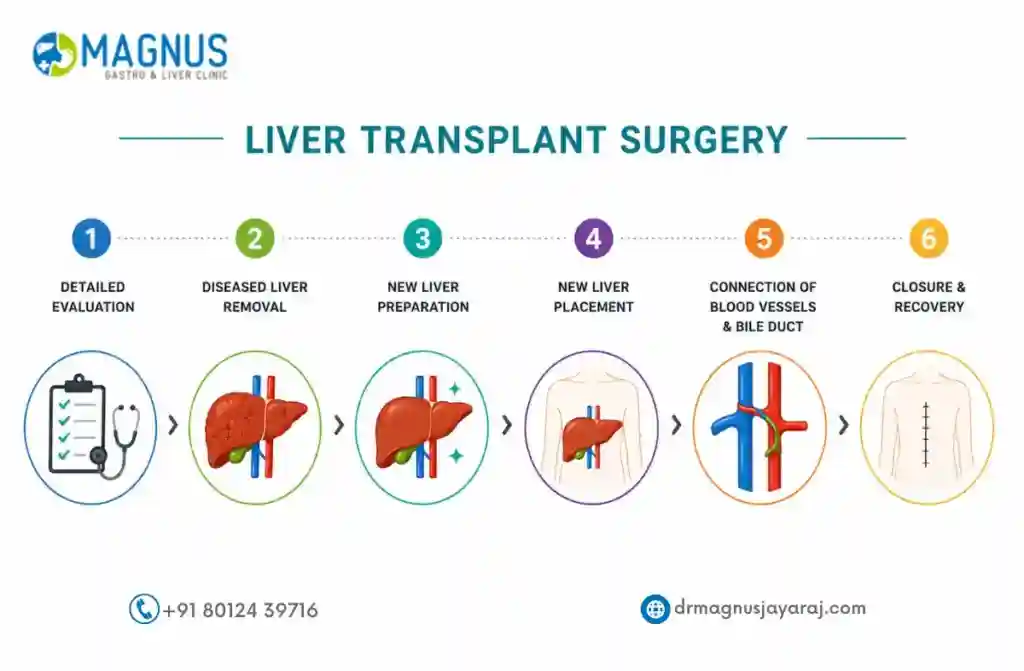
- Initial Consultation and Assessment: The transplant journey begins with a detailed medical consultation. The surgeon reviews symptoms, medical history, and previous treatments. This helps determine whether a liver transplant is required.
- Diagnostic Evaluation: Comprehensive tests are performed to assess liver health and damage. These include blood tests, imaging scans, and liver function tests. The results help decide transplant eligibility.
- Donor Matching Process: A suitable donor is identified based on compatibility factors. Blood group, body size, and medical condition are carefully matched. This ensures a safe and successful transplant outcome.
- Surgical Procedure: The damaged liver is surgically removed in a controlled environment. A healthy donor liver is then transplanted with precision. Advanced surgical techniques ensure safety and accuracy.
- Post-Operative Monitoring: After surgery, the patient is closely monitored in the ICU. Doctors track liver function and recovery progress continuously. This phase helps prevent complications early.
- Long-Term Follow-Up Care: Regular follow-ups are essential after discharge from the hospital. Doctors monitor liver health and adjust medications if needed. This ensures long-term transplant success and stability.
Advanced Diagnostic Facilities for Liver Disease
Early and accurate diagnosis plays a crucial role in managing liver diseases effectively. Advanced diagnostic tools help doctors understand the severity of liver damage and plan the right treatment approach. These tests also ensure timely detection of complications before they become severe.
- Liver Function Tests: These blood tests measure enzyme levels and overall liver performance to detect any signs of inflammation or damage.
- Ultrasound Scan: Ultrasound imaging uses sound waves to provide a clear view of the liver’s size, structure, and any abnormalities.
- CT Scan and MRI: Advanced imaging techniques that offer detailed cross-sectional views of the liver, helping detect tumors, infections, or structural changes.
- FibroScan: A non-invasive test that measures liver stiffness to assess the degree of fibrosis or scarring without surgery.
- Liver Biopsy: A small tissue sample is taken from the liver to confirm diagnosis and evaluate the extent of liver disease.
These advanced diagnostic tools ensure precise evaluation and early detection of liver conditions. With timely diagnosis, patients can receive the most effective treatment and better long-term outcomes.
Liver Transplant vs Other Liver Disease Treatment Options
| Factor | Liver Transplant | Medication Management | Lifestyle Changes |
|---|---|---|---|
| Suitable For | End-stage liver disease and liver failure | Early to moderate liver disease | Fatty liver and mild liver conditions |
| Treatment Goal | Replace damaged liver and restore function | Control symptoms and slow progression | Improve liver health and prevent disease progression |
| Long-Term Outcome | Can provide long-term survival and improved quality of life | May not reverse advanced liver damage | Effective only in early stages |
| Recovery Period | Several weeks to months | Minimal recovery time | Ongoing lifestyle commitment |
| Success in Advanced Liver Failure | High when performed by an experienced transplant team | Limited effectiveness | Not effective |
| Need for Specialist Care | Essential | Recommended | Recommended |
Recovery After Liver Transplant Surgery
Recovery after a liver transplant is a gradual process that requires careful medical supervision and patient cooperation. During this phase, the focus is on ensuring proper healing, preventing complications, and supporting the new liver to function effectively.
Patients are closely monitored through medications, diet, and regular check-ups. Each step of recovery plays an important role in achieving long-term transplant success. Under the guidance of an experienced Liver Transplant Surgeon in Kelambakkam, patients receive personalized care and support to ensure a smooth recovery and optimal liver function.
- Hospital Stay: During the initial recovery period, most patients stay in the hospital under careful medical supervision.
- Medication Management: Immunosuppressive medications help prevent organ rejection.
- Dietary Recommendations: A balanced diet supports healing and strengthens immunity.
- Lifestyle Modifications: Patients are encouraged to adopt healthy habits that protect liver function.
- Regular Follow-Up Visits: Routine evaluations ensure the transplanted liver continues to function effectively.
Diet and Lifestyle Tips After Liver Transplant
After a liver transplant, following the right diet and lifestyle habits is essential for smooth recovery and long-term liver health. Patients must focus on balanced nutrition, healthy routines, and infection prevention. These habits help the body heal faster and reduce the risk of complications.
- High-Protein Nutrition: Foods high in protein like lean meats, eggs, legumes, and dairy products support the healing and rebuilding of body tissues after surgery. They also support faster recovery and strengthen the immune system. A balanced protein intake is essential for post-transplant healing.
- Hydration Importance: Proper hydration helps maintain normal body functions and supports kidney and liver health. Drinking adequate water also helps flush out toxins from the body. It is important to avoid dehydration during recovery.
- Avoiding Alcohol and Smoking: Alcohol and smoking can seriously damage the newly transplanted liver. Avoiding these habits helps protect liver function and improves long-term survival. It also reduces the risk of complications and rejection.
- Regular Exercise: Light to moderate physical activity improves blood circulation and overall fitness. It helps patients regain strength after surgery and supports mental well-being. Exercise should be started gradually under medical guidance.
- Weight Management: Maintaining a healthy body weight reduces strain on the liver and other organs. It also lowers the risk of fatty liver disease and metabolic complications. A balanced diet and regular activity help achieve this goal.
- Infection Prevention Measures: Post-transplant patients have a weaker immune system, so hygiene is very important. Regular handwashing, vaccinations, and avoiding exposure to infections help stay protected. These precautions ensure safer recovery.
Following these dietary and lifestyle recommendations can significantly improve recovery and support the long-term success of a liver transplant. Regular follow-up consultations with an experienced Liver Transplant Surgeon in Sholinganallur can help monitor progress, address concerns, and ensure optimal liver function. Expert guidance and ongoing care play a vital role in maintaining a healthy and active life after transplantation.
Liver Transplant Cost in Greams Road, Chennai
The cost of a liver transplant in Greams Road, Chennai, generally ranges from ₹20 lakhs to ₹35 lakhs, depending on the patient’s condition, donor evaluation, surgical complexity, and hospital stay. The overall expense may also include pre-transplant tests, ICU care, medications, and post-transplant follow-up. A consultation with a liver transplant specialist can provide a more accurate estimate based on individual treatment needs.
Why Choose Liver Transplant Services in Navalur?
Choosing the right specialist plays a crucial role in the success of liver transplant treatment and long-term recovery. At our center in Navalur, patients receive advanced care combined with compassionate support throughout their journey. Under the expertise of Dr. Magnus Jayaraj Mansard, we ensure precise diagnosis, safe surgical procedures, and comprehensive post-operative care. Our focus is on delivering reliable, patient-centered liver transplant services with the highest standards of medical excellence.
- Experienced Transplant Team: Our team includes highly trained transplant surgeons, hepatologists, anesthesiologists, and critical care specialists.
- Modern Surgical Infrastructure: Advanced operating rooms and intensive care facilities support complex transplant procedures.
- Multidisciplinary Care Approach: Multiple specialists collaborate to deliver seamless treatment.
- Patient-Centered Treatment: Every treatment plan is tailored to individual patient needs and goals.
- Comprehensive Liver Care Under One Roof: From diagnosis to rehabilitation, all services are available in a single location.
Patients from nearby areas looking for a Liver Transplant Surgeon in Sholinganallur often choose our center for comprehensive liver transplant care and long-term support.
How to Prevent Serious Liver Disease
Preventing serious liver disease starts with maintaining a healthy diet, exercising regularly, avoiding excessive alcohol consumption, and getting vaccinated against hepatitis. Managing conditions such as diabetes, obesity, and high cholesterol also helps protect liver function. Regular health checkups can identify liver problems at an early stage before complications develop. Consulting a Liver Transplant Surgeon in Thalambur for expert guidance can further support long-term liver health and timely treatment when necessary.
- Vaccination Against Hepatitis: Hepatitis vaccines help protect the liver from viral infections that can lead to chronic damage and liver failure. It is one of the most effective preventive measures. Timely vaccination greatly reduces long-term risk.
- Healthy Diet Habits: A balanced, nutrient-rich diet supports normal liver function and prevents fat accumulation. Including fresh fruits, vegetables, and whole grains helps maintain liver health. Avoiding processed foods is also important.
- Limiting Alcohol Consumption: Excess alcohol intake is a major cause of liver damage and cirrhosis. Reducing or avoiding alcohol helps protect liver cells from long-term injury. This significantly lowers the risk of serious liver disease.
- Regular Health Checkups: Routine medical checkups help detect liver problems at an early stage. Detecting the condition early helps ensure prompt treatment and improves overall recovery results. It is especially important for high-risk individuals.
- Managing Diabetes and Obesity: Controlling diabetes and maintaining a healthy weight reduces the risk of fatty liver disease. Proper lifestyle management helps prevent liver inflammation and complications. It supports overall metabolic health.
Conclusion
Liver transplantation is a life-saving treatment for patients with advanced liver disease, liver failure, or liver cancer. Early diagnosis and timely medical evaluation play a key role in achieving successful outcomes and preventing further complications. With the expertise of an experienced Liver Transplant Surgeon in Navalur, patients receive advanced surgical care along with comprehensive long-term support for recovery. Seeking consultation at the right time can significantly improve treatment success and overall quality of life.
Read more: Best Liver Transplant Surgeon in Perungudi