Medically reviewed by Dr. Magnus Jayaraj Mansard, Specialist in Liver Transplantation, HPB Surgery and Surgical Gastroenterology. Last medically reviewed on October 2026
Your liver plays an important role in digestion, nutrient processing, metabolism and many other essential functions. What you eat regularly can influence your overall metabolic health and may also affect conditions such as fatty liver disease.
There is no single food that can “clean” or “detox” the liver overnight. Instead, liver health is supported by an overall balanced eating pattern, healthy body weight, regular physical activity and appropriate medical care when needed.
A liver-friendly diet usually includes vegetables, fruits, whole grains, legumes, nuts, fish, lean protein and healthy unsaturated fats. At the same time, it is helpful to limit excess added sugar, refined carbohydrates, highly processed foods, saturated fats and alcohol.
What Are the Best Foods for Liver Health?
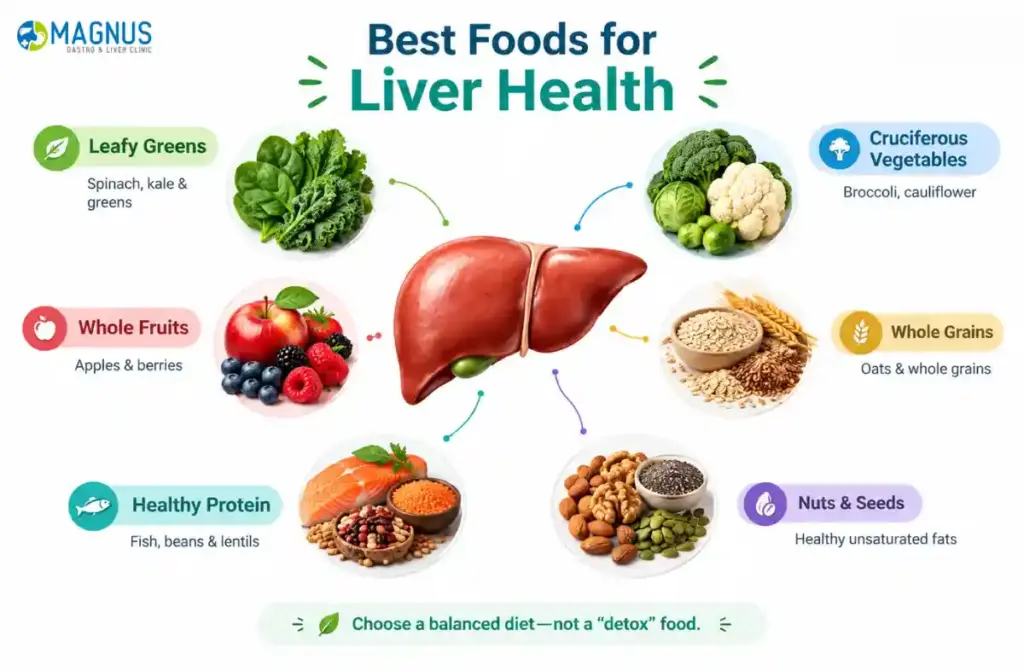
Some foods and food groups that can form part of a liver-friendly diet include:
- Leafy green vegetables such as spinach and greens
- Cruciferous vegetables such as broccoli and cauliflower
- Fresh fruits in appropriate portions
- Whole grains such as oats and brown rice
- Beans, lentils and other legumes
- Nuts and seeds
- Fatty fish and other sources of unsaturated fats
- Eggs, fish, poultry and other suitable protein sources
- Low-fat or unsweetened dairy products when tolerated
- Unsweetened coffee for people who can safely drink it
The overall pattern matters more than any individual “superfood.” For people with fatty liver disease, dietary changes are often combined with weight management and physical activity. NIDDK notes that healthy eating, portion control and maintaining a healthy weight can help prevent or manage fatty liver disease.
1. Leafy Green Vegetables
Spinach, amaranth leaves, drumstick leaves and other leafy greens can be useful additions to a balanced diet.
They provide fiber and a range of vitamins, minerals and plant compounds while generally being low in calories. Adding vegetables to meals can also help increase food volume without relying heavily on calorie-dense processed foods.
Try adding leafy greens to:
- Vegetable poriyal
- Soups
- Salads
- Dal
- Egg dishes
- Smoothies without added sugar
The goal is not to rely on one particular vegetable. Eating different types of vegetables throughout the week provides greater dietary variety.
2. Cruciferous Vegetables
Broccoli, cauliflower, cabbage and similar vegetables can be included regularly as part of a healthy eating pattern.
They are naturally rich in fiber and provide several micronutrients and plant compounds. They can also be prepared in simple ways without excessive oil, butter or processed sauces.
For a liver-friendly meal, try steamed, roasted or lightly cooked vegetables instead of deep-fried versions.
3. Fruits in Appropriate Portions
Fruits can be part of a healthy diet and provide fiber, vitamins, minerals and naturally occurring plant compounds.
Examples include:
- Apples
- Oranges
- Guava
- Berries
- Papaya
- Pomegranate
- Pears
- Bananas
Whole fruit is generally a better everyday choice than fruit juice because whole fruit retains its fiber and is more filling.
If you have diabetes, fatty liver disease or another metabolic condition, the amount and type of fruit that fits your diet may need to be individualized.
4. Whole Grains
Replacing some refined grains with whole grains can improve the overall quality of your diet.
Options include:
- Oats
- Brown rice
- Whole-wheat products
- Millets
- Barley
- Other minimally processed whole grains
Whole grains can provide more fiber than highly refined grain products.
For an Indian diet, you do not necessarily need to completely eliminate rice. Instead, consider portion size, preparation methods and adding vegetables, legumes and an appropriate protein source to create a more balanced meal.
5. Beans, Lentils and Other Legumes
Dal, chickpeas, kidney beans, green gram, black gram and other legumes can provide protein and fiber.
They can be particularly useful for people who want to increase plant-based protein while reducing their reliance on heavily processed foods.
Examples include:
- Dal with vegetables
- Chana salad
- Sprouted legumes
- Rajma with vegetables
- Moong dal
- Chickpea-based dishes
Preparation matters. A nutritious food can become much more calorie-dense when prepared with large amounts of oil, butter or creamy sauces.
6. Nuts and Seeds
Almonds, walnuts, peanuts, chia seeds, flaxseeds and other nuts and seeds contain healthy fats and other nutrients.
However, nuts are energy-dense, so portion size matters.
A small serving of unsalted nuts can be used as a snack or added to breakfast and salads. Choose minimally processed varieties instead of sugar-coated, heavily salted or fried versions.
7. Fish and Other Healthy Protein Sources
Fish can provide high-quality protein, and some fish are also sources of omega-3 fatty acids.
Other suitable protein options may include:
- Eggs
- Fish
- Skinless poultry
- Beans
- Lentils
- Tofu
- Unsweetened low-fat dairy products, when appropriate
Protein requirements differ between individuals. People with advanced liver disease should not make major changes to their protein intake without discussing them with their doctor or dietitian.
In cirrhosis, nutrition becomes particularly important because malnutrition is common, and meal planning may need to be individualized. NIDDK recommends working with a healthcare professional or registered dietitian when appropriate.
8. Healthy Unsaturated Fats
Not all dietary fat has the same nutritional profile.
A liver-friendly eating pattern can emphasize unsaturated fat sources such as:
- Nuts
- Seeds
- Fish
- Avocado
- Certain vegetable oils
At the same time, it is sensible to reduce foods high in saturated and trans fats.
NIDDK recommends replacing saturated and trans fats with unsaturated fats, particularly in the context of fatty liver disease.
9. Is Coffee Good for Liver Health?
Coffee is an interesting area of liver research. Some evidence and liver-focused clinical guidance associate coffee consumption with lower risk of advanced liver disease in certain populations.
However, coffee is not a treatment for liver disease, and adding large amounts of sugar, cream or sweetened syrups can reduce its nutritional value.
If you already drink coffee and tolerate it well, moderate unsweetened coffee may fit into a healthy dietary pattern.
People with specific medical conditions, pregnancy, medication interactions or caffeine sensitivity should discuss their intake with their healthcare professional.
10. What Is the Mediterranean Diet?
The Mediterranean-style eating pattern is frequently discussed in relation to metabolic and liver health.
It emphasizes:
- Vegetables
- Fruits
- Whole grains
- Legumes
- Nuts
- Fish and seafood
- Healthy unsaturated fats
- Fewer highly processed foods
- Less red and processed meat
- Less added sugar and refined carbohydrates
EASL describes the Mediterranean diet as an eating pattern rich in vegetables, fruits, nuts, legumes, whole grains, fish and seafood, while limiting red meat, processed foods, sugars and refined carbohydrates.
You do not need to follow a traditional Mediterranean menu exactly. The underlying principles can be adapted to Indian foods and personal preferences.
Foods to Limit for Better Liver Health
A healthy diet is not only about what you add. It is also about how often you consume foods that provide excess calories, added sugar or unhealthy fats.
Consider limiting:
Sugary Drinks
- Soft drinks, sweetened juices, energy drinks and heavily sweetened beverages can add significant amounts of sugar without providing much satiety.
- NIDDK specifically recommends reducing drinks and foods containing large amounts of simple sugars, including sugar-sweetened beverages.
Highly Processed Foods
Limit frequent consumption of foods such as:
- Packaged snacks
- Processed meats
- Fast food
- Deep-fried foods
- Commercial bakery products
- Sugar-heavy desserts
These foods can make it easier to consume excess calories, saturated fat and added sugar.
Excess Refined Carbohydrates
- Large portions of refined carbohydrates may contribute to excessive calorie intake and metabolic problems in some people.
- Instead of focusing on completely eliminating one food, consider portion control and balance.
Excess Alcohol
- Alcohol can directly contribute to liver injury. People with alcohol-associated liver disease should stop drinking, and people with cirrhosis should completely avoid alcohol.
- If you have liver disease, discuss alcohol use with your doctor rather than assuming that a particular amount is safe.
What Foods Should You Eat If You Have Fatty Liver?
If you have fatty liver, the focus should generally be on an overall healthy dietary pattern rather than a single “fatty liver food.”
A practical plate can include:
Half: vegetables
One quarter: protein
One quarter: whole grains or another appropriate carbohydrate
You can also include a small amount of healthy fat.
For people with overweight or obesity and fatty liver disease, gradual weight loss may reduce liver fat and, in some cases, liver inflammation and fibrosis. NIDDK notes that losing at least 3–5% of body weight can reduce liver fat, while greater weight loss may be needed to improve inflammation and fibrosis.
Rapid weight loss is not recommended as a general strategy because it can create nutritional problems.
What About Liver Detox Foods?
There is no need to depend on a special “liver detox” food or juice.
Your liver already performs detoxification and metabolic functions as part of normal physiology. Instead of looking for a single detox ingredient, focus on sustainable habits:
- Eat more vegetables
- Choose whole foods more often
- Reduce added sugar
- Limit highly processed foods
- Maintain an appropriate body weight
- Stay physically active
- Avoid harmful alcohol use
- Take medicines only as directed
- Be cautious with unverified herbal supplements
Some herbal and dietary supplements can actually cause liver injury. NIDDK advises people with liver disease to discuss supplements and complementary medicines with their healthcare professional.
A Simple Liver-Friendly Indian Meal Plan
A healthy liver diet does not have to be complicated.
Breakfast
Choose one:
- Oats with nuts and fresh fruit
- Vegetable dosa with sambar
- Idli with sambar and vegetables
- Vegetable upma with a suitable protein source
Limit excessive oil and sugary beverages.
Lunch
A balanced lunch could include:
- Vegetables
- Dal or another protein source
- A moderate portion of rice or whole grains
- Curd or another suitable protein-rich food
- Salad
Evening Snack
Options include:
- A small serving of unsalted nuts
- Whole fruit
- Sprouts
- Unsweetened yogurt
Dinner
Keep dinner balanced and avoid routinely making it a large, high-fat meal.
For example:
- Vegetable soup with protein
- Chapati with vegetables and dal
- Grilled or lightly cooked fish with vegetables
- Millet or brown rice with vegetables and a protein source
Your ideal diet depends on your age, activity level, body weight, medical conditions, medications and liver status.
Can Diet Reverse Fatty Liver?
Diet and lifestyle changes can improve fatty liver, particularly when excess body weight, insulin resistance or other metabolic factors contribute to the condition.
However, the outcome varies between individuals.
Fatty liver can have different causes, and not every liver condition is caused by diet. Hepatitis, alcohol-related liver disease, autoimmune liver disease, genetic conditions and other disorders require appropriate medical evaluation.
If you have abnormal liver blood tests, persistent symptoms or an imaging report showing fatty liver, speak with a qualified healthcare professional.
When Should You See a Liver Specialist?
Dietary changes are useful, but they should not replace medical evaluation when liver disease is suspected.
Consider seeking medical advice if you have:
- Persistent abnormal liver function tests
- Yellowing of the eyes or skin
- Unexplained weight loss
- Persistent abdominal swelling
- Significant or recurrent abdominal pain
- Swelling of the legs
- Dark urine or unusually pale stools
- Known hepatitis
- Fatty liver with abnormal liver tests
- A history of heavy alcohol use
- A diagnosis of cirrhosis
- A family history of significant liver disease
Some liver diseases can progress without obvious symptoms, so appropriate testing and follow-up are important.
Takeaway
The best approach to liver health is not to search for one “miracle” food. Instead, build a consistent eating pattern around vegetables, fruits, whole grains, legumes, nuts, healthy fats and suitable protein while reducing excess sugar, highly processed foods, unhealthy fats and alcohol.
If you have fatty liver or another liver condition, your nutritional needs may be different from those of someone without liver disease. A personalized plan from a doctor or registered dietitian can help you make appropriate changes safely.
Read also Best Liver Transplant Surgeon in Chennai.